 store@seahomeschoolers.com


Writer’s Toolkit Buyers Guide
The Writer’s Toolkit – Year 2 – Print Teaching guide + PDF Student Workbook
Original price was: $158.00.$110.00Current price is: $110.00.
AVAILABLE: NOVEMBER, 2026
This purchase is for a Print Teaching Guide & a Printable PDF of the Student Workbook
The Writer’s Toolkit Year 2 is a 34-week writing curriculum built around The Writing Revolution (Hochman Method). Sentence construction, grammar, paragraph planning, original composition, and purposeful revision develop together throughout the year. Learners receive sustained instruction in what information a question or writing purpose requires, how to find and select it in nonfiction text and features, and how to use it accurately in their own sentences and paragraphs. Fiction and nonfiction Book Nook studies connect authors’ choices about setting, character, plot, description, mood, and words with decisions in learners’ own writing. Clear scripts, modeling, guided practice, and paired workbook pages support the educator throughout. The year culminates in an original three-paragraph story and two nonfiction paragraphs, with educator-supported research, revision, illustration, and sharing. Year 1 is not a prerequisite.
The Teaching Guide, Student Workbook, and Consumables are included with your purchase.
A Hochman Method / The Writing Revolution–aligned writing curriculum
The Writer’s Toolkit Year 2 is a 34-week writing curriculum built around The Writing Revolution (Hochman Method). Explicit sentence instruction, purposeful reading, structured paragraph planning, original composition, and revision work together throughout the year. Learners study how writers communicate ideas, then use those insights to make decisions in their own writing.
Designed for home educators and small learning environments, Year 2 provides clear teaching scripts, modeled thinking, guided practice, and opportunities for learners to take increasing responsibility. The educator shows how to make a writing decision, including why one plausible choice works better than another. The learner generates possibilities, chooses, explains, writes, and rereads. Writing develops through supported thought and repeated practice.
How Year 2 Develops Writing
Year 2 continues the series’ explicit instruction in sentence construction, paragraph planning, original composition, and revision. Its particular emphasis is helping learners use those tools to understand nonfiction and develop original stories, with clear teaching and increasingly demanding applications.
Learners are taught what information a question or writing purpose requires, how to locate and select it in text and features, and how to use it accurately in their own writing. Sustained study of setting, character, plot, description, mood, and word choice informs their own compositions. The year culminates in an original three-paragraph story and two nonfiction paragraphs on learner-selected topics.
The Writing Revolution in Meaningful Use
Sentence work includes constructing and repairing sentences, arranging words, combining sentences, matching subjects and verbs, managing pronoun reference, choosing sentence purposes, and expanding ideas with precise details. Learners use language to express sequence, contrast, reasons, results, recurring events, possibilities, and examples. Grammar and punctuation are taught through the meaning a writer needs to convey.
Single-Paragraph Outlines help learners separate deciding what to say from composing the sentences. They brainstorm more ideas than they need, choose relevant details, record usable key-word notes, and organize those notes around a focus. Instruction addresses topic sentences and concluding sentences as choices that must fit the whole paragraph. The educator models how a note becomes a sentence and how that sentence can better serve the writing.
Reading Nonfiction for Meaning and Writing from Information
Learning to read nonfiction for meaning and use information in writing is a primary goal of Year 2. Learners are explicitly taught what information they need and how to find it. The question words who, what, when, where, why, and how identify different kinds of details. A question directs attention to the needed person, action, time, place, reason, or process rather than to whichever fact happens to be nearby.
With educator support, learners locate information in text, photographs, captions, maps, headings, and glossaries. They compare possible answers, distinguish relevant details from other true facts, preserve important information in notes, and use it accurately in their own sentences and paragraphs. They return to a source to check meaning and learn that using their own words must preserve the fact. The guide also supports applying familiar sentence tools to content from other studies.
Nonfiction books and course passages serve complementary purposes. Books show how authors develop and arrange information across a whole work: Owls introduces useful features, Buzzing with Questions examines inquiry and sources, and Mr. Ferris and His Wheel offers events organized in time. Passages give learners focused opportunities to practice locating, selecting, organizing, and using specific information. Early instruction explains what nonfiction features contain and how they help readers; later, learners use titles, pictures, captions, labels, glossaries, and source acknowledgment to help readers of their own work.
Book Nook Studying Authors and Making Writing Choices
Book Nook studies fiction and nonfiction through close attention to words, illustrations, and author decisions. Setting includes where and when a story takes place and what life is like there. Character study examines wants, actions, obstacles, qualities, and change. Plot study considers how a problem develops, why one attempt leads to another, and how an ending connects to what came before. Description, mood, and precise word choice deepen the work.
These studies lead into learner choices: observing and inventing a nighttime setting, extending an original character, representing events in order, writing a postcard, or describing a place behind a paper door. The books offer varied people, communities, experiences, and fields of knowledge. The Night Is Yours contributes a joyful neighborhood setting; Saving American Beach connects character decisions with MaVynee Betsch’s conservation work. Reading and making both have a clear instructional purpose.
Original Composition and Purposeful Revision
Original writing is woven through the course. Learners plan and write paragraphs with educator support, choose their own details and wording, and apply beginning, middle, and end to a real experience with a problem. The final unit develops one original three-paragraph story and two one-paragraph nonfiction pieces on learner-selected topics. Aunt Isabel Tells a Good One, Also an Octopus, and What Do Authors Do? support the story work at the point when their ideas become useful to the learner’s own composition.
Revision receives direct instruction. Learners use specific feedback to add needed information, choose a more precise word, strengthen an opening or ending, or clarify a relationship. They make changes on an existing draft, reread the whole piece, and explain what improved. The educator writes a different piece alongside the learner and sometimes follows a revision direction the learner supplies. Editing checks capitalization, punctuation, and spelling; illustration and sharing complete the work.
What Learners Work Toward
- Sentences that communicate an intended idea with clear grammar, precise wording, and purposeful punctuation.
- Targeted reading that finds the information a question or writing purpose requires and uses that information accurately.
- Focused paragraph plans with relevant details, usable notes, coherent order, and fitting openings and endings.
- Original settings, characters, narrative paragraphs, and a connected three-paragraph story.
- Nonfiction writing shaped by chronological order or a larger topic divided into smaller topics.
- Purposeful revision, thoughtful presentation, and the ability to explain their own writing decisions.
Teaching Support and Course Materials
The course contains seven units and 34 weekly lessons, with five daily lessons per week. The Teaching Guide provides scripts, examples, questions, modeling, guided practice, and support prompts. The paired Student Workbook contains the assigned reading, planning and writing pages, reference tools, and illustrated or hands-on activities. Portfolio work preserves evidence of growth and culminates in sharing and celebration.
Year 1 is not a prerequisite. Year 2 establishes the sentence tools it uses and repeatedly applies them to new purposes. It is a strong fit for families who want explicit writing instruction, meaningful nonfiction and literature study, substantial learner choice, and clear guidance for teaching. The educator remains an active partner, reading aloud, modeling, discussing, and scribing when needed while learners develop greater responsibility for their writing.
Additional information
| Weight | 0.5 lbs |
|---|---|
| Format | E-Book, Print |
You may also like…
-
Sale!

The Historian’s Toolkit – Year 1 Audiobook
Original price was: $33.00.$23.00Current price is: $23.00. -

The Critical Thinker’s Toolkit – Level 1
Price range: $69.00 through $105.00 -
Sale!
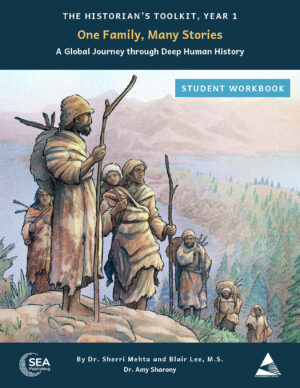
The Historian’s Toolkit – Year 1 Student Workbook
Price range: $44.00 through $64.00 -

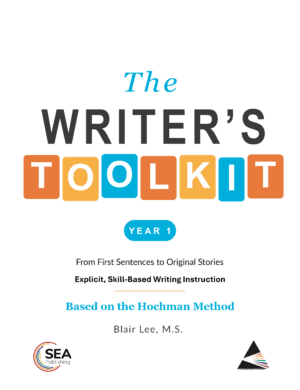
The Writer’s Toolkit – Year 1
Price range: $95.00 through $176.00 -
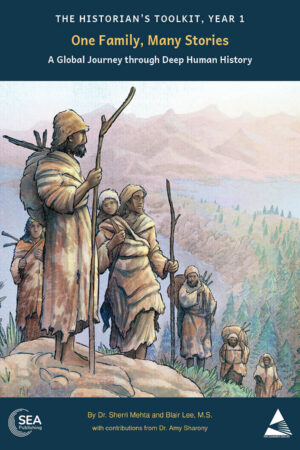
The Historian’s Toolkit – Year 1
Price range: $30.00 through $45.00


Reviews
There are no reviews yet.