The Dali Museum, The Mediterranean, and Vegan Tapas!

Dali Museum

The Dali Museum, The Mediterranean, and Vegan Tapas!

The town of Figueres, Spain is about a 35 minute drive from Girona. There is a lot of history there, but we only went for the Dali Museum. We did not want to spend the day in Figures, because we also wanted to visit Costa Brava. Costa Brava is what the coastline of northeast Spain is called.

Salvadore Dali is a genius! He worked in almost every medium you can think of. The museum is a bit crowded but not too crowded. When we were standing in line Sean said, “What is this? Aren’t we going to the Dali Lama Museum?” A little prep about Dali might have been good on my part. He loved the museum and is now a big Dali fan! What follows is a series of photos from the Dali museum. It seems to me that the Spanish like eclectic artists. Gaudi, Dali, and Picasso all push the boundaries in so many ways. It really makes you think about their intent when you stand in front of the work of both of these artistic geniuses. http://www.salvador-dali.org/museus/teatre-museu-dali/en_index/                            The Dali Museum is on 4 floors. The top floor features works by artists other than Dali. These 2 paintings are by another artist.  More by Dali are below.  DNA!       Once Sean got over his disappointment that he was not at a museum dedicated to the Dali Lama he loved it. Sophia enjoyed it from the start.  Seriously, if you can think of a medium for art, Dali has probably created something using it!     What a cool ring! Attached to the main museum is the jewelry museum. The guys did not want to go to it, but I did, so they went along. We all loved the jewelry museum.   Jim parked our car across from the museum. The parking space seemed too good to be true. When we went back to our car there was a van parked in front of it and the car was covered in sticky drops. It was probably soda. We think we were not supposed to park where we did. It was better than a parking ticket! We have laughed so hard this trip. I am sure whoever sprayed the soda was upset. The 4 of us just laughed.


We left Figueres and headed to Costa Brava. We wanted to spend half a day on the East Coast of Spain, and get in the Mediterranean. It is a beautiful coastline. The Mediterranean is a beautiful blue color. It was colder than we thought it would be. It was saltier than the Pacific Ocean which surprised us. We all got in and the kids had fun with the peace donut! The first thing that happened when we put it down was that the wind blew it away. Good thing Sean is in shape. He had to run to catch it. Most of the people on the beach seemed to be tourists like us. Languages we heard were French, German, Russian and Dutch.    Sean and I like to try different candies that you don’t see in the states. These are different types of Mentos. Sean was hungry, so he and Sophia went to get food. Sean ordered pizza and Sophia ordered pasta with sauce. It is the second time this trip that she has done that. The Spanish version of marinara sauce tastes like Campbell’s tomato soup if you don’t add water. We find it gross. I asked an Italian we met about the quality of Italian red sauce in Spain, and he agreed they don’t do it well. When they got back from eating Sean told Jim and me that something really embarrassing happened. Sean’s pizza arrived without being cut into slices. The waiter who delivered it was older. Sean said to the waiter, “Would you please cut this.” The waiter looked askance at Sean, then picked up his knife and fork, and said, “You don’t know how to cut?” Then the waiter proceeded to cut Sean’s pizza into bite sized pieces for him. Realizing what was happening, Sean said, “That’s okay, I got it.” But the waiter wouldn’t stop cutting. Instead he looked at Sean as he was cutting and said, “You like a baby.” Sophia of course was laughing at the whole ordeal. Of course this has been a running joke ever since. We have since learned that in France and Spain at least pizza is not cut into slices. When we left Jim put the peace donut in the back window, so we could drive through the Spanish countryside spreading a message of peace. Before leaving town we bought some fruit. The fruit in the North of Spain has been really delicious. The kids fell asleep in the back seat on the way back to Girona. It was quite a full day.    We were hungry so we went back to B12 to have vegan tapas, https://www.facebook.com/pages/Restaurant-Bar-B-12/175203855832255. The food there was just delicious. We asked one of the owners, Jordi, about the movement for Catalan to separate from Spain. We heard from many people in this area about their differences from the Southern people of Spain. One of their gripes is that a lot of tax dollars come from Catalan, that are spent in the rest of Spain, not in Catalan. It is easy to see that happening. The area around Costa Brava alone must bring in many tourist dollars. The people of Catalan consider themselves more relaxed and easy going too. They are right about how friendly and easy going they are. How they compare to the rest of Spain, we don’t know. We have yet to leave Catalan. We are having that good of a time in it!        After dinner, Jim and I walked the wall and the kids went to the room. We saw 2 people the entire time!                        Forgive any typos the wifi is not good so I am posting it while I can.

Check out my previous post from the Spain trip here.


Why they Chose Girona to Film the Game of Thrones, Girona, Spain

Girona

Why they Chose Girona to Film the Game of Thrones, Girona, Spain


I will not actually bore you with a written answer to that. The photos speak for themselves. Girona is magical. It is now one of my favorite towns I have visited of all time. The others are

  • The area around and walking up to Seigfreid’s castle in Germany: I walked up to this on a deserted old road, early in the morning, with only a handful of other people around. It was a magical misty morning. The castle and grounds had not been preserved. It felt like stepping back in time.
  • Amboise in France: This is the town that took in Leonardo da Vinci when he was kicked out of Italy for his heretical views. There are houses still in use that are carved into the surrounding rock walls. It also has a lovely castle that belonged to the Prince who took da Vinci in.
  • The Cliffs of Mohrer and the Burrens in Ireland: I cannot think of the name of the town we stayed in. It had a lovely inn in a small town very near to the Cliffs and Burren. It is an area with fields, stone walls, the Burrens and the Cliffs of Mohrer. There are small, abandoned castles and lots of sheep with their butts spray painted different colors.
  • Jaisalmer, India: I adored Jaiselmer! It is a magical place. It is still inhabited, so you can get a feel for how these forts used to function.
  • Both Eger and Sopron, Hungary: Eger has churches and cathedrals with a beautifully preserved muezzin. The wine dungeons are a fun experience. We stayed inside the old Roman walls in Sopron. Can you tell I like historical places?
  • An old castle we visited in the Ukraine: When my daughter-in-law’s father heard I love castles he took us to 2. The first one we went to was almost empty surrounded by stinging nettles. (Ouch!) It was the first time I could really imagine what it was like to be back in the Middle Ages!
  • Machu Picchu: We hiked in to Machu Picchu along the Santa Teresa trail. It is a magical way to get to one of the most spectacular places in the world.

Back to Girona

  
 Breakfast was at the Historic Hotel. It was delicious. We found the fruit and vegetables from Catalan to be some of the best we ever ate! There are several options for staying in Girona. We opted to stay in a historical family room. In the only Jewish residence still in use.


The following is from an interview with our Xave who with his family owns the Historic Hotel and Casa Cundaro. Girona was built in 1 before God (that is a quote). The Jewish quarter was established 8-9 centuries after God. It was designed so that the Christian District was higher on the hill than the Jewish Quarter. This area was walled, so if their families expanded and they needed more space they would block off lanes and build rooms there or build an arch over the lane and then build rooms on top. That was the only way they could expand. The dining room of the Historic Hotel have stones in its walls that were used to build walls by the Romans.


Casa Cundara was owned by a family and passed down for generations. We would learn at the Jewish Museum a couple of days later that the family would have had to convert to Christianity in order for that to happen. The family stopped using it, and it was bought by their neighbors, the current owners. When the new owners bought it they wanted to put a jacuzzi in the garden area. When they began the project, they found something buried under the garden. They had to call archaeologists in when they excavated it. They found 2 houses with a street running between them. They dated what they found to Roman times. They also discovered a mezuzah that is over 1000 years old. (I know it shows a menorah not a mezuzah.)

One of the reasons Girona looks as it does, is that when movies and TV shows are made there, the town uses the revenue to continue the restoration of the historic district. Xave asked if we had seen Perfume. We had not, but I have read the book. I asked if the people from the Game of Thrones had contacted him about staying there. They called him when we were eating breakfast. This is where I would want to stay if I were them!

  
 It is no surprise to learn a lot of bike riders come here. It is lovely, quiet, and hilly. These are photos of some of the famous cyclists who have stayed here.

  
 Girona is a walled city. We woke the kids and walked the wall. There were very few people. One of the most surprising things about Girona is how few people there are visiting it. Lucky for us but surprising. It is so special! The walls and the town they surround are a mix of Roman walls and structures, buildings and walls built by the many rulers since then, and more modern work that has been done to make the structures sound.

  
 The cathedral tolls the hour. In case you are wondering, Sean is not wearing the same shirt. He has taken James’ shirt!

  
   The lady bugs we saw had an elongated shape. One of my biology professors once told us that people call this the age of man. It would be more correct to call it the age of the beetle. (Lady bugs are beetles.)


Sophia and I love tea. When we found a tea shop, we had to have some. The shop owner was very kind to us, and his English was perfect. We even treated ourselves to some tea for the rest of the trip.

  
 Then we visited the highest rated vegan restaurant in town. It was delicious!

  
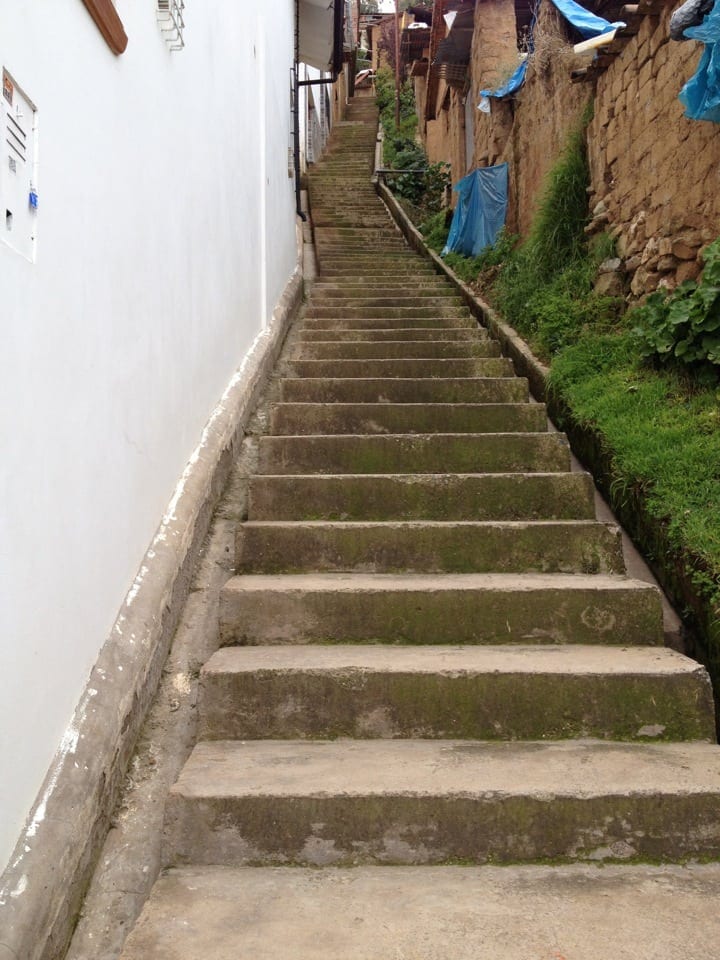
 We spent some of the day wandering around Girona. There are stairs all through Girona. It is exercise getting around. There are people running the steps all through Girona.


I thought of you Sharon and Laurel when I saw these.


There is a old wall and a new wall. In the evening we walked the old wall.

Check out my previous Spain post here.


La Pedrera in Barcelona driving to Girona, Spain

La Pedrera

La Pedrera in Barcelona driving to Girona, Spain

Barcelona is a wonderful city to recover from jet lag. It is small enough so it isn’t overwhelming. The food is wonderful, even for those who have dietary restrictions. There is a mix of Roman ruins, multi-century Spanish architecture, and Gaudi! & then there are the people!!! Everyone we met was warm and welcoming.

We bought 2 adult soccer shirts and a shirt for the baby on the way. We already have two granddaughters. Mike and Kate are expecting a baby boy. Kate’s dad is a big Messi fan. Sean put one on.

  
 Today we left Barcelona for the North. We will not be going to Morocco. Instead we are going to the south of France & Portugal. Before we left Barcelona, Jim, Sean, and I got up and went to La Pedrera. You can go inside to see it. Sophia did not want to get up and go. (We won’t let that happen again. It was totally worth getting up for.)

  
   Antonin Gaudi was born in 1852 into a family of coppersmiths.  He moved to Barcelona to study teaching. He became interested in Utopian society and socialism. He studied architecture. I don’t know why he switched from teaching to architecture. His first architectural projects focused on buildings for proletariat. He began working on the cathedral Basilica de Sagrada Familia. He became enomored with the Catholic faith. After working on the project he converted both his political beliefs and his faith. He spent the rest of his life as a passionate advocate for Catholicism. When you are inside La Pedrera it feels like you are walking through a Dr Suess book. The roof has 13 chimneys + some vents all with interesting shapes. His designs were inspired by nature.


The tops of these chimneys are broken champagne bottles!

It is hard to stop taking photos. Each turn is cooler than the last! Some of these are from the rooftop to the buildings across the way.

He would do things like hang strands of wire upside down, examine their shape in a mirror, and mimic the shape they make draping down.

  
 The attic of La Pedrera is structured like a snake’s skeleton.

  
 His chairs and door handles are ergonomically designed. Gaudi would have a peron grab clay and then squeeze it and make a mold so that the door handle would be perfect for them. La Pedrera was originally designed for one prominent family. Eventually it was divided into apartments. Today much of it is still private apartments. These are a series of photos showing how an apartment would be decorated during Gaudi’s time.

  
                               We took a cab to the airport where we rented a car, left Barcelona, and drove to Girona. The taxi ride was funny because there was not enough room in the cab we hailed, so Sean and Jim had luggage piled in their lap. We went back and forth about taking a train or driving and opted to drive.

  
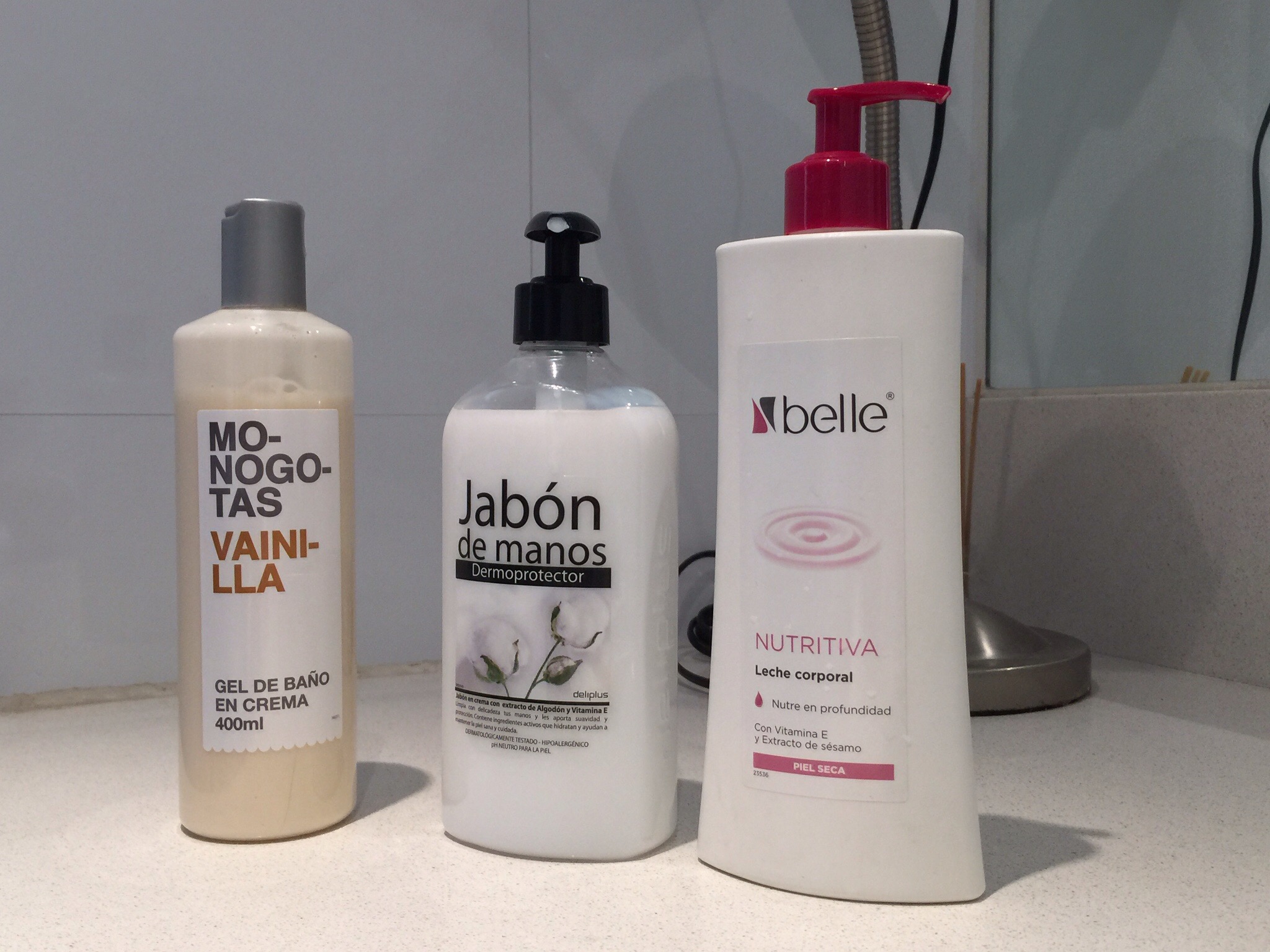
   I forgot to tell you a funny story. Everyone took a shower before I did. When I went into the shower, I noticed there were 3 bottles in there. Can you tell what they all have in them?

In case you cannot. There is bath soap, hand soap, and hand lotion. I asked who used lotion on their hair. LOL, Sean thought it was conditioner.

We rented a room in the historic district on the hill. (More on that tomorrow.) Girona is like stepping back in time. Sophia had never been to Europe, so she had never been to one of these old towns. Her entire face lit up. We would wait until the next day to explore Girona. We wandered around getting our bearings, marveling at the surroundings. Girona is in the Catalan region. Many of the signs are in Catalan. With our Spanish as bad as it is, it was confusing. We could not figure out how to get to our hotel so we hired a taxi to show us the way. It was worth every penny!


I love old cobbled streets!


Sean’s Barcelona jersey has people wanting to talk soccer with him. When we told Akmed, the person checking us in, Sean rowed instead, he told us it was called remar. El rema y esquia. Akmed was excited to hear Sean rowed because his best friend married a rower and the two moved to San Diego so he could row. “Do you know Bernard Stomporowski,” he asked. No, we do not.

  
 Sean had his favorite dish on the trip so far, a potato dish with sauce. While eating potatoes, soccer was on. We learned that if Girona wins 2 more games they will move up to Division 1. There are three divisions and they are fluid as to which teams are in it. Madrid, Barcelona, and Seville are always in the top because they are so good. There are 6 teams in each division. (I hope that is correct.) Our memory is sketchy on that detail. The other slots in Division 1 are very competitive. Both Bilbao and Barcelona are in the Catalan area. It was a great year for soccer in Catalan. Sean loves graffiti.


We met a group of Venezualans at the Harlem Club. The next day we saw one of them, Maximillano Fugues, with his wife, Lia del Sol, and mother-in-law in Girona. “Did you know the Game of Thrones is going to be filmed in Girona next season,” Maximillano asked. We did not. I looked it up and it is. When you visit here you will understand why they would use this location. http://www.thelocal.es/20150527/game-of-thrones-to-shoot-in-spain-again

  
     There are many expats from Venezuala in Spain. We were told many of them are here because they feel Venezuala has become a dictatorship, and all the educated young people who can leave do. Jim asked what was going to happen to Venezuala after all the smart young people left. Jim was told, “Tell the last one to turn out the lights.”

We also learned the Spanish love Cuba. I cannot wait to visit there!

Check out yesterdays post here.


Last full day in Barcelona, Spain

Spain

Last full day in Barcelona, Spain

  
We woke up late again. Even I didn’t get up early this morning. When I finally woke the kids up before noon they were STARVING!  Even Sophia who almost never eats. Sean commented on the way over that the entire trip the 4 of us are looking for something to eat. LOL, that’s what traveling with a 15 year old boy is like. I get distracted along the way.


Sean need a pastry appetizer to eat on our way to the restaurant.


Sophia’s huge pot of soup!


There is a big soccer game tonight. The Bilbao fans have been celebrating since we got here. The red and white shirt are the Bilbao fans. The red and blue shirts are Barcelona. We learned today that Kate is having a boy, so we bought him a Barcelona team outfit, with Messi’s name on it!   


The kids wanted to go back and nap (so did Jim).We came back and I washed the second load of clothes.They dry the old fashioned way! The photos are on the wall behind where I am hanging clothes out. The kids are napping on the sofa bed together but there are three beds and three bedrooms. There is also a kitchen with all the appliances. The location is 2 and 1/2 blocks away from Gaudi’s La Perdrera. It is in a great location. I originally wanted to stay in the Gothic District. I am glad we didn’t. Every time we have been down there it has been really crowded and noisy. We are in the Modern District (named for all the Gaudi buildings in it). It is a litlle over a km to the Gothic District. Perfect! Here is a link to the apartment, https://www.airbnb.com/rooms/308166.

  
Our host Carlos.      

La Perdrera by Gaudi. The kids were seriously too hungry to go inside. They woke up from their nap starving AGAIN.

Casa Batillo, this is only about 4 blocks from where we were stayingg

Sean preferred the building next to it, below. He told us he likes symmetry.


Barcellona is a lovely mix of old and new. There are Roman walls with an oldchurch restored with Gaudi’s help alltogether. (Blair, “I will not stop sightseeing to eat, unless you let me get a photo of you two!)


Our table at the restaurant. I thought of Mark Klitsie! I should tellyou it is about 10 p.m.that we are eating dinner. It stays light until 9 p.m.here.  


How much did we like dinner last night? Enough to eat here again on to night.


The owner of our apartment invited us to go listen to his band, Son de la Rambla play. They played traditional cuban music. There were some wonderful dancers at this. It got off to a slowish start because of the big game where Barcelona beat Bilboa 3 to 1. Everyone was watching it. It was the national championship. They play next week for the European cup against Italia. Once the game was over the party began! That is our host in red doing a rap number. It was a wonderful night. We got to sleep about 3 a.m. The band played until 4 a.m. The kids were tired and wanted to leave. I made them promise they would go to see Gaudi in the morning if we did!

Check out my first post from Barcelona here.


Barcelona day 1

Barcelona

May 29
We woke up feeling pretty good. Sean immediately wanted to go deal with tickets to Primavera Sound.

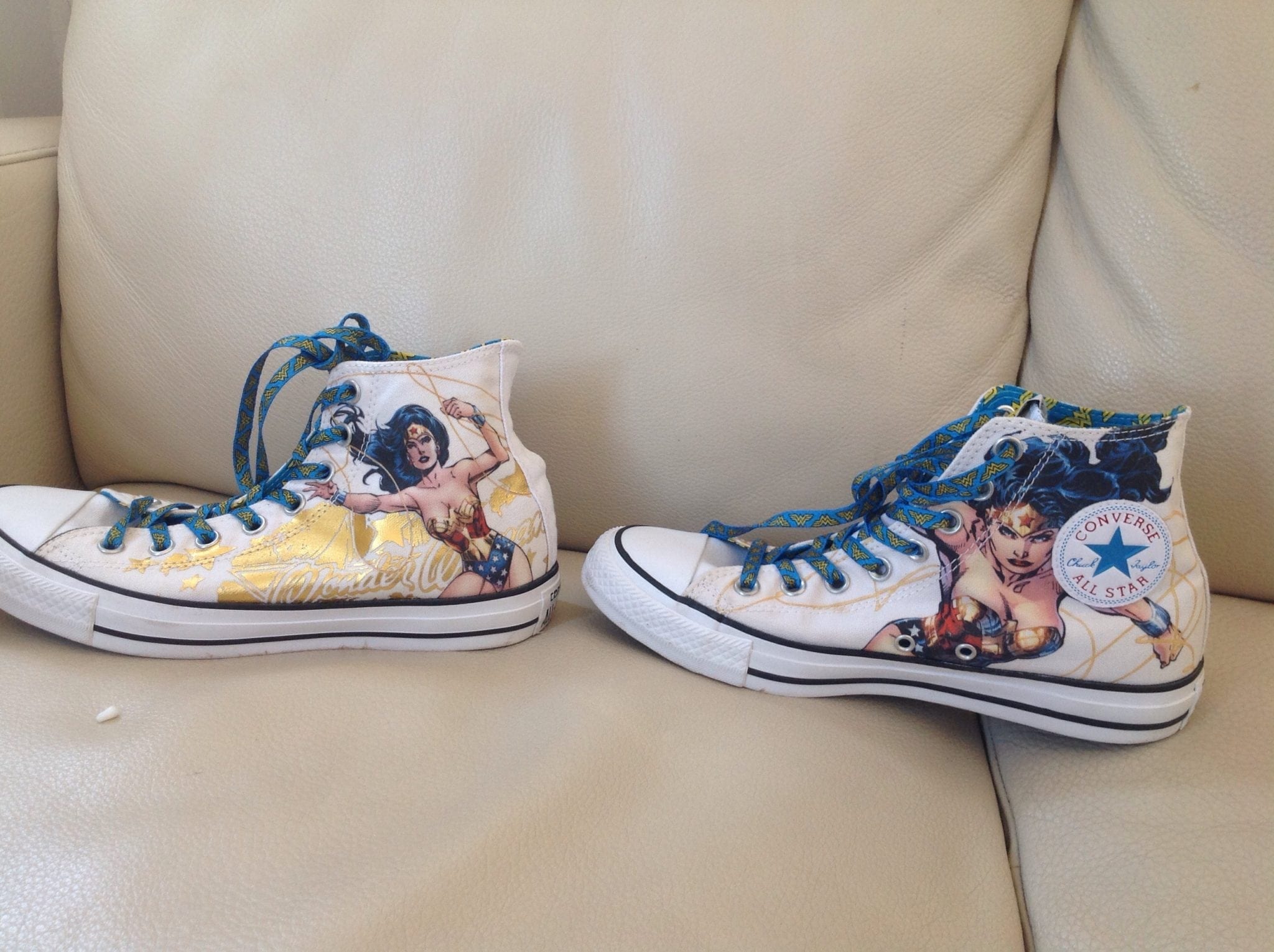
#ILoveFunkyShoes
#ILoveFunkyShoes

My shoes for the day. I would be back after getting the tickets to the concert. They looked so comfortable when I bought them!

We figured the subway out. Once again I understand the language better than anyone else. Sophia and Jim were both going to brush up onimage

their Spanish, but we are having to wing it on my high school and college Spanish. Jim and I like to take it easy the first couple of days, and then go like the wind the rest. When we got in the train we all were a bit grumbly and it was then I realized we were not quite as alive as we felt upon waking. (Dropping grumbly teens off in a foreign country at one of the largest music festivals with about 110 rules to follow seemed good in some ways and worrisome in others.)

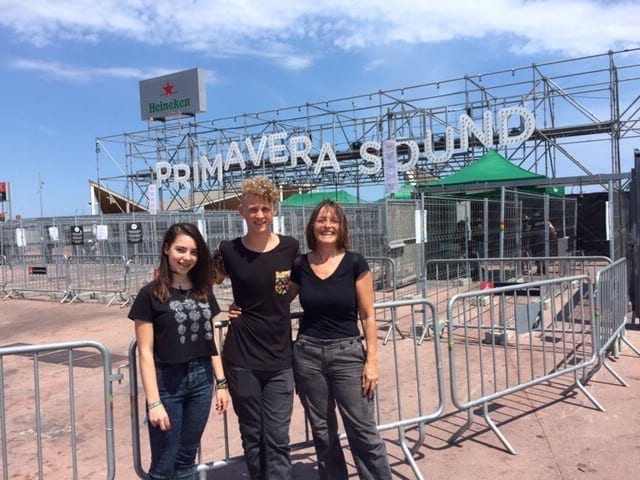
At Primavera Sound
At Primavera Sound

There was tight security and the crowd looked nice. There were people from all over the world, judging from the accents we heard & many groups looked about the age of our kids. They did make Jim pay for a ticket and take the

Needed for entrance to Primavera Sound

kids in, but Sophia’s ticket was free so it worked out to what we expected in the first place.

With the kids deposited, Jim and I went back to the apartment, washed a load of clothes, and went to the Gothic District. The Gothic District is the old part of Barcelona built by the Romans. It has the narrow streets, cobbled walkways, twisty turns, and old buildings I love to see. http://en.m.wikipedia.org/wiki/Gothic_Quarter,_Barcelona

image

The lovely church spire was designed by Gaudi (more on him tomorrow).

Here is a photo of Roman ruins that are being excavated.

image

I am a vegan and a foodie. Before becoming a vegan, it was hard for me to figure out what restaurants we were going to go to. Now I have many fewer to choose from, so it is easier. We went to a superb!!! restaurant last night. I am known among my friends and family for my healthy eating. I cannot get too far off my diet when we travel if I want to feel good. I have found that none of us feel good after 1 week if we eat too differently. So we stick as close as we can to what we eat at home.

image

Barcelona is a good city to be getting over jet lag. It stays open late and doesn’t get started early. Every one but me woke after noon, and we are staying up until the early hours of the morning.  The time in Barcelona is 9 hours off that in California.

Eating with the kids at 1:30 a.m.

Check out my post on the way from San Diego to Barcelona here.


On the way to Barcelona

On the way to Barcelona

At the airport in San Diego: May 27

It takes a long time to get from the West Coast of the U.S. to Barcelona. We left in the evening of the 27th from San Diego, flew to San Francisco, next stop Frankfurt (I love Germany!), and finally we arrive in Barcelona in the evening of the 28th. I plan on sleeping most of the way! Hopefully… Sean will probably watch movies the entire way.

image
This trip we are taking, Sophia, a friend of ours with us. We have asked friends of Sean’s if they want to go on trip with us before, but Sophia is the first to say, “Sure, I am okay being away from my family for almost 4 weeks.” It probably helps that she and I are super close! I had to borrow someone else’s daughter to have one to travel with us. Good thing I have 2 granddaughters!

image

Sophia and I are dressed in black in super comfie clothes. No makeup either. The photos will of Spain in a day!

Made it to San Fransisco with no problems. There was a problem with engine 4 on the plane leaving for Frankfurt. We left 3 hours late from San Francisco, but we made it safely which is what really counts. I won’t bore you with the details, but that delay made us late for our connecting flight to Barcelona. The new flight we were put on was delayed… 24 hours later.

Good things Barcelona is a late night city! 😉

It is 2:42 a.m. in Barcelona. We walked around a bit, but Sean wanted to come back so he could sleep.. Sophia probably would have walked more, but she was too nice to tell Sean that. I would have walked much longer, but I Jim was ready to sleep too. Wait until you see photos of where we are staying. I found it on Aire B&B.

P.S. Typos will happen in my travel blog. I just don’t want to take the time to put every comma where it belongs. I am sorry if that bothers you. 🙂

Check out my previous post about our trip here.


The Homeschool History Project: American Government

The Home School History Project: American Government

“Those who cannot remember the past are condemned to repeat it.” George Santayana

Learning about other cultures in Machu Picchu, Peru

I interpret this quote to mean that through studying history people are less likely to repeat past mistakes. I think this is an important reason for studying history. In the United States the best way to accomplish this is by participating in the election process and at least voting. It disturbs me that young people, those who are likely to live the longest and therefore be affected the most by voting decisions made now, are not voting. It seems to me, they are not ensuring that the world they’re going to get is the one they want to live in.

Roanoke, South Carolina

Kids who attend traditional schools have a hefty history requirement, but if you look at the statistics of how likely they are to vote, this doesn’t translate into them helping ensure that the mistakes of the past are not repeated. I wonder if the reason for the disconnect between studying history and working to affect change through the simple act of voting is because of the focus on studying past events without applying the knowledge in a meaningful way to their own life.

Youth Voting

Registration And Voting Among Young Americans

A 2009 Project Vote report on voter participation in the 2008 elections shows how drastically civic engagement amongst young people, and especially among young people of color, lags behind other groups:

·         Though 21% of the eligible voter population, voters 18-29 made up only 17% of the actual voting population in 2008.

·         Approximately 21 million citizens under the age of 30 did not vote in 2008.

·         If younger citizens had voted at the same rate as those aged 30 and over, 7 million more people would have cast ballots in the election.

·         As of November 2008, fewer than half (49%) of the 3.7 million 18-year-old citizens were registered to vote, a rate 22 points lower than the general population.

·         In 2008, non-white or Latino 18-year-old citizens were registered to vote at a rate six percentage points behind their white counterparts, 51 percent of whom are registered.

http://www.projectvote.org/youth-voting-.html

These numbers were even worse for the last election in 2014. That got me thinking about learning history and applying what has been learned in a meaningful way. This is how I believe science should be taught. Why not history?

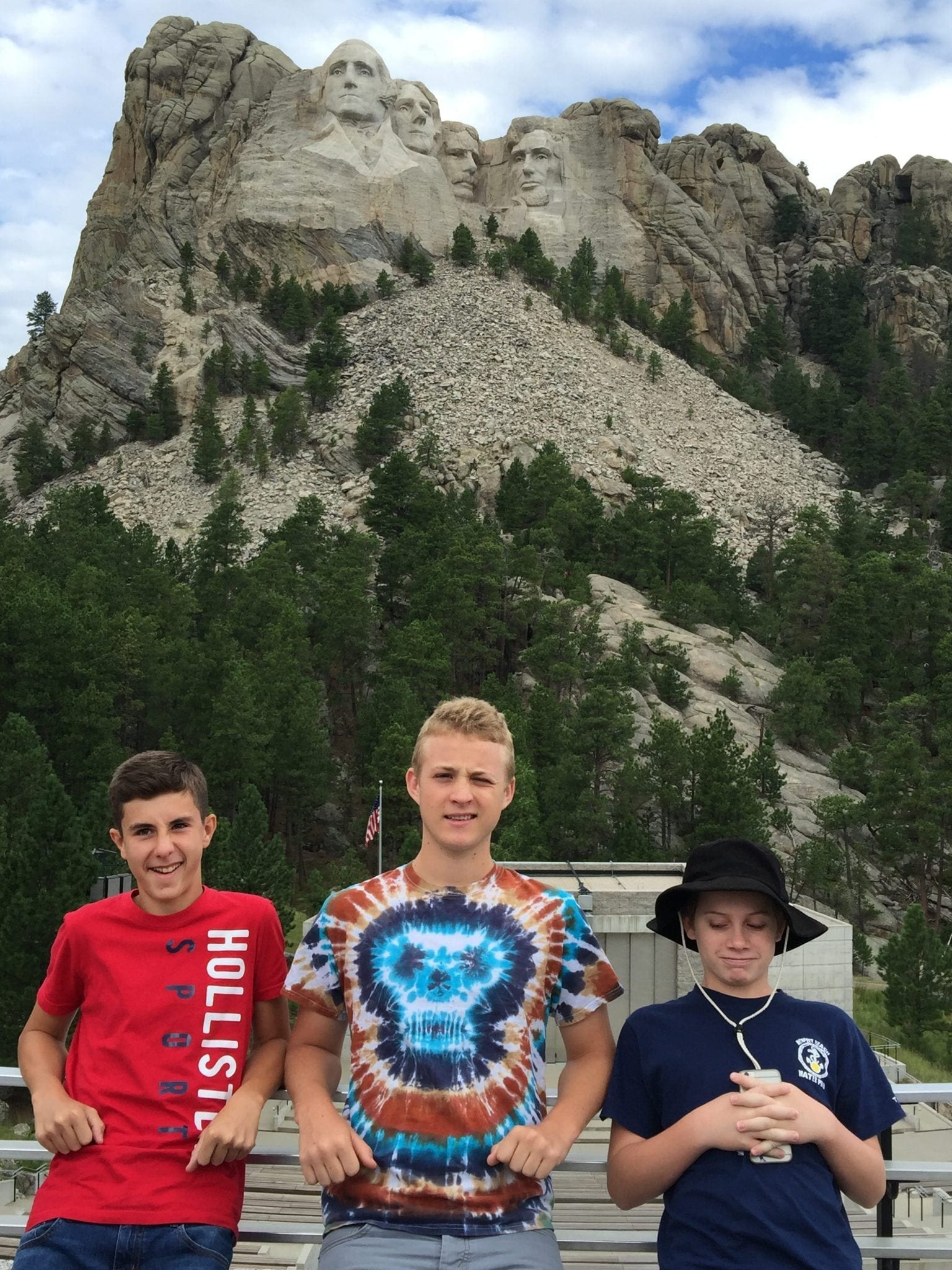
In Gettyburg, Pennsylvania Memorial Day, 2013
In Gettyburg, Pennsylvania
Memorial Day, 2013

I was thinking along these lines when I came up with the idea for The Homeschool History Project. Sean has spent many years studying history. He has studied American History and World History. We seek out historical sites and living history museums when we travel. This year he is going to apply what he has learned about the past to the world of today. He will actively engage in the history of now.

Two of the basic premises for history this year are:

  1. Large scale changes in history often occur through government action. This is not the only way historical change occurs, but it is what we are focusing on this year.
  2. The best way to learn how government works is by participating in it.

How does a high school student participate in government in a meaningful way? The truth is there aren’t many avenues open to them. Working for a political campaign is one of the few. By working for a political campaign, Sean will gain a better understanding of the issues important to government and the electorate. He will gain a practical working understanding of how elections work and why it is important to vote. Perhaps even more importantly, by investigating and researching candidates, issues, and political parties, he will learn what is most important to him with respect to the issues he will vote on in the future.

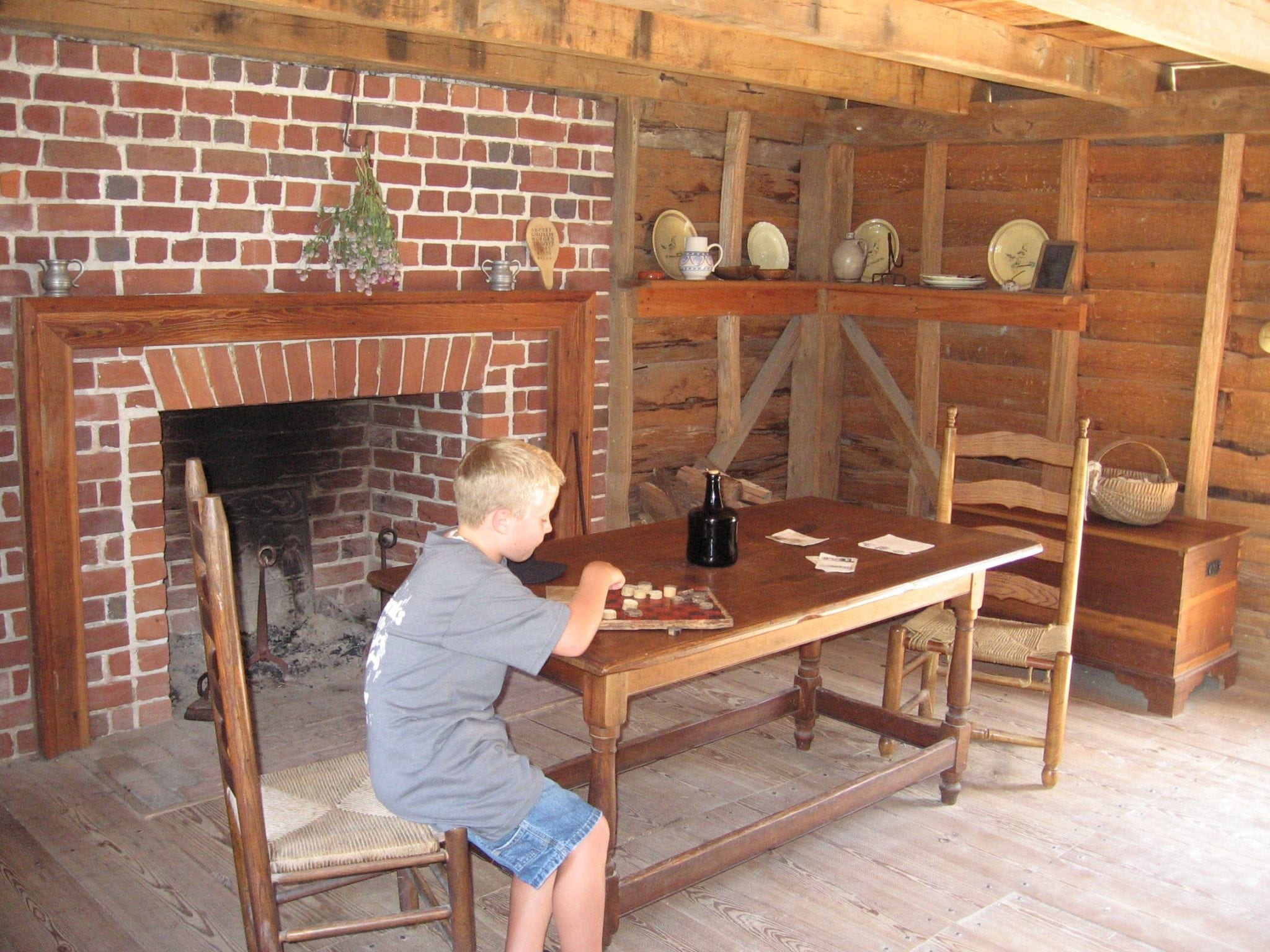
The living history Lexington, Massachusetts
The living history museum Lexington, Massachusetts

What Students Will Be Doing in This Course: A Tentative Schedule

This is not a final schedule. Nothing is set in stone. I expect there to be revisions over the next year.

  1. As candidates enter the primary, listen to the speech where they declare their candidacy and fill out the form at the end of this post.
  2. Months 1 and 2:
    • Thinkwell American Government
    • Choose a candidate. If the candidate does not make it out of the primary, Sean will have to switch candidates. He will sign up for a campaign during the first two months with an understanding that he will start working in earnest on the campaign in December. Volunteering will be in addition to the assigned written work.
  3. Months 3 through one month after the election
    • Each month, look at a specific issue or set of related issues. For example, the different parties’ platforms on scientific issues. Issues like stem cell research and climate change. On week one of the month, fill out a questionnaire looking at the issues. On week two look at how each candidate aligns with their party’s platform. On week three, look at the facts, without the politics, of these issues. On week four, write or discuss orally our opinions about these issues. We will also look at unions, lobbying, healthcare, the financial system, the ongoing wars, money in politics, foreign policy, and any other issues that are important to the electorate. The goal is to have some understanding of these issues by the end of this process.
    • Write a monthly blog piece about the candidates, issues, and our volunteer experiences.
    • Watch and discuss orally all the debates. Focus on the discussions with Sean being cogent, while adequately supporting opinions about the debate and the candidate’s positions. Use social media such as Facebook and twitter to comment on the debates. Read factcheck.org after the debates to see who was the most honest about their positions and their opponents’ positions on issues.
    • Create a photo journal for the final month of the election. Sean will be working hard enough on the campaign this month and won’t have time for much more than photo journaling.
The Homeschool History Project: Handcrafting High School: Year 2: American Government

In case you are wondering, I am not an expert on American politics or American government. I know more than Sean, but for most of this we will learn together. I think this adds strength to this course of study. We will use the Thinkwell course to come to an academic understanding of American government. In addition, I want Sean to see my opinions and positions grow and evolve as I come to a deeper understanding of issues, and as I watch the candidates in the debates and read what is written about them. I plan on exploring issues with him and discussing and taking positions as to which we each care most about. I will not be looking for Sean to mirror my positions. I want him to come to an understanding of what matters most to him. I have been careful to this point not to favor any candidate. Does it mean no bias has crept in? No, that is inevitable. Both my husband and I have similar views on most issues, and we often discuss our views.

I am glad these went out of style, LOL!
I wonder why these went out of style? LOL!

When I first came up with this idea I thought I would put together a group to do this. We will be doing this with or without a group. One other homeschooling mom is going to do this with us. If anyone else wants to participate in this, great, but it will definitely be a group effort. Frankly, I am too busy for it to be anything else. Here are the guidelines that must be met for participation with the group.

If you want to participate in this with us:

  • All political and religious affiliations are welcome. However, every person will have to sign a statement at the beginning of this course that they will be respectful of other’s differences. No flaming or bullying will be tolerated. We will leave that for political attack ads. If we can’t celebrate each other’s differences, we will need to at least respect them.
  • There will be some requirements for the parents of each student. Do not sign up for this unless you, the parent, are willing to do some of the teaching of this course. You will also have to commit to either working on the campaign with your student, or at a minimum, making sure they get to their commitments over the course of the year. It is also expected that you make sure your student is doing the work. It is up to the parent, not me or the other students to make sure your student is doing the work.
  • Even though I am the person starting this group, I am not in charge of this group.
  • You do not need to know me personally to be considered for this group.
  • It is a requirement for this course that all adults the student lives with commit to voting in the 2016 election. Because this course is about American government and how it functions, it is critical that you as a parent set a positive example for your student.
  • Students can choose any candidate they want, with the exception of candidates who support voter suppression of any kind. Voter suppression disillusions and disenfranchises young people. The purpose of this project is to empower young people not the opposite.
https://seahomeschoolers.com
I think the Founding Father’s would be shocked by the low voter turnout in the United States.

It feels a little funny to openly discuss our political preferences, but Sean doesn’t share my reservations.

candidate form

Check out my post on handcrafting 10th grade here.


Handcrafting 10th grade: The Plan for 2015/2016

Handcrafting 10th grade

Eclectic? Absolutely! Academic? Of Course! Innovative? You Know It!

It’s Organic, Too! (I am a chemist, after all! ;-))

History: American government & politics with writing

History and the upcoming election will be the main focus this year.

Computer Science

  • Work for Thoughtstem, http://www.thoughtstem.com/home
  • I let Sean choose between designing a website by himself that will be live by the end of the school year, 2016, or take a series of three courses at UCSD Extension focusing on learning to program in HTML and CSS. He chose designing a website. He already has put in some time on The Homeschool History Project website, and he is enjoying the project. It was getting to be too much to do everything and something had to give. He wants to focus on politics and crew this year, and I can’t blame him. I do to, at least the politics part.

Lit analysis

These will be in addition to the book club books. These are not in the order that they will be read. Before I tell you what the list is, I thought you might be interested in the process I use to decide what books are going to read over the course of a year. I look for books with content that is relevant to what we are studying. I narrow these down based on the quality of the writing, and how likely someone of Sean’s age is to get through the material.

Blog

Write a weekly blog post for Sean’s blog WiseBread, https://wisestbread.wordpress.com/2015/05/, about the following topics

  • Once a month – the election and volunteering
  • Once a month – homeschooling
  • Twice a month – Sean will choose the topic

Thinkwell geometry

http://www.thinkwellhomeschool.com/products/geometry

Crew

It is the first year on the varsity team! http://www.sdrcjrs.com/

Geology

There are several components to this.

  • We will be using my text along with a text I found that uses data analysis for situations in geology. The book has students work through and interpret the data. This logical analysis of science data will be a great compliment to what we are doing in politics.
  • Sean will be scripting, producing, and directing 10 min. videos of me going over the more difficult topics from each chapter.
  • Sean will be editing my final draft of Astronomy and Earth Science 2 as he works through it.

There are four academic pursuits that will be woven throughout all of the above

  • Analyzing written material and pulling meaning from it
  • Tight writing
  • Being able to formulate an opinion and state that opinion clearly while using supporting statements
  • Work on the skill of logically analyzing written and oral arguments where someone is trying to convince you of something. Try to ferret out when someone states an opinion as if it is a fact. Pay attention to the logical process used to form the opinion and how well the facts support the opinion. Study the quality of the sources used to support the argument.

I am not sure exactly what, but something with Thom Jones at Crime Scene Camps, http://www.crimescenecamps.com/onlineclasses.html. I promise you, I am not getting free classes or materials from Thom. His classes are that good!

 FYI, Homeschooling High School Rocks!

Check out this Real Science Odyssey Lab Photo Journal here.


The Friendly American

Travel

The Friendly American

When I travel, I have one trait that identifies me right away as an American. I am the friendly type. Americans are known for being friendly when we travel, and we are known for looking at the world as if everything is amazing and awesome! Even for an American, I can be alarmingly sunny and friendly. And I am sorry if it offends, but I do think the world is a superlative place. I am also extremely extroverted. I can’t help it. It just bubbles out of me most of the time. My personality is like opening a bottle of warm soda on a hot day. Try as you might to prevent it, the soda bubbles out of the bottle and onto the counter and floor when you open it.

How well this is received depends on the country. One of the reasons I like India so much is that by and large the people are as friendly as I am. They’re not quite as in-your-face about it though. If you are an observer, and I am, I sometimes see people cringe a bit as I smile hugely and start speaking with enthusiasm. When this happens I thoughtfully tone it down. I am a visitor to their country after all. I wonder if people who are bothered by this trait in American travelers assume it is provincial and quaint. This trait isn’t quaint or provincial though. I was born the sunny type; it’s just my nature. I have been through a lot in my life, and I have resolutely decided to be happy and embrace life. The teachings of Victor Frankel, who was not an American, had a big impact on how I approach life. You cannot have one second of it back, so you might as well enjoy those seconds.

As the Dalai Lama said, when asked what surprised him about humanity the most:

“Man. Because he sacrifices his health in order to make money. Then he sacrifices money to recuperate his health. And then he is so anxious about the future that he does not enjoy the present; the result being that he does not live in the present or the future; he lives as if he is never going to die, and then dies having never really lived.”

Any time you can quote the Dalai Lama to support your point, you know you’re on the right track ;-). Like the Dalai Lama I work to live in the present and enjoy it while I am living in it.

Actually I am leaving out the other trait that quickly sets us apart as Americans. We tip. Americans do not realize what a rarity this trait is until they travel outside the United States. It is the reason that despite our offensively, overt sunniness other cultures are welcoming to us. It sounds a little strange, doesn’t it? It is as if Americans are bribing other cultures to allow us to visit, learn about them, and be as friendly as we want while we do it. My favorite word for this is baksheesh, which is defined as a small sum of money given as alms, a tip, or bribe. It covers all the possibilities.

You can look for me in Spain in three weeks. I’ll be the one giving baksheesh to waiters with a smile on my face :-).

Check out my next post about our trip here and check out our post from Peru here.


Handcrafting High School: Year 1, Month 8

Handcrafting High School: Year 1, Month 8

What a crazy month April was. We moved for the third time since the summer of 2012, and we aren’t in the military. First we moved from the mountains to San Diego where there is a larger homeschool community. That house was too far inland, so we moved closer to the coast. That house was too far from rowing and our adult kids, so we moved closer to both. As you can imagine our friends and family think we’re crazy, or that we really like to move. I feel the feather in Forrest Gump. In addition to moving, we spent time on the road at away races. We have a new granddaughter/niece (depending on who you’re talking to.) I wrote a blog article that led to the formation of a new group, Secular, Eclectic, Academic Homeschoolers, which has kept me busy. I have also been working on instructions for the illustrator for Astronomy and Earth Science, and anytime I read over my work I edit it. It’s enough to keep even an energizer bunny like me busy!

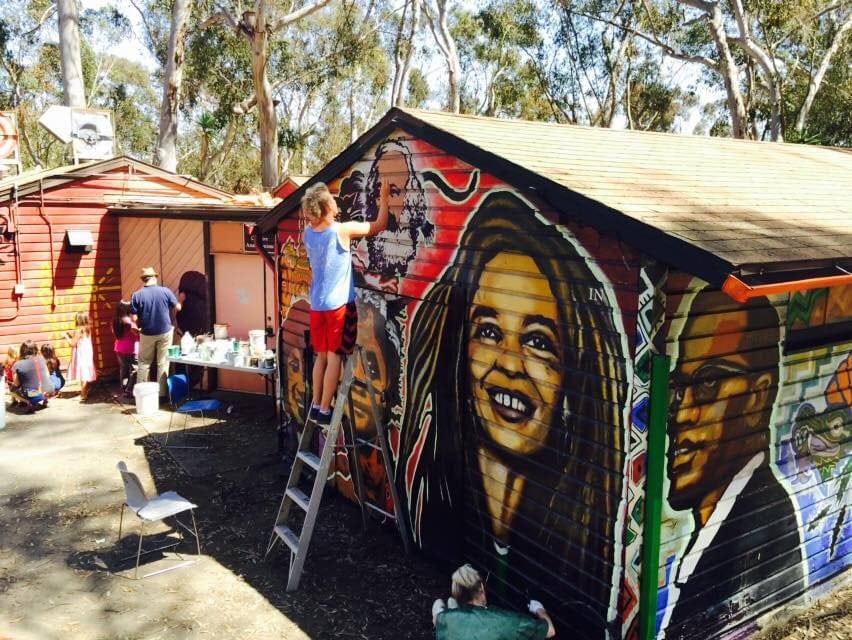
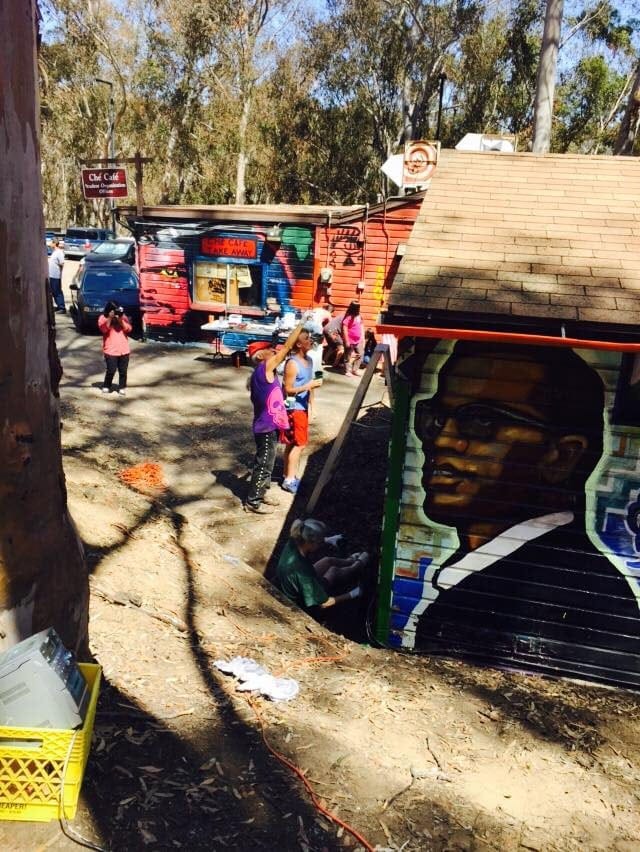
We took time this month to stop at the Che Cafe to help paint. A good friend of ours is leading the effort to save the building for demolition. They invited Sean to come paint with the muralist Mario Torero, http://www.fuerzamundo.org/paintings/murals/

Handcrafting High School: Computer Science

Last month Sean began writing the code to design a website. He continued working on and enjoying that project. He also signed himself up for the Coursera Course: Malicious Software and Its Underground Economy: Two Sides to Every Story, https://www.coursera.org/course/malsoftware. The professor teaching it, Dr. Lorenzo Cavallero, assigns technical academic reading from peer-reviewed journals each week of the six-week class. This gave me the opportunity to work with Sean on how to read technical academic writing. I had several professors in college assign scientific papers to be read and disseminated. It is a skilled type of reading that most people outside of scientific communities don’t have much experience with. That’s too bad, because many issues we make decisions about in our personal life are based on the findings of scientists. If you aren’t able to understand what scientists are talking about in their writings, then you have to rely on others to interpret those writings for you. That said, I’m a scientist, and it didn’t occur to me until this week that I should start working with Sean so that he has experience with this type of skilled reading. If you’re wondering what he thinks of the readings, he finds them dry, very dry. Sean is slogging through them though. When he finishes an article, I have him explain to me what the authors’ points are and what the focus of their study is. I was very pleased with his answers. (Even though, I didn’t really understand what he was talking about. Seriously, botnets?!?) Here is a link to an article someone sent me about how to read scientific papers. I didn’t use it, because I had already finished tutoring Sean on how to do it, but I read it and thought it was good. http://violentmetaphors.com/2013/08/25/how-to-read-and-understand-a-scientific-paper-2/.

Handcrafting High School: Math

This year math has clicked for Sean. He calls it his easy subject. It began when he started using a calculator for simple calculations. Once those sort of simple calculations were out of the way, Sean gained more confidence, because he could see he was good at the more difficult steps. It has been frustrating over the years to deal with this. I have told him for years he is better at math than he thinks he is. He saw that he got the problem incorrect without recognizing he did everything correct except calculate 5*7 correctly. (For some reason 5*7 is often a problem for him.) So he thought he was bad at math. The complicated, multi-stepped problems that he knows he has to pay attention to, he does well at. The problems that focused on simple calculations, he would often get wrong.

It took me a while, but I have come to be much more accepting of computerized systems in our homeschool. Why not use Dragon software for dictation if you struggle with handwriting, a calculator if you struggle with simple calculations, spell check or grammar check if those are weak areas for you? I’m not suggesting people don’t learn basic math, spelling, or grammar. I’m suggesting that if a student is struggling with a subject there is an argument to be made for eliminating the specific area they’re struggling with to focus on the larger picture. Students can continue to work on the areas they’re struggling with separately. Although you know if you follow this blog, I told Sean that unless he took the time on his own he was never going to have his multiplication tables mastered, and we left those behind. At some point, life is too short.

Sean is getting instructions from Mario.

Handcrafting High School: Science

This was an interesting month in science for us. Last month we decided to spend the rest of this school year studying astronomy. At the beginning of this month I gave Sean a list of astronomy questions to answer. These were in areas he expressed interest in previously. He researched the answer to each question and then worked on writing strong paragraphs with good topic sentences to answer them.

While Sean worked on this, I looked over the text I am writing to make sure it was realistic to use it as a high school level course. As I have said before, astronomy, cosmology, and earth science could easily be called applied physics and chemistry. By including more applied math, and some more technical modeling exercises it was surprisingly easy to bring Astronomy and Earth Science 2 to a high school level. Interestingly, I found myself in conversation with someone who was a very well regarded high school physics and chemistry teacher. She is now running the science department for a private school in California. When I told her what I had been working on her response was, “That makes sense. There isn’t much difference between high school and middle school labs. If you included more math and focused on modeling and data analysis, you could definitely use a middle school course for high school.” It is interesting how often these sort of coincidences happen in life, isn’t it 😉

Sean spent the last part of the month reviewing the early chapters in astronomy, but this time with more math, focused modeling and data analysis, and with research questions woven through. We were both happy with the results.

Handcrafting High School: Language Arts

The focus of language arts this month was on nonfiction writing and reading. Most of Sean’s language arts has not focused on nonfiction writing, because he prefers fiction. I warned him the focus on nonfiction writing and reading would be the situation through most of 10th grade. As usual when asked to do something that is not his ideal choice, he grumbled a bit and then with his characteristic good humor got on with the task at hand. It helped that I had him focus on 3 areas that interest him.

  1. Astronomy: He researched and wrote about parallel universes, dark matter, and black holes.
  2. Volunteer/Travel: He spent time learning more about the Oglala Lakota tribe and the situation on the Pine Ridge Reservation, which is an interesting but depressing topic.
  3. Politics: As with science, I gave him a series of questions to research and write about. Here is a list of the questions. I told him that if he had any problems filling these out, he should call the local Democratic or Republican headquarters and they would be able to help him answer the questions. (I am sorry to share these and not the astronomy questions, but I keep all my original work very close to my chest until it is published.)
    • What are the names of all the political parties who ran a candidate in the 2012 presidential election?
    • How many of these parties already have a declared candidate as of 4\16\2015?
    • What are the names of the candidates who have already declared their candidacy?
    • What is the procedure for declaring your candidacy for president?
    • Are there differences for declaring your candidacy depending on your party affiliation?
    • Are there differences for declaring your candidacy depending on the state you are from?
    • Does it cost money to declare your candidacy? If yes how much? If yes, what do you think about this policy? If no, do you think there should be a fee? We will be discussing your answer to this. I will be taking the opposite position, so be prepared to defend and discuss your position.
    • What does the term platform mean when referring to politics?
    • A lot of strategizing goes into how a candidate runs their campaign. What do you think the thinking is for someone who declares their candidacy early, or first?
    • Some candidates are predicted right away to have a good shot at winning, and others are predicted to have no shot at winning. It costs a lot of money, both your own and donated, to run for president. Why would anyone donate money to someone who is not predicted to win? (Hint: think about platform issues.)
    • Conservative Republicans are saying that Hillary Clinton is anti-homeschool. Is that what she said though? Let’s watch and see what we think, http://www.c-span.org/video/?325353-1/hillary-clinton-education-roundtable-iowa.
    • This sort of spin happens to all candidates. What do you think the effect of misleading or untrue spin is on people’s attitudes toward the political process as a whole?

Sean also signed up for the Coursera Course Online Gamers: Literature, The New Media, and Narrative. He really wanted to take this. This course requires Sean to read Lord of the Rings, play the online game called LOTRO, and possibly do some writing. I’m not completely sure about that. This course started at the very end of the month. We will see how it goes. As long as he can get to all his other subjects, he can keep on doing this one, https://www.coursera.org/course/onlinegames. It’s a good course, but I think Sean might have signed up for it so he has an academic excuse to play video games 😉

Handcrafting High School: History, Law, and Unsolved Crimes

We continued to work on and review Pandia’s Level 3 American History course. We should have been done with it, but Sean got sidetracked studying about the plight of Indigenous People’s. We are taking this area of study slow; because the injustices done to them make him so angry, it can sidetrack the day.

Sean started a new course through Crime Scene Camps. We are going to be sorry when Sean has taken all of Thom’s courses. They are so good, and Thom is a master at focusing in and digging deeper. We use the courses for discussion purposes. I haven’t had Sean do anything beyond reading and discussing them with Thom and me. Sean has learned so much through them. The new course is Unsolved Crimes. So far Sean has learned about Jack the Ripper and Lizzie Borden. This class is fun! I am reading along with him!

Here is the description of the course from Thom’s website.

Unsolved Crimes:  Update–In my work on the Zodiac case, I have uncovered new clues that have never been discussed previously.  The first place I shared this information was with my current homeschool session of this course.  This course is a homeschool version of one of my most popular college courses.  We will look at iconic unsolved crimes and apply modern techniques to our analysis of each case.  Each week, we will read about one of the cases, do our own research, and then discuss various hypotheses.  The cases covered will include Jack the Ripper, Lizzie Borden, The Black Dahlia, The Zodiac, the Lindbergh Kidnapping, and others.  While some of these cases have a high level of violence, I tone it down, even in my college classes.  I am more interested in solving the forensic puzzle.

Handcrafting High School: Crew

Jim and I chaperoned one of the away races this month. It was a blast. I rode on the girls’ bus and Jim rode up on the boys’ bus. We left the clubhouse at 4 a.m. I sat right behind the driver. I should tell you that I am an early riser. I am also the type of person to ask about and honestly want to hear the story of someone’s life. While every other person on the bus tried to sleep, I learned about the driver’s interesting and inspiring life. He had been violent in his youth and had been in and out of prison because of it. Somewhere along the line he turned his life around. He has done a good job of raising his children and the children of his various girlfriends and wives. He is still close to all of the children even the ones that are not his. He helped any of them who wanted to go to college to do so. One of the times when he was in prison, one of his ex-girlfriend had twins without letting him know. When the twins were 3, he was contacted by the state of California to pay child support for them. At that time the twins were homeless. This was the first he knew about them. He fought for and was granted custody of them. Even as I realized that his voice was very loud, and that there was grumbling on the bus all around me, I did not stop him in his story. It really was that interesting, and I am not good at stopping people when they are on a roll. I lost my privilege of riding behind the bus driver forever! LOL‼

For the first time since he joined the team, Sean experienced burnout. It lasted about a week. The week before he loved crew and wanted to go to a college with a crew team. The following week he was done with crew and didn’t want to ever row again. The next week he loved crew and wanted to go to a college with the crew team. This used to happen toward the end of the ski season too. Crew has a nine month season. It is probably lucky that April was month eight of the season.

We have 4 weeks of school before we leave for Spain. Beginning on the 27th of May we leave for Spain. I will be blogging every day about our travels.

Check out month seven here and month nine here.


Time to Focus: Week 2 through 4, Grade School Writing

Fourth Grade Writing

A Handcrafted Education:

It’s Innovative, It’s Eclectic, It’s Academic, It’s Homeschooling

The next three weeks Sean worked on narrowing the focus of his writing. I like to call writing with a narrow focus “tight writing”. This skill is particularly important in non-fiction writing. Writing that is too loose plagues even experienced adult writers 😉 Sometimes when I am having trouble with a chapter I have to vomit everything I know about the topic onto the page. It is as if I cannot focus down without getting it all out. Even when it is clear and cohesive though, it doesn’t make for good writing. There is too much information. It is the same problem kids have, except without my skill with the delete button. (I have many, many times erased pages worth of writing.) Kids come to understand that it is good and important to acquire large amounts of knowledge. It makes complete sense that they want to demonstrate how much knowledge they have acquired when they write. The only problem with that is it makes it hard to write a focused piece, and most writing is best when it is focused.

In case you are beginning to wonder, there wasn’t much writing being done this first month. I think it is a better approach to take some of the important writing strategies and focus on them separately. It emphasizes the importance of thinking about the strategies when writing and helps minimize distractions away from learning about these strategies. In addition, Sean worked on writing strong sentences. I didn’t call them topic sentences at the time, but that’s what they would have been in a larger piece of writing.

There were a couple of times during the month when I wasn’t sure about this approach where we looked at letters, and then discussed words, and then discussed how you take those words to build one strong sentence. It didn’t feel like there was enough writing going on, and it felt like I was dumbing down the class. That didn’t turn out to be the case, but I thought I should tell you in case you’re reading this and thinking that this approach is more appropriate for let’s say a second grader. The irony of me putting together this series is that Sean and I are going to spend the last part of this year, 2015, revisiting what we did in one year of writing while Sean was in the elementary grades. It is going to be more advanced, and more on his level, but after reading my last blog piece, Sean thought it would be fun to go back and re-look at this.

Writing Month 1: Week 2: The forest and the tree

Day 1: Keeping in line with the artistic approach to language arts, the week started with me asking Sean to draw or paint a forest. I gave him no more information than that. I gave him an hour or so to do it. I painted along with him. In fact this month, I did the same exercises I was asking him to do. I did that so I could think through the process I was using and discuss the process with him. I also did it in case the lesson wasn’t hitting the mark I hoped it would when I thought it up. That way if I needed to explain it more or differently as he went along I would know right away to do that. After he painted the forest I asked him to write 1 strong sentence describing the forest, with 3 facts in it. As I said, we worked on this together with both of us creating our own sentence.

Day 2: We drew or painted one of the trees in the forest. Then I asked him to write 1 strong sentence describing the tree with 3 facts in it. It was easier to draw 1 tree versus a forest, and much easier to come up with a strong sentence describing the tree. That was the point of the exercise. I wasn’t sure if he would understand that from this. If he didn’t, I was planning on drawing a leaf the next day.

Day 3: We lived in a remote area, so we had to do this online. Otherwise we would have gone to a museum. We looked at a series of artwork. We discussed the techniques used by visual artists to bring focus to specific points on their canvases.  Sean wrote a topic sentence that went similar to, “Artists focus attention by” (and then he listed 3 strategies he observed).

Day 4: We went to the library and looked online to study how diaspora in history have affected families. Sean got into it and spent several hours studying this. I asked him to write one strong sentence with three pieces of information in it about the effects of diaspora on families. He couldn’t. He had too many things running through his mind to narrow it down, so the two of us wrote a sentence together. We spent a lot of time discussing what to include and what to leave out. Then we finished the week by watching Fiddler on the Roof. (Were you wondering why I chose diaspora?) I love musicals. That one has been one of my favorites since I was a little girl and saw it on Broadway. In case you aren’t familiar with Fiddler on the Roof, one of the central events in the play is a pogrom, and I treated the pogrom as a mini-diaspora. After that we both wrote a strong sentence with no problem about the effects of diaspora on families. We discussed how much easier it was to understand and communicate something when you focused and limited the amount of information. We also discussed the choice the playwright made when taking serious subjects such as diaspora, anti-Semitism, and depriving people of their liberty and property and making a musical instead of a drama. When teaching writing I think it is important to take a step back from time to time and discuss the decision the author made for the type of writing used to portray their message. We spent a lot of time reading Shel Silverstein as well. He often takes serious subjects to write about in his poetry.

Writing Month 1: Week 3

Now that I had made my point about the importance of narrowing your focus when you write, it was time to help Sean learn strategies for how to do that. The strategy we worked on this week was narrowing the focus of writing with descriptive language.

Day 1: I used trains from the Thomas the Tank Engine set we still had lying around. You could use My Little Ponies or all sorts of things, but your child needs to know a lot about what you chose. You need three things that are the same (i.e. ponies or trains), with each having a different appearance. Sean and I each wrote yet another sentence, this time about the trains (but not a train) in the Thomas the Tank series. Then I put the 3 trains on the table and we discussed visual differences between them. I wrote the descriptive differences down for Sean on the white board and left them there. We discussed how differences in color and shape made one train appear happy and another grumpy. We discussed how word choices in a story determine the personality you think a character has. Next we read a story in the Thomas series discussing what noticed. Then we watched a cartoon with Thomas. In addition to appearance we discussed how speed and movement was depicted differently to create mood and indicate a specific focus for a character. I explained to him how much thought goes into these types of descriptive choices when designing products such as toys.

Day 2: I told Sean that we were going to pretend that we had both been hired to design a new train for the Thomas the Tank Engine series. We were given complete artistic control about the mood and personality of the train. Each of us needed to write down three characteristics describing the mood and personality of the train we were going to design. We did not share the descriptions with each other. These were just simple notes; no sentences needed, and the spelling did not need to be perfect. We each needed to create with clay the prototype for the train as we had described it on our paper. The reason for having him make it with clay was that I wanted to give Sean the opportunity to use a different artistic medium, one that required more tactile manipulation. We discussed that we made one general structure for the train and then we began adding details to make it specific. As we were working we talked about how much more interesting the train we were creating became as we added more specific information to it, i.e. doing little things to it to help create the mood or personality we wanted to convey. Next we shared our representations with each other. Based on the prototype we each wrote one strong sentence telling three things that we guessed about the mood and personality of our character. Then we shared what our original intent was for the mood and personality for our train.

Neither of us got it exactly correct for what the other was trying to represent. We discussed how there is interpretation both with words and other forms of art. Then we discussed ways that we could revise our trains to make it more specific so that the artist’s vision for what the train would look like would be more specific and therefore easier for others to figure out.

Day 3: I started by looking up the word dragon in the dictionary. We discussed, yet again, how this sort of bland definition was boring. It’s boring to read, and it’s boring to write. I turned to one of my favorite authors when it comes to tight descriptive writing, someone who is never boring to read, J. K. Rowling. I used her descriptions of the four dragons from the first challenge of the Tri-Wizards Tournament from the book Harry Potter and the Goblet of Fire, pp 325 with the word Dragons through the next 2 pages, pp 326 and 327, of the hardcover book. We discussed how tight, well-described passages are much more interesting. We also discussed that dictionaries should have the more generalized albeit less-interesting description in them 😉

Then we each wrote a descriptive paragraph of a dragon we each invented. The paragraph was a rough draft. We discussed word choices for making our writing tight, and descriptions specific.

Day 4: We edited our paragraphs so that the topic sentences were strong, and the writing was tight. We did not edit our writing for other errors, and I made sure to keep my writing at a similar level to Sean’s. It wasn’t hard because we brainstormed together, and I asked Sean for his advice a couple of times. I also asked him for help on specific word choices, such as, “Do you think it sounds scarier if I say the teeth were “like sharp needles that could pierce armor” or “pointed and dripping green blood”?”

In case you are wondering we were using Sequential Spelling for spelling, and using the occasional grammar worksheet to keep those lessons learned. We used Word Roots for vocabulary.

Writing Month 1: Week 4

We spent this week using facts to focus writing. We also looked at how much easier it is to write about a topic the more specific the topic is. Over the four days of writing we used the table below. (I did use my book, RSO Chemistry 1 for this for Sean, but you could use something else. For myself, I substituted the words 1. vehicle, 2. car, 3. Ford, and 4. Mustang because I know very little about cars.) We both started each day writing the sentence on the left without reading anything. Then we read a passage and wrote a sentence using specific facts from the passage.

Day 1: The topic was chemistry.

Day 2: The topic was matter.

Day 3: The topic was atoms.

Day 4: The topic was hydrogen atom.

Write a sentence about chemistry Now read the assigned passage and use facts you learned to write a sentence about chemistry
Write a sentence about matter Now read the assigned passage and use facts you learned to write a sentence about matter
Write a sentence about atoms Now read the assigned passage and use facts you learned to write a sentence about atoms
Write a sentence about hydrogen atom Now read the assigned passage and use facts you learned to write a sentence about hydrogen atom

The posts in this series are from my notes when I thought all this up 5 1/2 years ago.

For more homeschooling tips, check out the FREE SEA Homeschoolers Magazine here!


Moray and Maras, Cusco, Peru, Day 5 of Our Trip

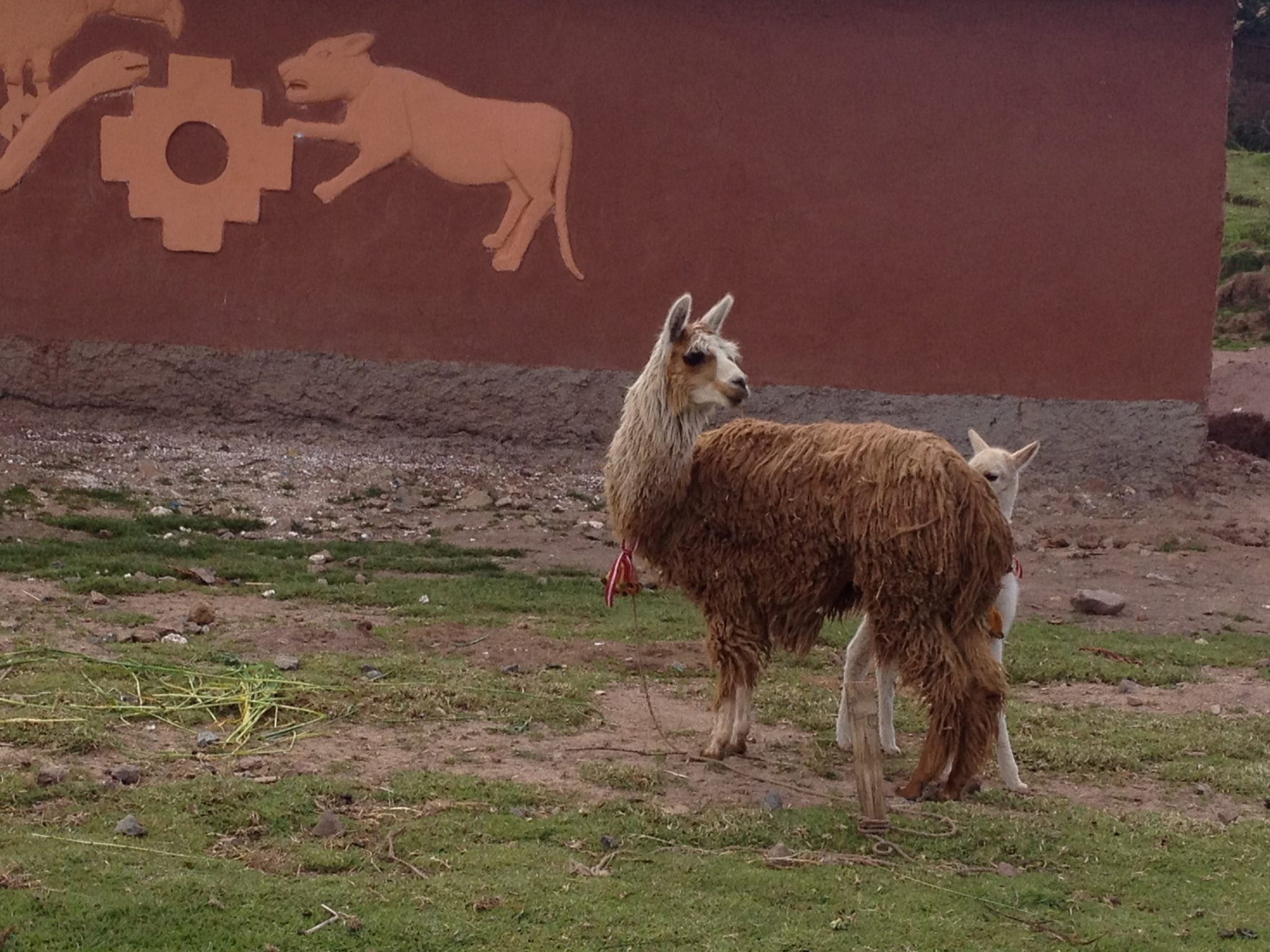
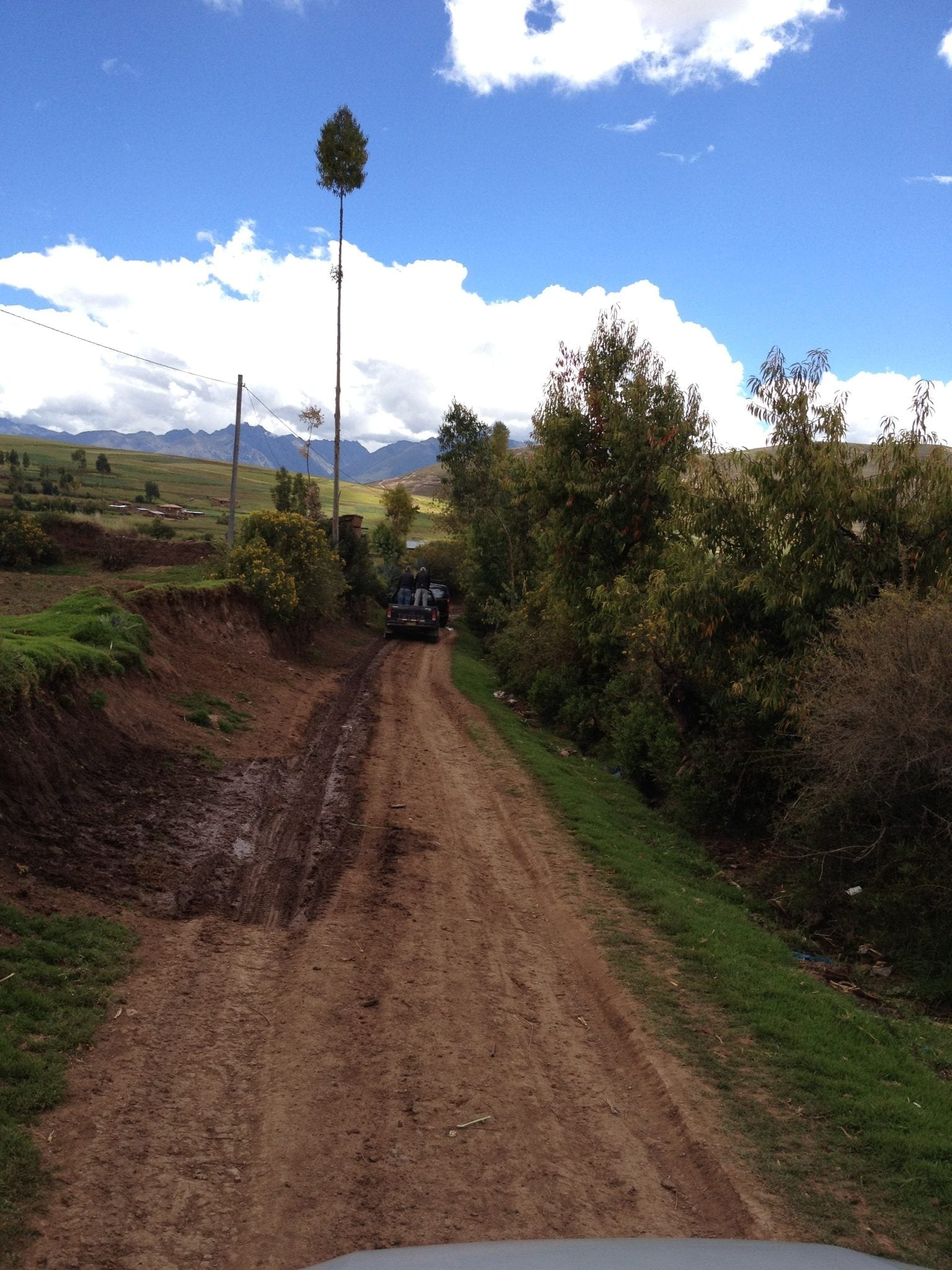
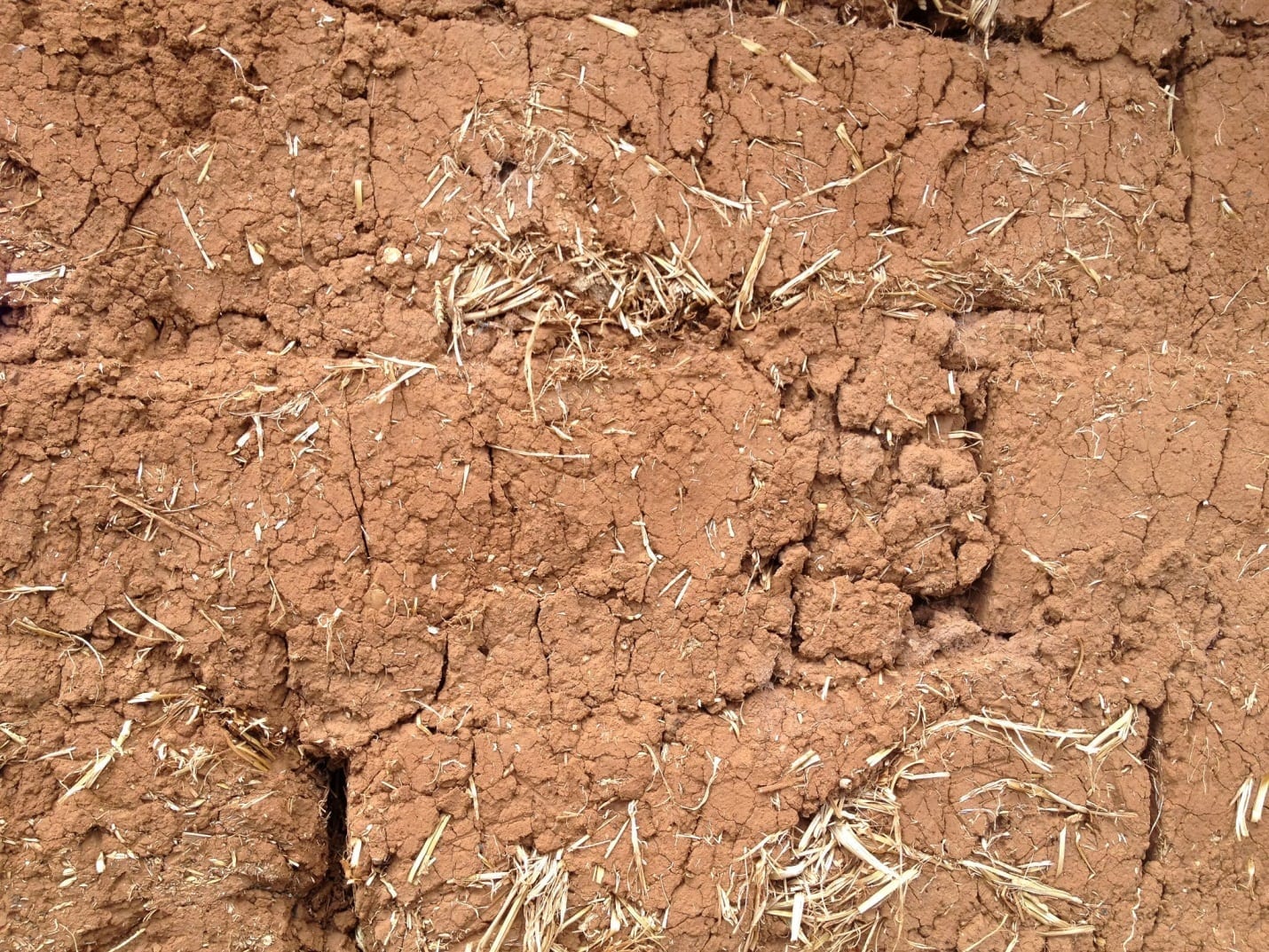
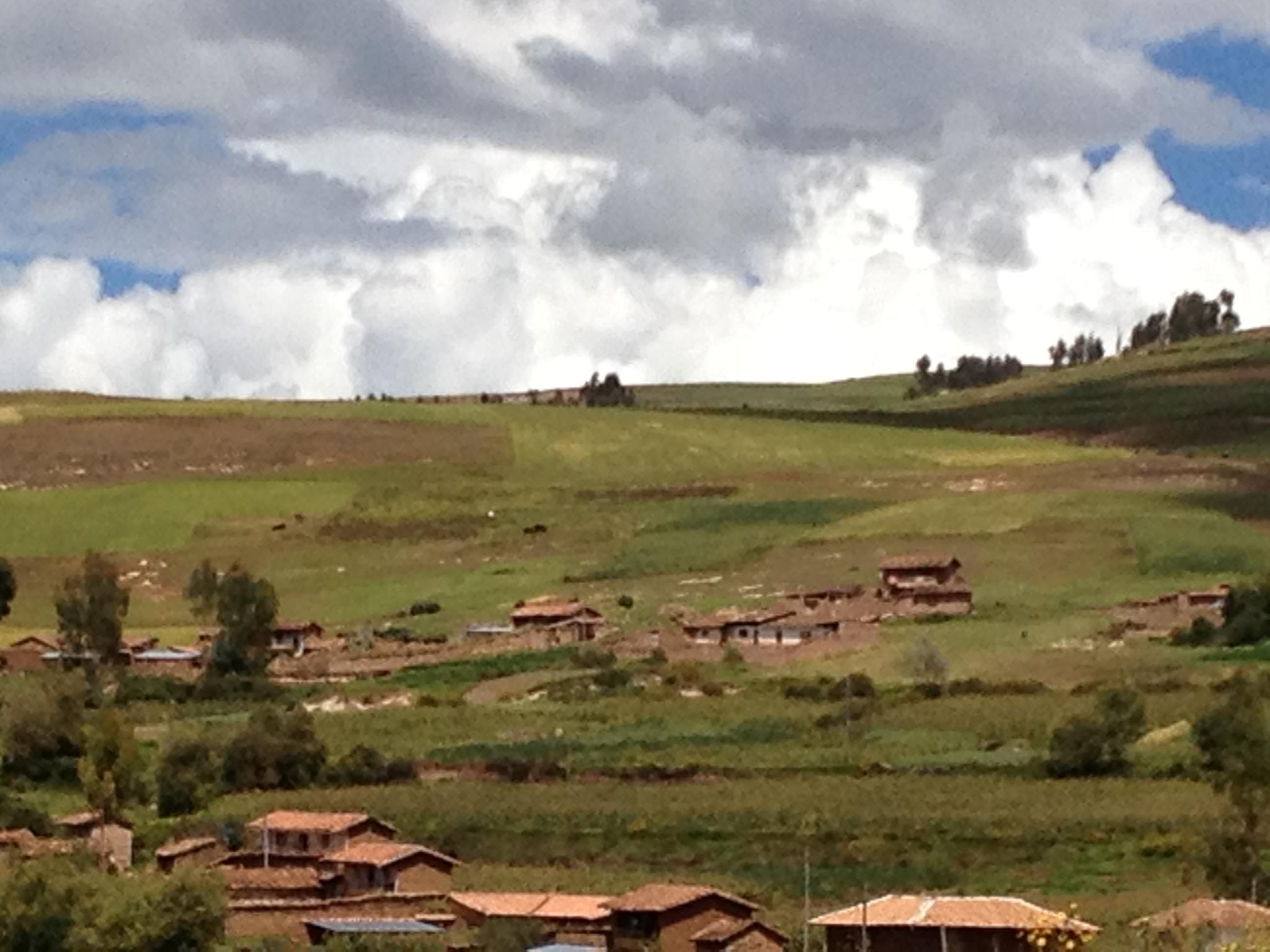
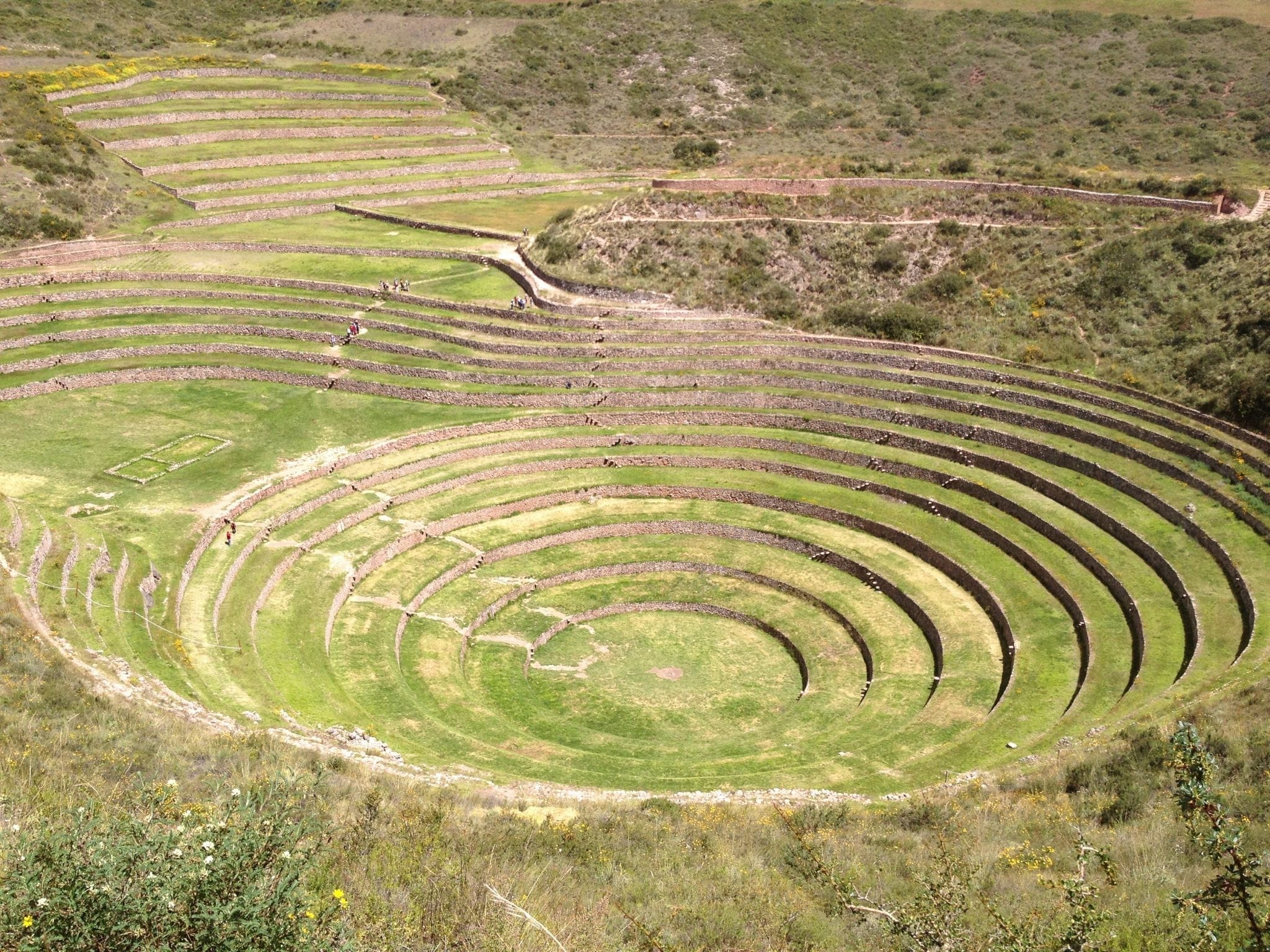
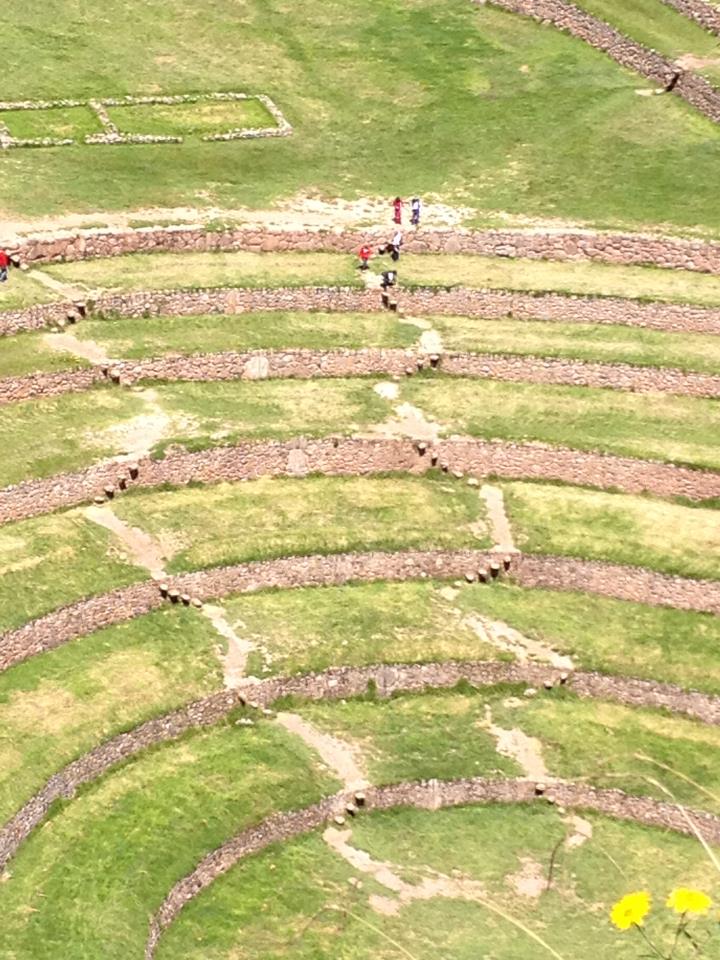
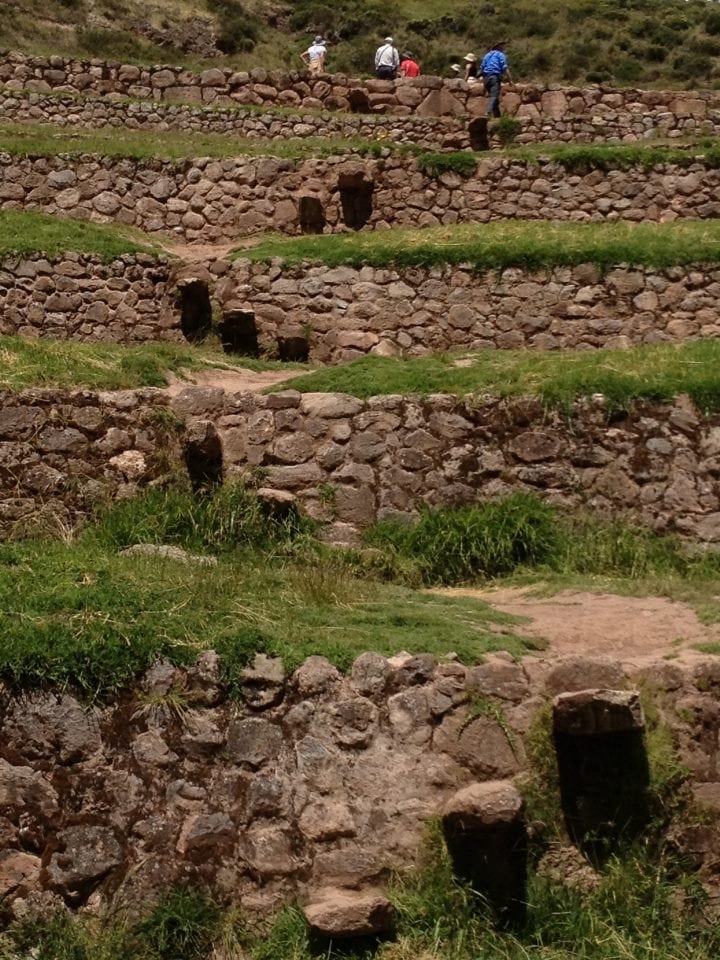
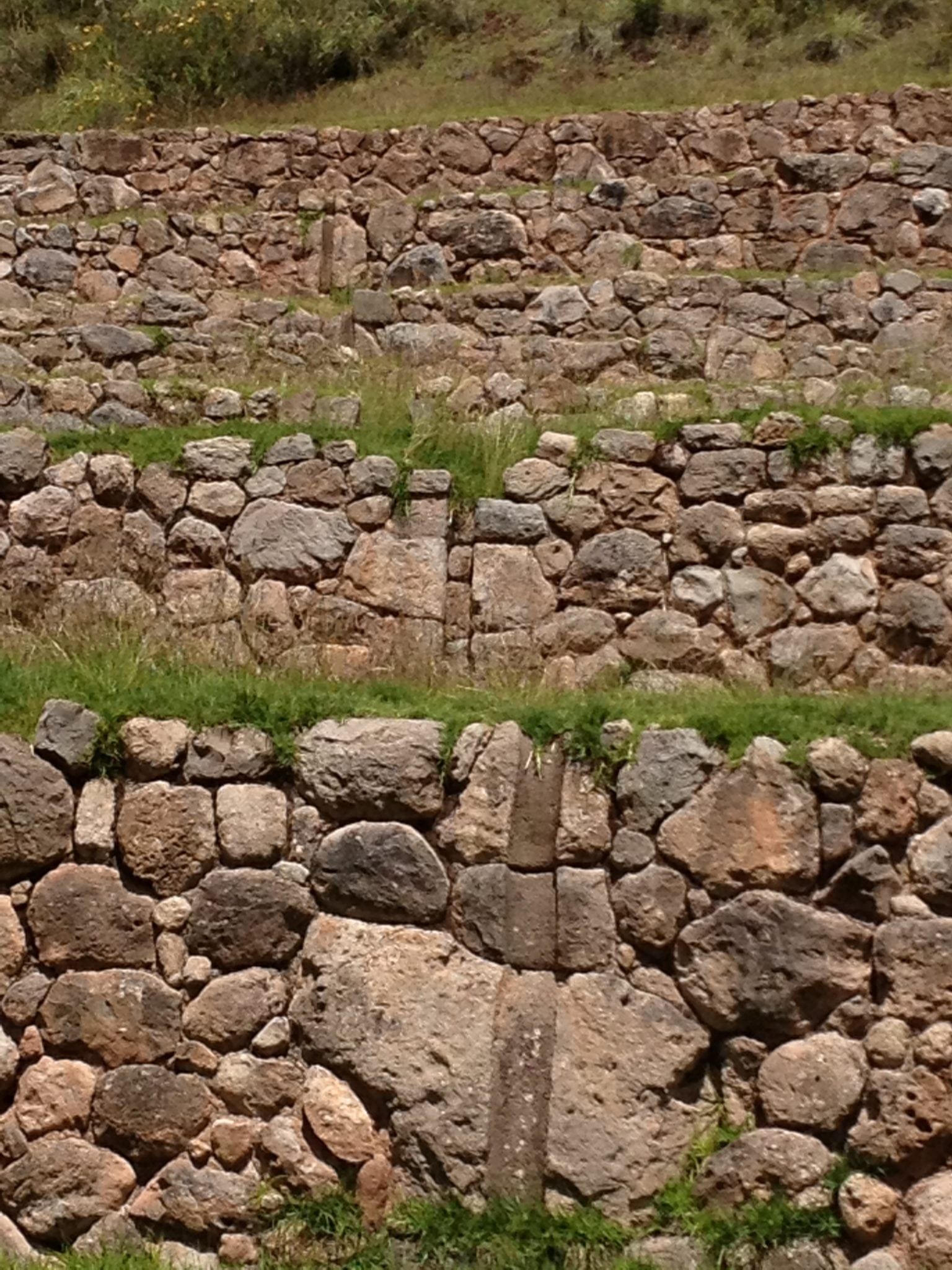
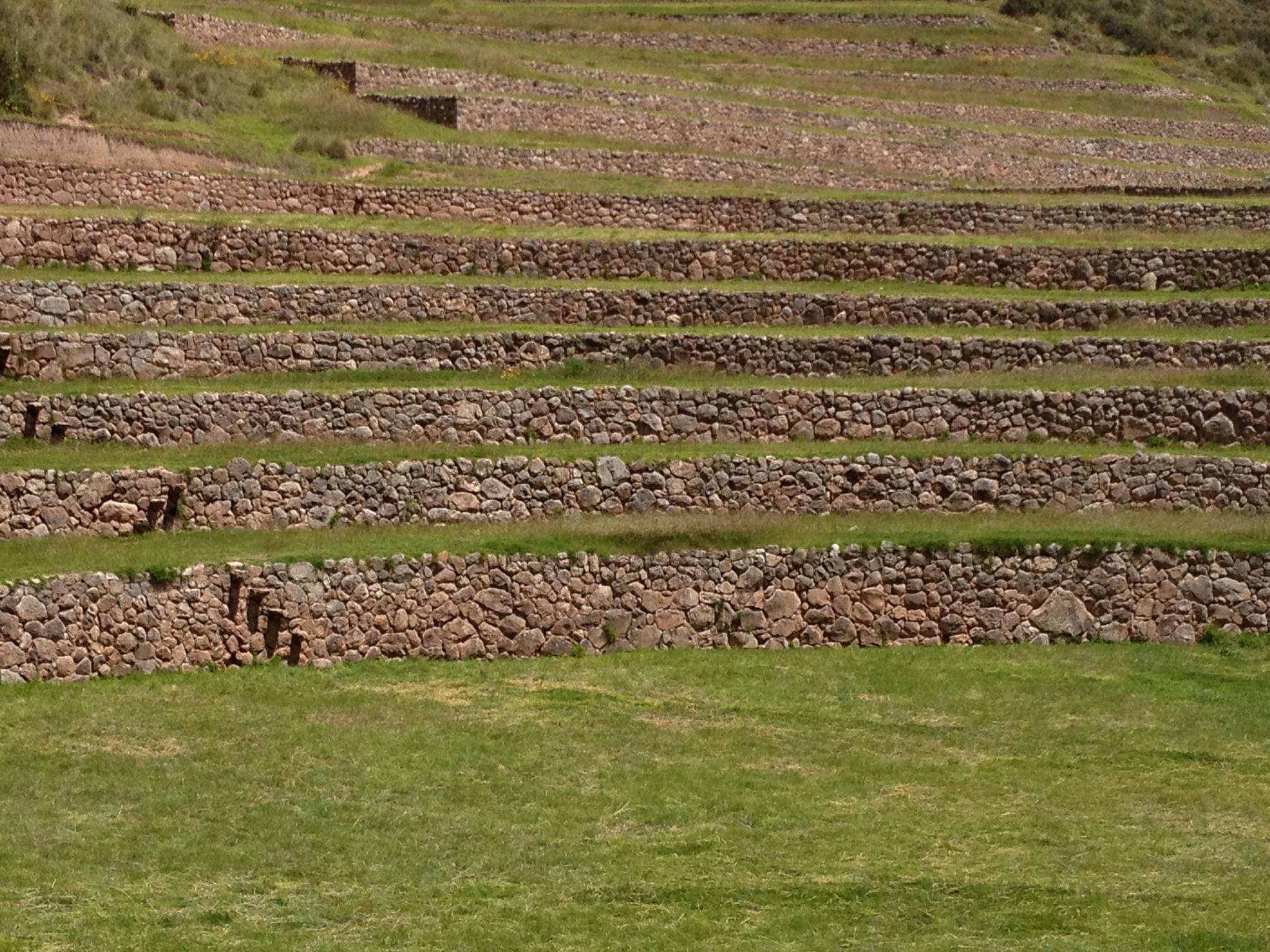
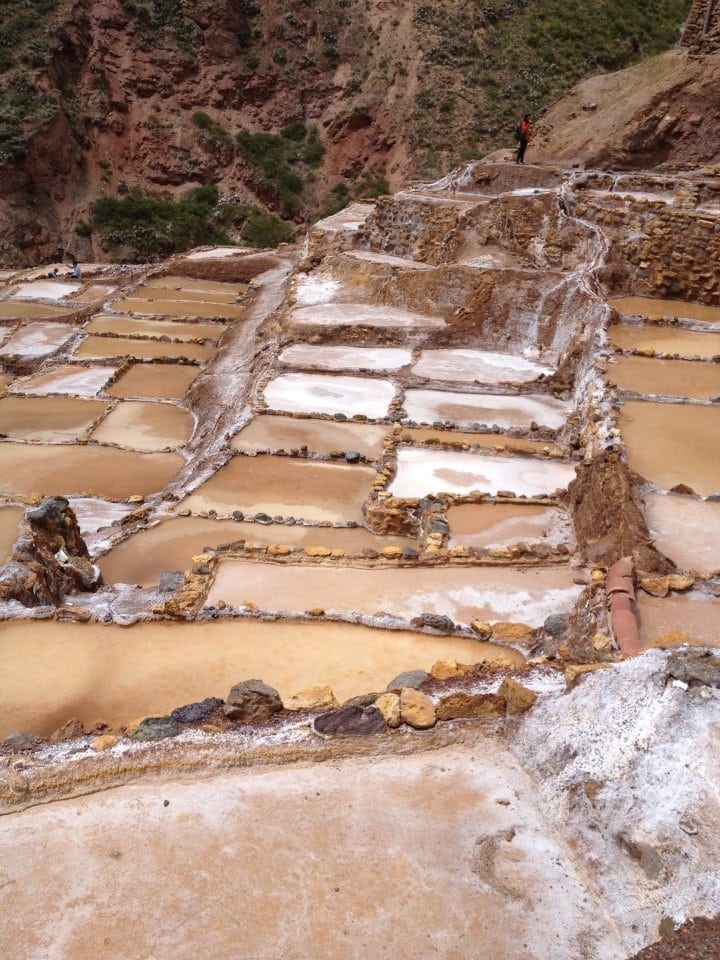
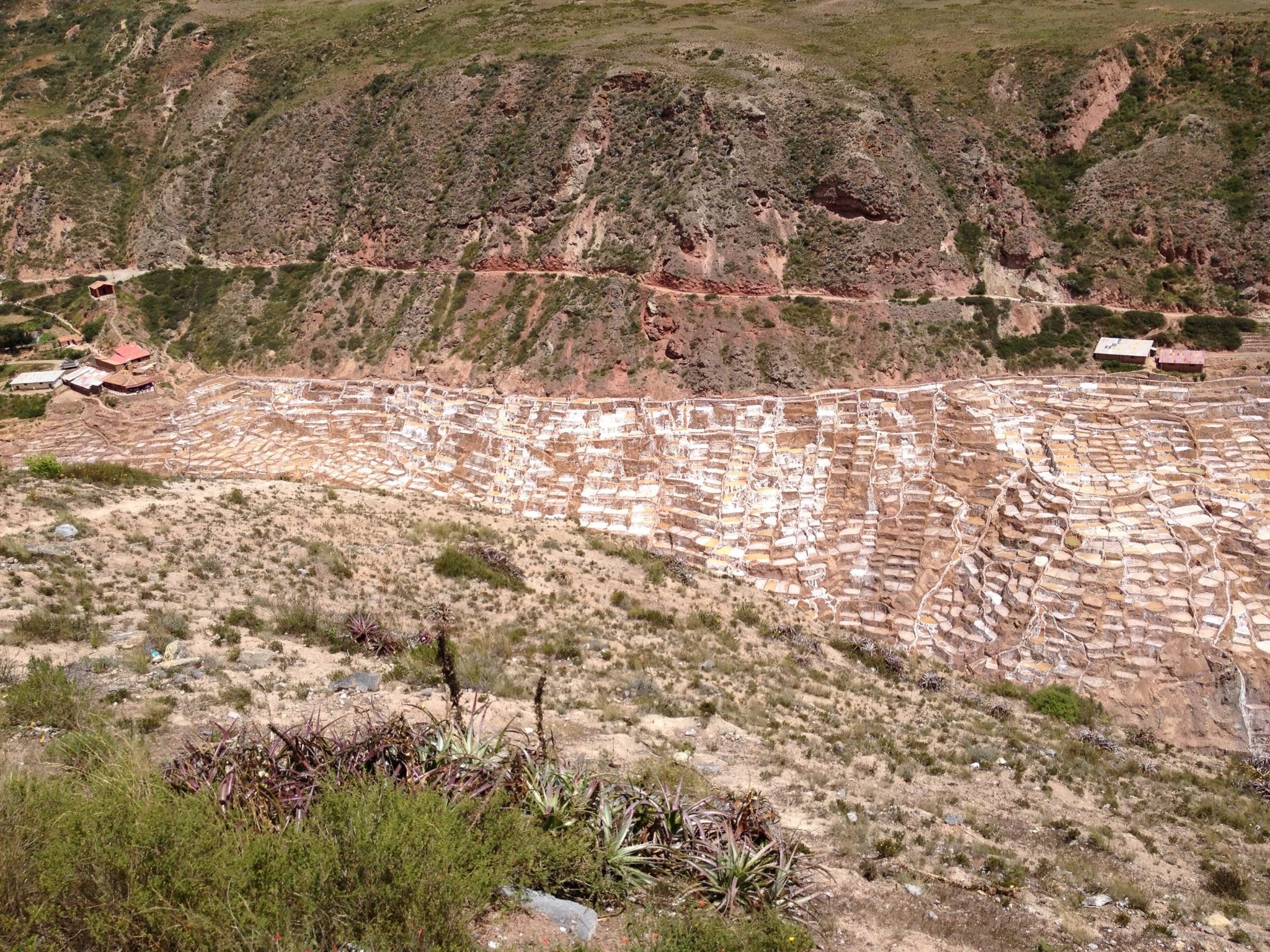
One of the recommendations for people who are hiking into Machu Picchu is that they acclimate in Cusco for 2 to 3 days first. All of the preparation just to walk 37 miles over several days might seem overkill. It isn’t. Those of us that fared best out of the group we hiked with were the ones who wore the most comfortable hiking boots, trained with an intense hiking regimen before going, and were the most comfortable hiking at altitude. We had yet to meet our group. Some of the people from the group finished the trek, and others didn’t. There was illness, there were injuries, and there were adult meltdowns. It really is an intense 37-mile hike. I don’t want to make it too daunting in case it’s something you’re interested in doing, but you should be forewarned that it’s not a casual stroll in the park. IMG_0445 This was our last full day in Cusco, and we decided to go off the beaten path and visit some of the less touristy sites. Have you been wondering where the llama photos are? We had two llamas at home, so the llamas didn’t make a big impression on us. Here is one I found while going through the photo album as I was writing this post. IMG_0462 This is the side of a native house of the type you see once you get out of the city. Even today most Peruvians live a rural life. They make these bricks from the clay soil near where they live and mix it with water and hay. The bricks do not dissolve in the rain as you would think they would. Peru mudbrick day five village day five Peru   This is a typical looking rural village. They are not very big. These photos show typical dress in the country. Peru women walking day fiveIMG_0480 IMG_0481 The life expectancy in the country is mid-40s. Why? The people chew coca leaves, which inhibit their appetite. Plus they eat a meal of mostly meat and potatoes. The life expectancy in Lima and the cities is the mid-70s. Peru donkey guinea pig food day five The donkey in the back is carrying food for guinea pigs. I’m not kidding. The first stop today was at Moray. “Moray or Muray (Quechua)[1] is an archaeological site in Peru approximately 50 km (31 mi) northwest of Cuzco on a high plateau at about 3,500 m (11,500 ft) and just west of the village of Maras. The site contains unusual Inca ruins, mostly consisting of several enormous terraced circular depressions, the largest of which is approximately 30 m (98 ft) deep. As with many other Inca sites, it also has a sophisticated irrigation system. The purpose of these depressions is uncertain, but their depth, design, and orientation with respect to wind and sun creates a temperature difference of as much as 15 °C (27 °F) between the top and the bottom. It is possible that this large temperature difference was used by the Inca to study the effects of different climatic conditions on crops. Speculation about the site has led to discussion about Moray as an Inca agricultural experiment station. Its microclimatic conditions and other significant characteristics led to the use of the site as a center for the ancient study of domestication, acclimatization, and hybridization of wild vegetable species that were modified or adapted for human consumption.” http://en.wikipedia.org/wiki/Moray_%28Inca_ruin%29. IMG_0483 moray Peru day five This is huge there are four of them. The terracing and depth creates different micro climates, with different temperature, water, and wind zones. The difference in the humidity and temperature from top to bottom is surprising. You start out chilly and dry at the top and end up warm and damp from humidity at the bottom. As much as a 59 degree Fahrenheit temperature difference has been measured from the top to the bottom.

This is another smaller area showing a similar structure.

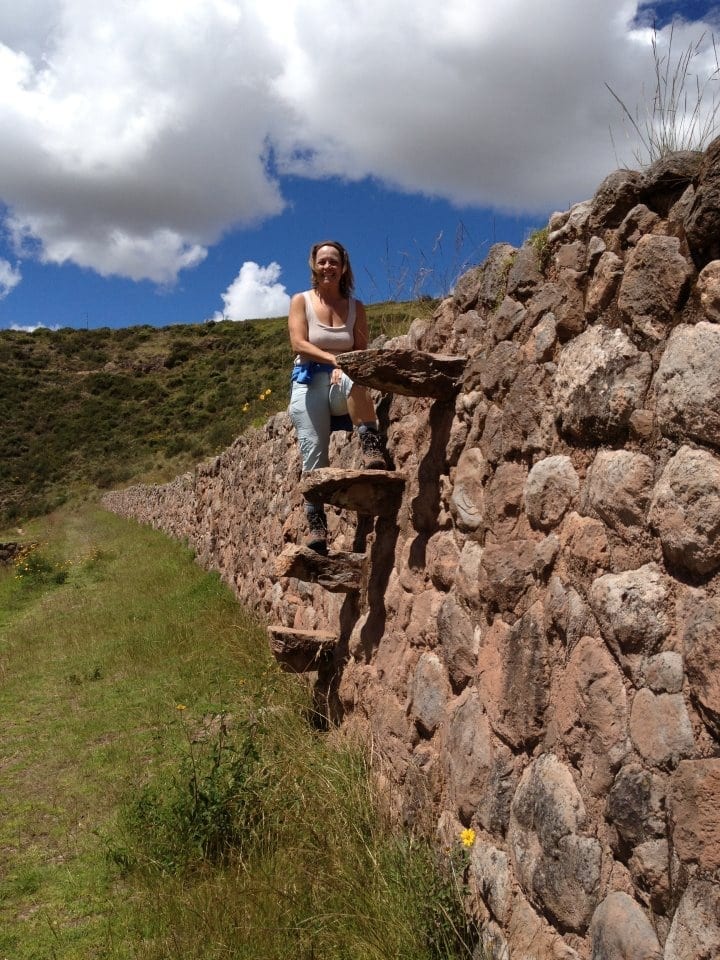
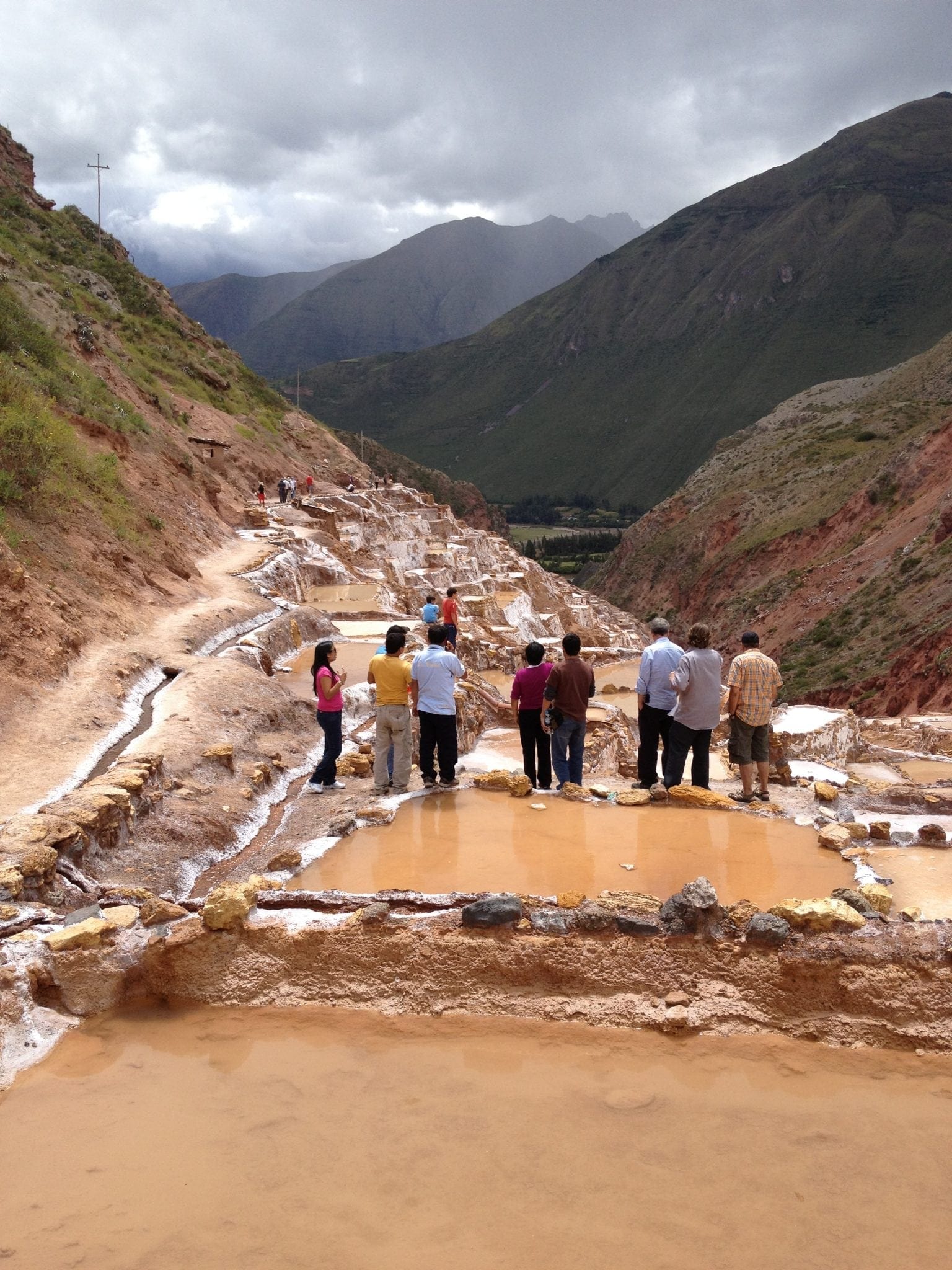
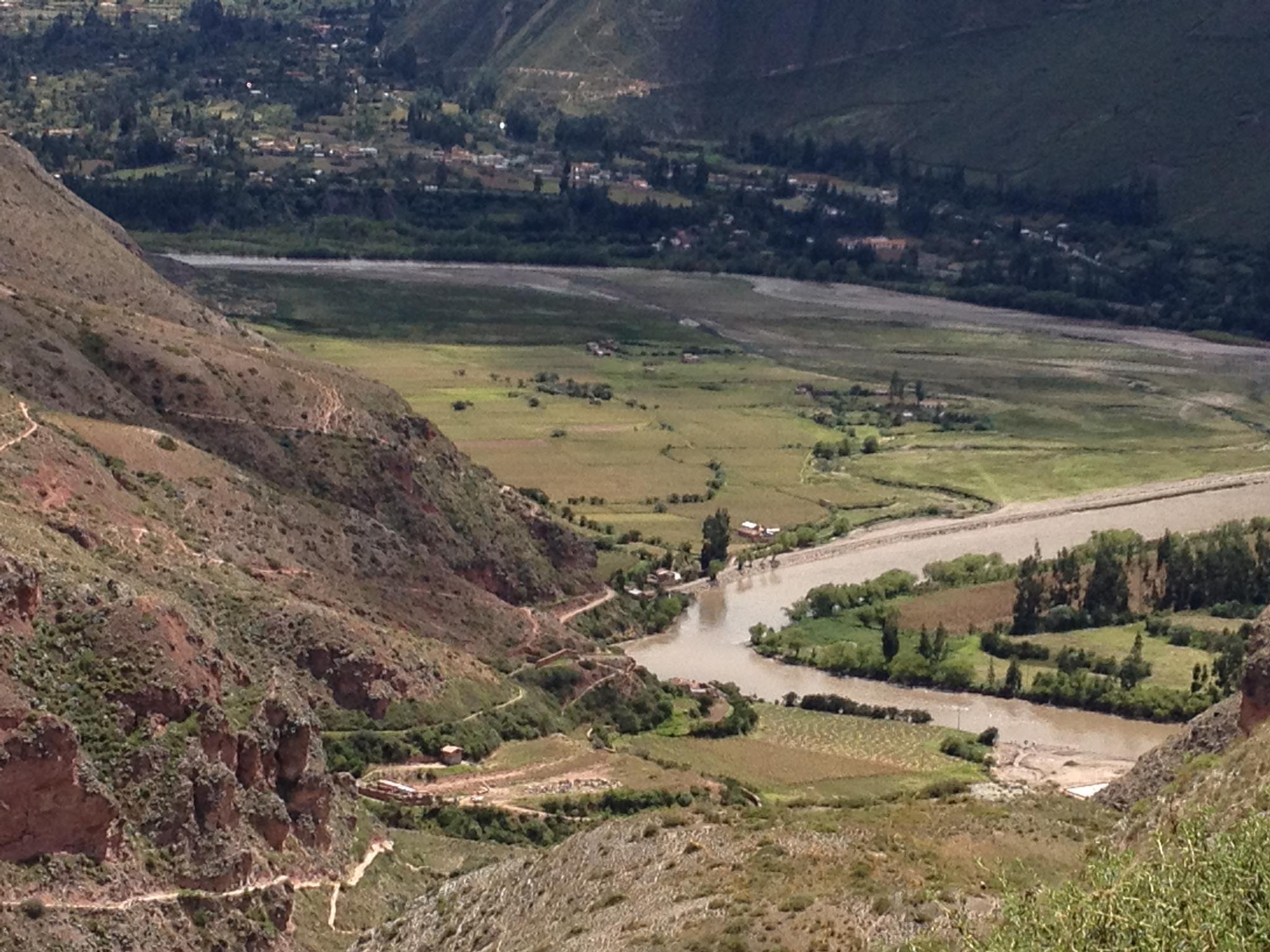
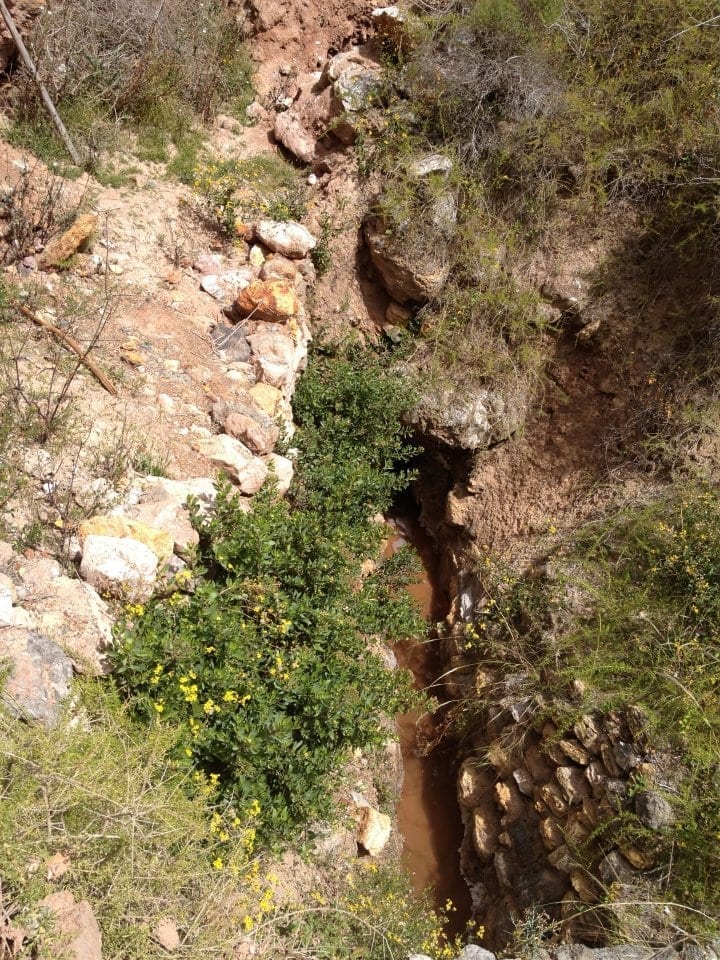
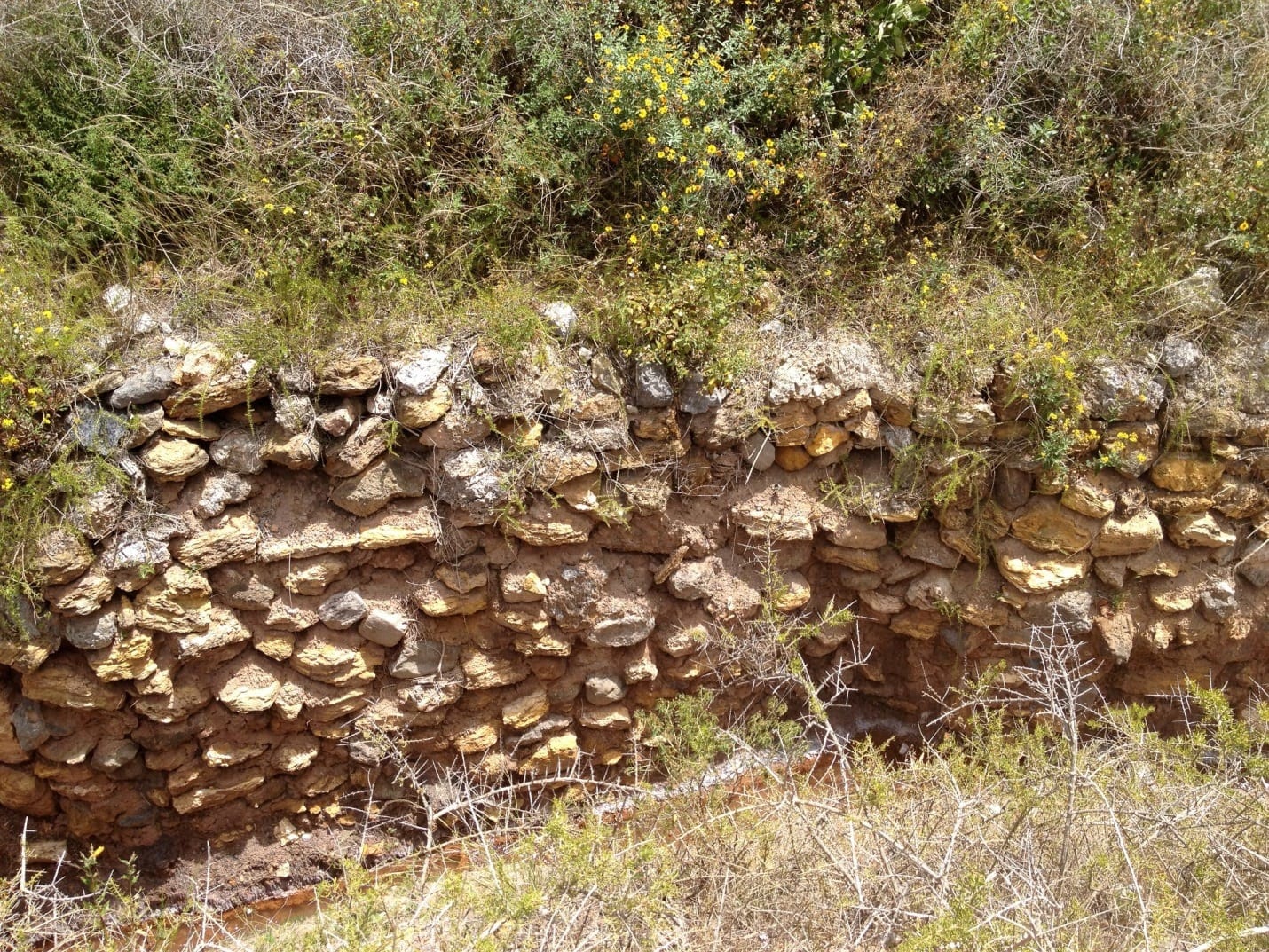
This is a different ring, one that has not been fully excavated yet. It was much windier at this ring. This is important because some plants need wind to pollinate. The piles of stones came from the walls and are being put back into them as this site is restored. stairs Moray Peru Day 5 This is a staircase going from one level to the next. stairs Mare Peru Blair day 5 Sean is at the top, and missed the cool stairs. There was no way to get down to the bottom with crutches. more stairs Moray Peru day 5 These steps are at least 600 years old. Can you imagine? IMG_0504 Each of the levels have many of these irrigation channels around the circles. To this day they do not know how they did it, but the bottom levels do not pool water. The water drains perfectly. Moray Peru from the bottom up day 5 This is a major site for New Agers. It is supposedly one of the most important energy centers on earth. The group in the center at the bottom are communing. All I really know as a chemist is, energy is damn interesting, and just how life comes out of it, I am speaking on the atomic level here, is fascinating. Not that I am a New Ager. It is just something to think about. Moray Peru new age day 5 The Andes: Even if you are from the mountains, the Andes are spectacular. Andes Peru day five Facts I learned today about the Andes” It is 13 degrees south of the equator. It is the longest Mountain range in the world. The mountains are 300 million years old. 7500 = the length the range grows in millimeters every year. The first snow we have seen was up on high in the Andes today. maras peru day 5Our next stop was Maras. This is from the top on the way in. The small white squares are individual salt flats. The salt mines have been in continuous operation for more than 1000 years. They’re pre-Incan. IMG_0538 IMG_0549 The photo below shows how the water gets to the pans. Are you wondering why there would be an archaeological site for salt? And even if there was why would someone visit it? Well, in the millennium before everything could be bought anywhere at any time, some commodities shaped history. People (and lots of other animals as well) need salt, but salt is not available everywhere. Salt used to be worth its weight in gold. A very interesting book on this subject is called Salt. It is nonfiction and tells the history of salt. This author also wrote a book called Cod, which is a fish that changed history. Both of these foods changed history more than many documents and most historical figures did. IMG_0550 IMG_0553 “Since pre-Inca times, salt has been obtained in Maras by evaporating salty water from a local subterranean stream. The highly salty water emerges at a spring, a natural outlet of the underground stream. The flow is directed into an intricate system of tiny channels constructed so that the water runs gradually down onto the several hundred ancient terraced ponds. Almost all the ponds are less than four meters square in area, and none exceeds thirty centimeters in depth. All are necessarily shaped into polygons with the flow of water carefully controlled and monitored by the workers. The altitude of the ponds slowly decreases, so that the water may flow through the myriad branches of the water-supply channels and be introduced slowly through a notch in one sidewall of each pond. The proper maintenance of the adjacent feeder channel, the side walls and the water-entry notch, the pond’s bottom surface, the quantity of water, and the removal of accumulated salt deposits requires close cooperation among the community of users. It is agreed among local residents and pond workers that the cooperative system was established during the time of the Incas, if not earlier. As water evaporates from the sun-warmed ponds, the water becomes supersaturated and salt precipitates as various size crystals onto the inner surfaces of a pond’s earthen walls and on the pond’s earthen floor. The pond’s keeper then closes the water-feeder notch and allows the pond to go dry. Within a few days the keeper carefully scrapes the dry salt from the sides and bottom, puts it into a suitable vessel, reopens the water-supply notch, and carries away the salt. Color of the salt varies from white to a light reddish or brownish tan, depending on the skill of an individual worker. Some salt is sold at a gift store nearby. The salt mines traditionally have been available to any person wishing to harvest salt. The owners of the salt ponds must be members of the community, and families that are new to the community wishing to propitiate a salt pond get the one farthest from the community. The size of the salt pond assigned to a family depends on the family’s size. Usually there are many unused salt pools available to be farmed. Any prospective salt farmer need only locate an empty currently unmaintained pond, consult with the local informal cooperative, learn how to keep a pond properly within the accepted communal system, and start working.”  http://en.wikipedia.org/wiki/Maras,_Peru Urubamba River Peru day five That is the Urubamba River that flows through Sacred Valley. The Maras salt mines are on a slope of the Qaqawinay Mountain that goes down into Sacred Valley. The Urubamba is a major tributary of the Amazon River. The Amazon River has so much of its water flow into the Atlantic Ocean every year, that it has a major effect on the Atlantic Ocean’s chemistry. The little creek shown below is the source of all the salt pans, and it is not bigger than it looks. It actually made me think of some of the pools we have around Bridgeport. This little stream does NOT have a major effect on the chemistry of the Atlantic Ocean 😉 River maras Peru day five The stones along this stream were put there to line it more than 1,000 years ago. This is pre-Incan and still here. The stone work around the natural settings is incredible. These stones highlight the reason for hiring a guide. Without a guide you would walk by and not realize how spectacular something this simple is. How many structures near where we live will still be there more than 1,000 years from now? thousand year old stonework Peru day 5 We have to get back to meet our guide for the trek and our group and to have dinner. By the time we got back, it was just starting to rain but people were lining the streets waiting for the parade on Good Friday. We were told more than once that Cuzco is a muy Catolico City. Cuzco Peru day 5 stilts Cuzco Peru day five evening IMG_0584 The ashtray? I have no idea why. No one smokes here. And you would know why if you walked through this area for even an hour. ashtray Peru day fiveIMG_0287 IMG_0294 IMG_0281 These steps lead to our hotel. Here are some foods that are native to this area. IMG_0599 IMG_0591 IMG_0588 IMG_0597

Check out day four here.


Cusco, Peru, Day 4 of our trip to Machu Picchu

Cusco

Cusco, Peru, Day 4 of our trip to Machu Picchu

When my husband Jim told me he had booked a trip for us where we would hike into Machu Picchu over several days, I was not pleased. In fact, I was irritated about it. It is embarrassing to admit now, but I had no desire to go on vacation and hike and stay in remote lodges along the way. He was surprised. He had booked the trip as a surprise for me and thought I was going to be delighted when I found out. It turns out he was right. It was one of the most fantastic trips I have ever been on.

Once I wrapped my head around the fact that this was going to be a great trip, and we were going on it, I began training for it. The plan was to hike our way with a guided tour in to Machu Picchu along the Santa Teresa Trail. It is remote, and other than guides who have some first aid training there are no medical facilities. You are at a high altitude for the entire hike, and even if you are fit the altitude can become a factor. My goal with my training regimen was that I never wanted to have to think about putting 1 foot in front of the other. I wanted to be able to focus exclusively on the sites and the people around me. I was successful. At the time we were living at 6000 feet in the mountains in California. I began hiking in the mountains 4 to 6 miles a day, six days a week. By the end of it I was in great shape and so were my dogs. Our pug looked like the fittest, sleekest potato you have ever seen.

We hiked with a group of people, most of who did not train for this trip. One of the people who began the trip was even afraid of heights. If you are afraid of heights, you do not want to hike into Machu Picchu. If you do not train for this trip, or take comfortable waterproof or Gore-Tex hiking boots you are definitely going to spend a lot of the hike thinking about placing 1 foot in front of the other. It doesn’t sound too demanding sitting in a chair in Southern California thinking about hiking 37 miles over several days. It’s a different story when you’re actually doing that hiking in an unfamiliar country at altitude.

turn right at Machu Picchu

Before leaving I read the book Turn Right at Machu Picchu by Mark Adams. It just occurred to me that was the last book I read aloud to Sean, sniff…sniff… It wasn’t about Sean’s reading level, but I don’t think he would have finished the book without me reading it to him. The book takes turns staggering chapters. It staggers one chapter telling the story of Mark Adams’ journey hiking over Hiram Bingham’s path with another chapter telling Hiram Bingham’s story. Hiram Bingham has been credited with “discovering” Machu Picchu.

coca leaves

That is what coca tea looks like. These are the leaves cocaine is made from, but chemically they are no more like the cocaine people abuse than ephedrine is to crystal meth. The leaves have to be processed to become the drug. The tea is very mild and quite yummy. It tastes sort of like hay smells when it is freshly cut. It is recommended that low-landers drink it when visiting because it helps you to deal with the altitude. Which luckily we have not yet felt any ill effects from except being more out of breath than normal when we climb steps. Supposedly the tea is a mild stimulant, similar in strength to coffee. I am drinking it this morning because I don’t want to wake the boys up, and until they wake up coffee is not available. Our doctor suggested we drink the tea while here. She said, “The people in that area have been drinking it for thousands and thousands of years. They know what they are doing.”

The next few photos are a series showing a traffic jam in Cusco. The streets are so narrow my jeep would BARELY fit down the streets. The cars are driving fast, too. You have to hop out of the street when one is coming. The streets are two-way even though they are barely wide enough for one car. This jam had cars going in all directions.

traffic jam one traffic jam 2 traffic jam 3 traffic jam 4

sauxhuawamen 1

These ruins are in the hills above Cusco. The name is Sacsayhuaman, which is pronounced sexy woman. It was spectacular. The Incans have been dubbed the Romans of the Americas, and when you visit a site like this you know why. This is also the site of one of the most bitter indigenous rebellions against the Spanish conquerors.

Sacsayhuamán

I have taken the following text directly from the site, http://www.world-mysteries.com/mpl_9.htm

“Sacsayhuamán (also known as Sacsahuaman) is a walled complex near the old city of Cusco, at an altitude of 3,701 m. or 12,000 feet. The site is part of the City of Cuzco, which was added to the UNESCO World Heritage List in 1983.

When the Spanish conquerors arrived first to these lands; they could not explain themselves how Peruvian “Indians” (ignorant, wild, without any ability of logical reasoning, one more animal species according to conquerors) could have built such a greatness. Their religious fanaticism led them to believe that all that was simply work of demons or malign spirits. Still today, many people believe in the inability of ancient Quechuas to create such a wonder, so they suggest that they were made by beings of some other worlds, extraterrestrial beings with superior technology that made all that possible. However, our history and archaeology demonstrate that those objects of admiration are an undeniable work of the Incas, Quechuas, Andean people or however pre-Hispanic inhabitants of this corner of the world would be named.

The imperial city Cusco, meaning ‘navel of the earth,’ was laid out in the form of a puma, the animal that symbolized the Inca dynasty. The belly of the puma was the main plaza, the river Tullumayo formed its spine, and the hill of Sacsayhuaman its head.

One of the most imposing architectonic complexes inherited from the Incan Society is Sacsayhuaman, which because of several of its qualities is considered as one of the best monuments that mankind built on the earth’s surface.

The wall or rampart is the most impressive section, built with enormous carved limestone boulders, this construction has a broken line that faces to the main plaza called Chuquipampa which is a slope with 25 angles and 60 walls.The biggest carved boulder of the first wall weighs about 70 tons and like all of the other rocks was brought from a quarry called Sisicancha, three kilometers away and where there are still rocks that were transported part of the way. Each wall is made up of 10 fronts with the most important ones known as Rumipunco, tiupunku, Achuanpunku and Viracocha punku.”

Cave

There are caves throughout these hills. Just like California, what is now Peru was once the seabed of an ancient ocean. These hills are made from limestone in many places. In others they are basalt.

our guide Hector

When we arrived at Sacsayhuaman there were guides hocking their services at the front gate. We had never hired a guy before, and didn’t really feel the need, but we felt sorry for the guides because there were a lot of them and they were not asking for very much money. We learned something from this. Guides when you are at locations that you don’t know very much about are a good thing. Since then when we have visited sites where there are guides available, we always hire one. We have very seldom been disappointed that we did.

Shawn in the throne

Do you see the face on the left side of the throne?

family photo cave

We are in a cave in a tunnel. There is a cave system all the way to Cusco from here, which would be a long way to dig a cave.

for funneling water

How the Incan funneled water into areas.

burial Lake

This is a burial site. Along the outer ring there were tombs. The inside was a lake. The Incans revered water so they had the mummified remains of some emperors looking out on this man-made lake.

for sizing

That is not a throne; it was used as a model for stone size and shape. So the architect could say, “I want 100 of that size.”

slide

Can you believe the guys almost didn’t slide down this?!? I have a saying when we travel, “We have to do this. We might never get this way again.” At least the boys are pretty good sports about it. One of my stepsons told me once that I had a reputation for talking to random-assed people all over the world. I don’t usually cuss on my blog but I am proud to say that he’s right. I do. I often have friends tell me that I would be the perfect person to travel with. I am not sure that everyone would actually like to travel with me. I am not the sit on a beach and read a good book on a vacation type. I am the let’s see every single thing that there is to see and meet as many people who live here as possible type. We usually come home from our vacations exhausted.

sauxhuawamen 2

There are 4 theories about the shape of this wall 1. Puma teeth 2. Snake 3. Lightening 4. To prevent it from falling when earthquakes occur. Cusco is on a fault line. There have been three major earthquakes since it was constructed, and it has withstood them all.

family 2

Look how little he is. Now Sean is the tallest of the three of us. If you’re wondering what the deal is with his foot, I will tell you in a day or so in a shorter post.

family photo at sauxhuawemen

The Incan’s had no heavy machinery and no draft animals. It is still just a matter of theory as to how these were built.

puma foot

Do you see the puma foot?

guinea pig

What about the guinea pig? These rocks are absolutely huge by the way.

stone doorway

These are Incan doorways. They reminded me of Ireland. Lots of piles of stones always remind me of Ireland.

llama

This is a llama. A piece of paper could not fit between any of the rocks, and all the angles and offsets from one rock to another are on purpose. It is an ancient form of earthquake proofing.

altitude

We are standing at 12,352.4 feet in altitude.

Incan baths to Incan baths 1

The next site we went to was called Tambomchay. Tambomachay is an example of Incan baths, aqueducts, and temples. The volume of water is always the same coming through the holes.

stones lining the Creek
This creek is lined for 2 km up with stones that were put there during Incan times. This is just the beginning of our trip; by the end we were convinced that Roman masons had nothing on the Incan’s.

red Fort

The next stop was Pukapukara, the red fortress, named that because of the red rocks used. It was a military garrison built to protect the valley, because it is at a high point.

looking back at the Incan baths
The Incan baths where we just were.

root veggies

At 11,000+ feet altitude they grow mainly root vegetables. Peru is on the equator so even at 12,000 feet it never snows.

houses

These are representative of the local houses around Cusco.

walls

More earthquake-safe building. Think of a doorway shaped this way as the difference in stability when you plant your feet shoulder width apart and when you stand with them together tightly. If someone tried to knock you over, which would be more stable, your feet shoulder width apart or tightly together?

gpig

Jim ate guinea pig drumsticks. He says Jojo and PJ, our guinea pigs, have nothing to worry about.

Check out my post about days one through three here and day five here.


Cusco, Peru: Days 1 through 3

Peru

Before traveling to India in December of 2013, I wrote my travel blogs on Facebook. I have been meaning to transfer the photos and information to my WordPress blog for a while. When the daily photo journal of our trip began posting to the section of Facebook that shows what I was doing on this date in the past I decided there was no time like the present to transfer the trip we took to Peru three years ago. It was a trip to remember. One of best trips I have ever been on in my life. If you have visiting Machu Picchu on your bucket list, do it! Do not mess around, do it!

On the road, day 1: 1st we took a car then a plane then another plane then another plane. Life’s a journey. And this one only has plastic forks!! Waiting to go to Houston

Day 2: In Houston. I just spent 1 hour and 603 calories on that. Setting 16: hill: Whew. I am so ready for Machu Picchu.

I am already having a great time. I am such a vagabond. Funny how I am. I love my posse of friends so much, and their husbands and kids. And then there are all of my own kids. But wow do I love to see the world. Good thing I was born in this time so I can always have both. What I figured out in the last hour: 1. Skrillex sounds like Mickey Mouse on roids. Thank you Sean for adding that to my playlist, and 2. I wonder if I should go native and speak with my Texas accent for the rest of the day? Even after all these years it still sounds authentic.

Just waiting now to take the red eye to Lima. We will be in the air when it goes from today to tomorrow. After tonight 2 weeks of photos from Peru! Talk to you then.

Day 3: We did not leave the airport when we got to Lima. We sat around for a couple of hours and then caught the plane to Cusco. We will stop and spend some time in Lima at the end of our trip. At this point we just want to get to Cusco so that we can begin acclimating to the altitude.

These are two way streets on the way to our hotel.

When we travel I like to find places off the beaten path. I spend a lot of time looking for really cool eclectic places especially at the start of the trip. Often when we travel we only book rooms for the beginning of the trip. It is important to book those rooms though, because when you land you will be exhausted, and you don’t want to be looking for a place to stay then. Upstairs at our suite/ apartment. All the rooms are decorated to theme. This is the imperial Inca suite.

Our room has cases of potsherds from ancient Inca times found when they renovated this hotel.

The view from our room at the Quinoa Boutique Hotel. Both Jim and Sean told me I did a great job choosing hotels:) Cusco is pretty amazing already. Flying from Lima to Cusco you fly over mountain tops peaking through the clouds. Cusco is at 11,000 feet. The descent reminded me a little of flying into Aspen with all the banking and mountains. We are staying in the San Blas area of Cusco. It is the historic district. It is COOL!

The courtyard where we are staying.


Cusco is built on steep hills. We got in and slept a couple of hours. Now I just need to get Jim moving so we can explore.

Lunch

If they could only see how our guinea pigs live! Ha ha. Jim tried the alpaca. He said it was pretty good.

Cusco is one of the few colonially conquered towns that did not demolish the native masonry. The walls here at the bottom were built by the Incas. The Incas were excellent masons.

There are lots of Incan women walking around with these types of clothes on.

The main square in San Blas

Cusco has the largest population of any high altitude city in the world. Which makes sense when you think of how few cities there probably are at this altitude. Our cameras just do not capture the beauty of the rolling green hills/mountains/peaks with a city sprawling over them, with roosters and dogs crowing and barking in the background.

They made chocolate here. Peruvian chocolate does not taste like European or American chocolate. It is less sweet and less creamy. They make a drink called Mayan hot chocolate that uses chili pepper and very little sugar.

From our hotel balcony at night.

It was Ash Wednesday in Cusco

Check out day four here.


Handcrafting High School: Year 1, Month 7

Handcrafting high school
The second rowing meet in March. Once again in Long Beach.
The Freshman Four
The Freshman Four
There the Freshman 4 are in the boat. Jim and I are chaperoning one of the races in April, 2015
There the Freshman 4 are in the boat.

Some months a handcrafted education looks like a carefully detailed pattern has been followed as if I bought something from Butterwick, cut it out carefully, pinned everything meticulously, and sewed all the pieces exactly to Butterwick’s specifications. Other times a handcrafted education looks like a crazy quilt. It has a little of this and a little of that. It looks like I ran out of the fabric that I was planning on using and began to wildly improvise. This month looked and felt like a crazy quilt. It was productive, satisfying, and dizzying. We crammed in everything that we could, with some left over spilling out into the future. (There’s always the summer months, LOL!) But hey, that’s homeschooling! I worked hard with scheduling this month so that between academics and rowing Sean could still have time with his friends. Rowing is a big time commitment, in part because we live an hour away from where he rows. In fact, in April we are moving 55 minutes closer to rowing. We love the house we live in now. It is nicer than the one were moving to, but to cut 1 hour and 50 minutes of driving time out of our day 5 to 6 days a week is big. I can’t wait!

Blair, "Wow, that is a lot of plaid. Why are you packing all those plaid shirts?" Jim, "When I was shopping for shirts there were a lot of plaid shirts. They must be in style now." Blair, "That much plaid will never be in style honey."
Blair, “Wow, that is a lot of plaid. Why are you packing all those plaid shirts?”
Jim, “When I was shopping for shirts there were a lot of plaid shirts. They must be in style now.”
Blair, “That much plaid will never be in style honey.”

Part of the crazy schedule was because my husband, Jim, went to the Women’s Conference at the United Nations in New York City in March. Jim usually does most of the driving, taking Sean where he needs to go. Jim was at the Woman’s Conference because he believes that gender equality and women’s rights are critical issues that need to be addressed to solve many of the problems in the world today. He wanted to learn more about what women from different countries felt were the key issues faced by women. He thought this would be a good place to get a feel for that. Jim has been working on his Masters for a few years now. He is getting close to the end. His Masters is in International Relations. It may seem hokey but in our house we spend time talking about things like how to make your life matter and making the world a better place for our kids and grandkids (and yours too). My husband hopes to use his Masters as a way of doing that. I don’t know what we will do when Sean goes away to college. One of the things we’ve talked about is joining the Peace Corps.

PoSY1M7

Academics

Computer science

Sean finished the second quarter of computer programming with C/C++. The first two weeks of March were the last two weeks of the class. The amount of work assigned for those two weeks was intense. There really was no way to get ahead in this class, because each week there were 2 to 4 programs to write and an open book quiz that was really hard. So each week you were writing programs for that week’s assignment. Sean put in 12 to 14 hour days 6 days a week for the last two weeks. I insisted that he take 1 day off each week. At one point we debated about having him take the next quarter of the series, and then decided we were being ridiculous about it. He needed to have time for his other subjects, and he was getting burnt out about computer programming.

We slipped away for one night to attend this camping trip in Joshua Tree in California.
We have a wonderful homeschool group in our state called HSC. They organize camping trips every 6 to 8 months or so. They are such a great time!
It is a youth/childhood to remember. All the kids love these trips.

I asked Sean to think of a project that he would like to work on in computer science to finish out the academic school year; something that he thought would be fun. He told me he wanted to design a website for a history project that we are going to do for the next school year. It is an idea that I came up with and when I originally suggested he design a website for it, it was as an academic exercise for him so that he could apply what he has been learning. (A WordPress blog would suffice for the project, but I would have set that up not Sean.) I think the application of knowledge is an important step in the learning process and one that is often overlooked as we cram subjects with information that is supposed to be memorized without applying it. Sean told me he needed one solid day to work on the website every week. I am glad he picked this project, because the last half of March saw him becoming enthused about computer science once again. Yay, his passion became a passion again! As far as all the hard work and cramming, wow, does he know a lot more about computer programming! As he has been applying what he learned over the last year, I have been seriously impressed. Even though I have no idea what he’s doing most of the time.

Math

When Sean and I realized the amount of time computer science was going to take we took a break from the rest of his core academic subjects. Sean continued taking Law and History in Context. The other two “non-play” related things he continued to do were rowing and working every other weekend teaching kids computer programming.

Both Sean and I had a big surprise when he picked his math text back up. For the first time in Sean’s life math poured out of him like water out of a pitcher. My grandmother once told me that in our family math either poured out of you like water from a pitcher it was so easy, or you had to work at it. Math has always poured out of me, and my grandmother and mother, like water out of a picture. Interestingly enough that is not the case for my sister, but it is the case for my nephew, her son. For Sean, he had to work at it just like my sister did. Not anymore, though. Now he can sit down and do what used to be two days’ worth of math in half the time it took him to do one day. Math is now Sean’s easiest subject! 

Tempe Town Lake, where the Desert Sprints were held
The kids rode in a bus to Tempe, Arizona. Jim and I drove.
Sean watching his friends play cards on the team bus.

Science

I am so lucky that Sean did high school level biology in eighth grade. Because try as we might I cannot see how we are going to finish the entire astronomy and earth science course this year. Part of that is because Sean has become entranced with astronomy. The course opens as an astronomy and cosmology course and then moves on to become an earth science course. Whereas it is easy to move through math more quickly, it doesn’t make sense to do that with science when someone becomes interested in an area and wants to investigate further. Sean has gotten to the point where he is asking questions about parallel universes that I don’t know the answers to. He has taken all the knowledge I have about the subject, learned more, and is accessing what scientists know or think they know about parallel universes at a level beyond where I am on the subject. It is everything that a teacher could hope for. When Sean was little he used to tell me that I was so smart he was never going to be that smart. I used to tell him that I hoped that he would learn everything I knew and be smarter.

Writing

Writing this year is pushing my panic buttons. I need to go hang out with my dear unschooling friends more. Sean is a very good writer.  His main problem with his writing is that he likes to take every writing project and turn it into a big project. Big writing projects take time, lots and lots of time. Something we have not had a lot of this year. Even when he stays within the confines of a five paragraph essay, he tries to cram in as much information as possible, spending hours and days researching the topic. Then me he works for hours trying to get as much of this information into his paper as possible. The problem with that is, the writing isn’t tight. It makes his papers feel like they are not cohesive. The way he puts words together is excellent. As a reader though, you start to lose focus because there is just so much there. It doesn’t sound like much of a problem does it. To become a better writer the formula is very simple level though; you need to write. That is the entire formula. It makes me nervous when we are spending all our time on computer programming and not taking time for writing. I bought the IEW writing program, and it was really simple for Sean. At the end of the day, I do not think it is the best program for someone who already is a good writer and just needs to work on some of the stylistic issues. Some of the stylistic issues Sean needs to work on are big though. Sean does not write a good concluding paragraph. His transitions going from one body paragraph to the next are nonexistent. And he is not careful about making sure that his introductory paragraph has a lead in to each of his body paragraphs. Just as I was starting to worry, along came something very serendipitous. This type of serendipity is actually been the hallmark of this year.

One of the only perks I have ever gotten from all my writing came along this month 😉 I had the opportunity to preview a section of the High School American History Course that my publisher Pandia Press is working on right now. It was not until we had been working with this course for a week that I realized in addition to teaching history the author of the course is attempting something ambitious. She is completely successful in her attempt too. In addition to teaching American history, the author weaves study techniques and the skill of writing nonfiction essays throughout the course. If you take the time to use the techniques she is presenting to students in the student guide and the teaching techniques she gives you in the teacher’s guide, the course can be used as a history course and the bulk of a writing course. The benefits to integrating writing with another academic discipline are similar to what I was talking about when I said it was important for Sean to apply the computer programming skills he learned. I think that to take interesting topics or even just those that are assigned and apply writing skills in a meaningful way is the best way to learn writing. It also makes the academics more integrated, which both Sean and I prefer. I also have Sean write lab reports, and take some notes in science. Sean really likes to write fiction, so I give him time each year to work on his fiction writing too.

Travel Plans

2014 was the first year in a long time that we did not travel anywhere. We had planned on traveling in the fall of 2014, but rowing got in the way. One of the things we did this month was to figure out where we are going to go this summer. Rowing is a nine month a year commitment. And Sean wants to stay committed to it next year. So we have to do our travel during the summer when there is a break from rowing.

On May 27, we leave for Spain for three weeks. I will be blogging every day as we travel. There will be a couple of posts before we leave. We are also going to take the month of August and take a driving trip through the northern part of the United States. We will be stopping at some of the national parks along the way such as Yellowstone. We will be at the Oglala Lakota reservation called Pine Ridge in South Dakota in the middle of August where we will volunteer for a week helping to build houses for the residents there, http://www.re-member.org/. I will also be blogging every day of that trip.

Check out our post on teaching high school and middle school physics here.


Physics for Middle School and High School

For the past few months, I have been receiving emails asking for my help figuring out science for next year. The emails are from parents who are hoping RSO Astronomy and Earth Science 2 will be out for the start of the 2015/2016 school year. It won’t. I even get emails from people hoping RSO Chemistry 2 will be out. I only have 1 chapter of that book written, so it definitely will not be out next year. I will start writing it in time for Sean to use it for chemistry during the next school year, but that course is going to be in very rough form when he uses it. When parents find out these courses will not be ready they want my help figuring out what they can use in the interim.

To help all of you, I wrote this post detailing what we did for Physics when Sean was in middle school. We used Bite-Size Physics, a course written by Science Jim Mueller. Like my courses, this course is rich in labs that are paired well with theory. In fact, when I went to his website to get information for this post, I was pleased to read Mueller discussing something I also focus on in my courses. He states, “Here’s the problem, science books with experiments but no content or books with content but no experiments. You have to create an effective science curriculum with these poor materials.” (It reads a bit weird – but he means “you” the parents.) http://www.bitesizephysics.com/bitesizephysics.html It seems that one of Mueller’s goals with his course is the same as one of mine, which is to create a course that pairs content with experiments, so you don’t have to. Like my courses, these are not video labs either. These are get-your-hands-dirty, I-need-space-to-spread-out, homeschool-science-rocks labs. As a side note, I was at an event recently (not a homeschool event) when someone who is a fellow homeschooler began pushing very hard to have me try an on-line program where all labs are virtual. Uh, no, but thanks for the input. They did not know who I was other than that I am a fellow homeschooling parent of a high school student. RSO Physics will be out at some point. These suggestions are not for a course that will take the place of that course. These are suggestions for a more advanced course. I do not recommend using Bite-Size Physics in place of RSO Level 1 Physics.

For those of you who used RSO Biology 2 for high school. If that worked for you, then this course could also be used for high school. I will tell you what you should do to bring it up to the high school level. This course would work very well for a science co-op.

Bite-Size Physics by Science Jim Mueller

There are several options for packages, I recommend buying the bundle, because it comes with the fun and cheesy videos where he explains concepts. Sean loved them. There is some of the same material in his Force Book (which comes in this bundle) as there is in the Physics Book (which is the main spine for the course.) It is a bit confusing, but it in no way detracts from the course. In case you are wondering, I am not affiliated with the author at all. He has no idea I am recommending his course. It is just a really well done Physics course. Both Sean and I loved it. Here is where we bought our bundle. http://www.currclick.com/product/43327/Super-Science-Jim-Pack-BUNDLE?manufacturers_id=297&it=1

For Middle School

This is what Sean did.

  • Bite-Size Physics – There is math throughout the course. He makes it very easy to ignore the math. I had Sean do the math, but if your student is not strong in math, the course can be done without it. Sean struggled with some of the math. When this happened we breezed through it. Sean learned a lot of physics even when the math was lightened or skipped.

In addition, Sean read

  • Three books from Kathleen Krull’s Giants of Science series
    • Isaac Newton
    • Leonardo de Vinci
    • Albert Einstein
Isaac Newton, Kathleen Krull
Leonardo de Vinci, Kathleen Krull
Albert Einstein, Kathleen Krull
  • Several books from the Max Axiom Graphic Library series
    • Electricity
    • Forces and Motion
    • Magnetism
    • Scientific Methods
    • Energy
    • Light

physics max axiom

Here is a nice illustration with the books in the series. I recommend this series, where appropriate, in the RSO courses I write.

  • I had Sean write lab reports. Use the guidelines I give in Biology 2 for what a middle school lab report should look like.

For High School

  • Bite-Size Physics – The math should not be optional unless your child really struggles with math. In fact you should go online and find more math problems that cover the same physics to increase the math. Make sure there are solutions with the problems you find. Here is an example of what I mean: http://www.physicsclassroom.com/calcpad/circgrav/problems
  • Make sure your student begins to understand how units are used in applied math problems. Even if you do fewer math problems as you focus on this. Being comfortable converting between units and doing Dimensional Analysis is an important concept in all high school and college science courses especially physics and chemistry. Look it up if you have a high school student and you don’t know what I am talking about.
  • Lab reports – these should not be optional. Somewhere between 1 a week to 2 a month is a good number of lab reports.
  • Have your student read 1 to 3 books focusing on physics or a famous physicist. Here is a list, but the book does not needto be on it. Let students have some say in the choice. The choice shouldreflect their interests. I like to download a sample of a book (even if I am not going to read it in e-book form) so that Sean can check it out to make sure the reading level is a good fit.
    • Physics of the Future, Michio Kaku
    • Physics of the Impossible, Michio Kaku
    • E=mc2: A Biography of the World’s Most Famous Equation, David Bodanis
    • Surely Your Joking Mr. Feynman!, Richard Feynman
    • How to Solve It: A New Aspect of Mathematical Method, G. Polya
    • The Theory of Almost Everything, Robert Oerter
    • The Cartoon Book of Physics, Larry Gonick
    • Emperor’s New Mind, R. Penrose
    • Dark Side of the Universe: Dark Matter, Dark Energy, and the Fate of the Cosmos, Iain Nicolson
    • A Brief History of Time, Stephen Hawking
    • From Eternity to Here, Sean Carroll
  • Read http://preposterousuniverse.com/eternitytohere/quantum/ which is chapter 11 of From Eternity to Here by Sean Carroll. It is free to read. Carroll does a good job of making the complicated subject of quantum mechanics understandable.

High school students should keep a record of the work done. The easiest way to do this is to keep a file with the lab reports, data sheets, and photos of the labs. Also keep a record of the books read. A short synopsis, oral or written, from the student about the book is a good idea, but not mandatory. An oral synopsis can be done into a wireless phone.

I hope you have a great year of science.

Check out our post on month six of handcrafting high school here and month seven here.


Handcrafting High School: Year 1, Month 6

Read

Oh my goodness! What a busy month February was for both Sean and me. There were times this month when I felt like I barely had time to breathe. I actually realized TWICE! that I had showered and forgotten to shave. I remember being super busy close to the end with biology too. There is a point when writing a book where I can see the finish line, and I am ready to be there, so I work as hard as I can even at night. I did not finish it this month, in case you are wondering. (The book has yet to be illustrated or edited by anyone but my husband Jim, Sean, and me. So do not start looking for it soon.)

The photos are a series of memes I found on my computer this month. Put there I am sure because of a back and forth Sean and I have going on, “Is it meant to represent a prism separating light into its individual wavelengths, or Pink Floyd’s the Dark Side of the Moon?” This all started when I bought a pair of pajama bottoms for Sean, because I thought it was cool Target was selling scientifically themed clothes. When Jim and Sean saw them, they immediately said, “Dark Side of the Moon, cool!” I disagreed! Unfortunately they were correct about Target’s intent, but I didn’t give up right away. So… memes and a bit of teasing.

cool2

Sometimes this year the academics have come together and Sean has seemed to just “get” it. That was what it was like with computer programming and math in February. Everything just jelled. This was good because Sean needed lots of sleep this month. There have been many days when he was tired all day, ravenously hungry, and extremely grumpy. TEENS! He must be growing again.

On every level,  I was happy with our handcrafted homeschooled education this month. I think of the process I use with Sean as similar to how I would create a recipe. I love to create recipes by the way. I almost went into chef school instead of becoming a chemist. There are a lot of parallels between cooking and chemistry. I cannot tell you how many times my family has told me that they love something I made, and I have said, “Hmmn, I’m not sure if I can re-create this recipe. I changed so much, and I didn’t write down the specific amounts for what I used.”

Computer programming is a good example of this. Sean was going to take 3 quarters of programming this school year. Last month I told you he was going to take a break, and not take a class in Spring Quarter. Then he changed his mind, and decided to take the class. Because he has been so grumpy this month, I sat him down and asked what was going on. (Besides the obvious, which is puberty.) It turns out, it was because he really didn’t want to take the class. He has a friend taking the class with him, which makes him want to take it. He thought I wanted him to take it, which made him want to take it. I told him I only wanted him to take the class if he wanted to, but I did want him to do something computer related.  The upshot is, he will not be taking the class. He will be designing a website. It was time to tweak that ingredient, exchanging it for something else.

Sean has continued to enjoy the law class and the history class. For one of the classes, Thom, who teaches both, asked Sean to choose a historical event that interested him and learn more about it. From there they talked about the different ways that historical event is portrayed and perceived. It was a great lesson, made even more meaningful because Sean chose the event they focused on. He devoted a couple of days learning about the Watts riots. It is wonderful when Sean becomes captivated with an area of study, coming to me to tell me about what he has learned.

Sean suffered from migraines several days this month. It has been a couple of years since he has had so many in one month. We are lucky we homeschool. It must be difficult for kids who suffer from migraines, who have to attend regular school. One day Sean could not get out of bed. He wanted to lay there curled in the fetal position, sleep, and listen to a book on tape. So he did. On other days when he suffered from migraines that were not as bad we went geocaching or he read. He went to rowing all but one of the days. Rowing helps with the migraines. At first they were a trigger, but after a while they helped alleviate the symptoms and cut down on the incidence of the migraines. His doctor told us this would be the case, so we toughed it out for the period early on when they triggered the migraines.

cool-cat

We heard back from Stanford. Sean was accepted into their pre-collegiate summer session. He will spend three weeks studying Computer Simulations and Interactive Media. I’ll be honest and tell you, I’m excited for him. I’m not excited because I think this means he’s going to end up getting to go to college at Stanford. (Sean has no idea where he wants to apply to college, other than he wants to go somewhere with a crew team.) I am excited because of something I was told once about Stanford.

The daughter of a friend attended Stanford’s Online High School. They were not homeschoolers. Her daughter had always done very well in school. She was on the ski team, and wanted to have more time for skiing. She also wanted to challenge herself academically. Stanford’s online school gave her the flexibility to ski more, coupled with rigorous academics. I asked her what the teaching was like for the on-line classes. She told me that the teachers she was working with were the best teachers she had ever had. She said they made her think of things and look at topics in new ways. She told me that these teachers had opened her eyes to new perspectives. This is why I am excited for Sean. I hope he has a similar experience. I think it likely, given that Stanford cannot tell you exactly what your child will be working on, because they put together a planned project based on who attends. They look over the strengths and passions of the kids who will be in a session and plan what the project will be based on those students. It sounds like the homeschool version of learning, doesn’t it?

As I mentioned last month there were several essays as a part of the application. We went about this part of the application informally at first. Sean and I started conversationally without any paper or computer in front of us. I would ask Sean one of the questions he needed an essay for, and he would answer orally before writing them down. I used this approach because I wanted the real essence of him to come through. When Sean answered the questions on the application I did not want the focus to be on what he needed to write to get into the summer program. When Stanford sent us the invitation to apply, the only thing they knew about Sean was that he was a high school aged kid who had done well in a couple of computer science classes. They did not know one other thing about him. It’s possible that their summer program wouldn’t be a good fit for him. And if it wasn’t a good fit for him, it wouldn’t be worth taking three weeks out of the summer to go to it. I was completely surprised by some of his answers. I got to know him better through this process. There was no right or wrong answer, and I did my best not to steer him in any direction. If he was stumped on an answer I would say, “This is what I think they’re asking.” Then I would rephrase the question, but not in a way that introduced my bias. Again it was important to me to make sure Stanford was a good fit for him. If they didn’t want him because of something he answered in his essay, that would be okay. Whether a program or a college is a good fit works both ways, and not every place or every program is going to be a good fit for Sean or anyone else for that matter. I don’t care what the name is on the logo, if it isn’t a good fit it’s not worth spending the time, the money of life, participating in it.

Here are some excerpts from his essays. These are not all from the same essay, or for the same questions.

I thought this was a clever perspective

“When I was little, I loved building with Legos. Using algorithms and data structures is like building with Legos where you take one piece, add another in just the right place, and you keep adding pieces until you have built something from them. With programming it is even better than with Legos, because you take 2-dimensional characters on a screen, adding them to each other and putting them in just the right place, to build something important people can use.”

I was totally surprised by this one.

“In many ways I am your typical straight A student…” How would he know what a typical straight A student is like?

This is my favorite passage, and it blew me away. I flat out had no idea why Sean was always dragging us into art galleries. In case you are wondering, neither my husband nor I on our own visit art galleries or museums. Sean has always enjoyed visiting them, so we do. For a long time he mispronounced museum, musaam. He was constantly asking to visit “musaams”. One of the things my husband Jim values most about homeschooling is how homeschooled kids seem so much more comfortable exploring their passions and differences. Jim thinks this is because they do not have a peer group telling them something is uncool. How many 15 year old boys would admit to wanting to travel the world visiting art galleries and museums. I can think of some besides Sean, and they are all homeschooled!

“These are only a few of the things I have learned and seen while traveling. Every time I see or learn about something new, the world gets both bigger and smaller at the same time.

It is the same thing when I go to art galleries. In every country and town we go to, I visit art galleries, large and small. When I visit art galleries, I do not look at each piece for its beauty. I look at them to try to understand what the artist’s intent was. This is what traveling does for me. It is almost spiritual as it opens me up to the intent of other peoples, cultures, and times. To me the world is a rich tapestry that I am fortunate enough to be traveling through.”

cool

I wanted to celebrate Sean’s acceptance. So we took a day to visit The Art Museums in Balboa Park, near where we live. On the way there we walked by an artists village. Sean wanted to stop there first to check out the living artists. We never made it to one museum. We spent the day wandering through the village, talking to artists, and watching demonstrations. Glass blowing looks fun!

I was too busy to read much this month that wasn’t research for earth science.

Both Sean and I read:

Golden Son

golden son

This is the second book in the Red Rising trilogy. It is even better than Red Rising. I can’t wait for the next book to come out!

kenken

Will Shortz Presents Challenging KenKen

I love KenKen when I am really busy. I like to read or work these sorts of puzzles to unwind. KenKen is better than reading if I have things to do in the morning, because I do not get sucked into them, staying up until 2 or 3 a.m. to finish them.

Check out our 5 month update here.


Handcrafting High School: Year 1, Month 5

If you have read my previous handcrafting high school posts, it might sound to you like I have it all together. I admit I am proud of how we’re doing. But I have been working hard for nine years to figure it out. And any time a homeschooling parent says to you, as I did last month, that they started out using the classical method and it didn’t work for their child, there is a lot of pain and some tears associated with that statement. We have hiccups and issues even now. Sean just turned 15, and I deal with the same issues most parents do when dealing with their teens. Sean got in trouble this year because he was online playing games, Skyping, and texting friends instead of doing his schoolwork. There are times when he is so grumpy and hard to deal with I want to throw in the towel and walk away from homeschooling altogether. I believe the learning experience Sean is getting from this handcrafted education is best for him though, so I keep at it. Even at my most frustrated I want what I think is best for my child.

We have 3 ½ more years with Sean filled with academics, yes. We also want to make sure we have lots of time for love and laughter. Our intent with homeschooling has never been to get him into a specific college or career. It is about how we want to live our life, explore our passions, and foment close personal relationships within our family. Still… At the start of this month when I went to the mailbox and found a letter addressed to Sean, return-address Stanford, I was excited, even though I had no idea why Stanford would be contacting Sean. Seriously, no idea!

Handcrafting High School
New Hair Color this month, “Dad is going to hate this,” Sean says to me. Dad was cool about it, though. There are only so many battles worth fighting, and blue hair wasn’t one of them, LOL!

For those of you not from California, homeschooling like we do using a private school affidavit is the equivalent of homeschooling off the grid. California does not track Sean’s classes, curriculum, grades, or the activities he participates in. The only reason Stanford would have heard of Sean is the computer programming classes he took through UCSD Extension.

The envelope contained an invitation for Sean to apply during the early admission period to Stanford’s Pre-Collegiate Summer Institute. Let me be clear, he did not receive an invitation to attend, just to apply. If you are wondering if all the excitement led to Sean applying, yes! A kid who works hard enough to get A’s in college level computer programming classes would also want to attend a 3-week summer session at Stanford, https://summerinstitutes.stanford.edu/high-school.

There was a problem though. As part of the application they wanted a standardized test score. Sean has never taken a standardized test. I dislike them and think for the most part they are not a good indicator of ability (this from a woman who is really GOOD at those types of tests). Does a score on a general test mean you will perform well in a class or at a college? Not at all! I have had more than one student tell me, when I was teaching, “But I have never gotten a bad grade in a class before!?!” These are the students who cruised through high school without studying hard. Then they got to college and took chemistry. They do not know how to study. If you do not work hard at college level chemistry you will not do well in it. It is that simple. I do not care how well you performed on the SAT/ACT. I would much rather have a student who is a hard worker than one who never had to study to “get it”.

So… What to do? I planned on having Sean start taking an SAT prep class this summer because, as much as I disdain these tests, Sean needs to take them for some of the colleges where he wants to apply. At this point though, Sean hasn’t taken those classes or those tests, and we do not have any test scores from them. I contacted Stanford and explained my dilemma. Stanford does have a reputation for being homeschool friendly. They offered to waive that part of the application for Sean. Instead he needed to submit work samples which did a good job of demonstrating his ability. We had to put together a work portfolio, which is not a problem for a kid who is into computer programming! The problem is wading through the sheer volume of work to choose the best pieces!

The story of this month is one every homeschooler can identify with. It was crazy and productive and unexpected and typical of homeschooling!

Our plan was to start school again on January 5 and be in full swing by the time his next programming class started on January 15. Things didn’t quite go as planned. The letter from Stanford came on January 6, and the early admission application was due on January 21. Sean and I spent the first part of January filling it out, and while we were at it Sean decided he wanted to apply to the US Naval Academy’s STEM summer camp, http://www.usna.edu/Admissions/Programs/STEM/. Stanford’s application is 12 pages long. A transcript is required. I had to talk to them about the standardized test requirement. Sean needed letters of recommendation from instructors. He had to put together a portfolio. He gave written responses to eight questions, four of which required multi-paragraph essays. The transcript alone took me three days. I had to figure out how to assign credits, finish inputting grades (a task I had been putting off), and get records for the concurrent enrollment classes he had taken. We were only four months into high school! I learned a lesson I want to pass on to all of you. Do a good job record keeping if you think your child is going to need a transcript or portfolio! Compared to the Stanford Application the USNA application was a piece of cake, but it did require another three essays. Just like that, language arts for the month of January was completed!

C/C++ Programming I: Fundamental Programming Concepts

Sean went from a programming class with over 40 students in it to one with 9 students. In hindsight this was a tipoff, but I didn’t think about it at the time. (As of last night there are only 5 students still in the class.) The teacher seems to be making it his mission to teach this class in such a way that it is as difficult as possible. My husband and I discussed letting Sean drop the class. Instead we decided to let Sean focus almost exclusively on it. In addition to the coursework, Sean is working on the skill set needed for learning a difficult subject. There was a strong focus in January on learning how to learn. I believe if you know how to learn, very few academic subjects are outside of your capabilities. The other thing we want Sean to understand from this is he is capable, even if it means he’s got to dig deep to find the resolve to keep going.

Math and Science

Math and science take focus and time; two things at a premium this month. We decided to take a break from them and come back to them in the middle of March. Something had to give. These subjects were it.

Learning How to Learn

a Mind for Numbers
a Mind for Numbers

Imagine the serendipity… I learned about this Coursera course from a blog I subscribe to, http://schoolofserendipity.blogspot.com/. Coursera is going to begin having on-demand courses, and this is going to be one of them. According to Barbara Oakley, the main instructor of Learning How to Learn, this course will be available on demand in February. I recommend Learning How to Learn for every high school student who does not have this skill mastered. We are about 60% through it. Sean is enjoying it and getting a lot out of it. We bought the recommended book, a Mind for Numbers, written by Barbara Oakley. The chapters are often a restatement of what she is teaching in the course. Sean and I like having the book because it’s helping reinforce what she is talking about. However you could easily get away without buying a Mind for Numbers. Here is a link to a Ted Talk Barbara Oakley gave,

.

 History & Law

I decided to have Sean finish history this year with two more online classes. If I had known how much work computer programming was going to be I would not have signed him up for the sessions starting in January. But I prepaid for them before Sean began the programming class. It was lucky I did. These classes have captivated Sean’s interest, and have led to some great discussions. They are Sean’s favorite classes right now! He is not taking the law class because he is interested in a career in law. When I told him about the class, he wondered what I was thinking. I asked him to just give it a chance, and I told him that the class would help a lot with the history we have planned for next year. I came up with the most amazing idea for history for next year. I will be posting about it in a couple of months. I am fluid with our homeschooling plan, but it is important to think ahead for next year. There are specific academic areas Sean will be focusing on during the next academic school year. I need to make sure he has the skill set needed to start studying in those areas.

I copied the description, found below, for both classes directly from the website, http://www.crimescenecamps.com/onlineclasses.html.  They span 12-weeks. Sean and the other students in this class Skype with each other and Thom for a one-hour session each week. The classes are not free, but considering the time commitment from Thom, and the readings he provides, I consider these classes to be a great deal for what you get.

History in Context:  This course examines important themes in history.  It is not a simple chronological breakdown of events.  I created this course with two observations in mind.  First, the saying “History is context” is a key to understanding why certain events and people are important to study.  Second, I was an observer of a strangely passionate argument about whether History (as in the study of history) is objective or subjective, which ended in a couple of grad students storming out of the class.  Different people approach history in different ways and I feel it is important to share the idea that we can trace ideas, philosophies, and movements over long spans of time.  Students will read a variety of materials and engage in discussions about their ideas.

Introduction to Law:  This course introduces students to the world of lawyers, judges, and courts.  We will examine the ways that the law works, the types of law (criminal vs. civil), the sources of law (statute, case law), the levels of court, jurisdiction, trial issues (claims and counterclaims, pretrial hearings, objections, sidebars, precedent, jury selection, questioning witnesses, evidence hearings, summary judgment), decisions and concurring/dissenting opinions, negotiations, contracts, arbitration, and common legal terminology.  This is the type of class that I wish I had had before going to law school, but it is also useful for anyone who is interested in legal and political issues.  Students will receive chapters from an introductory manual that I have created for college students interested in pursuing law as a career.  There will be a variety of projects to choose from, with options including a visit to a trial in the student’s local area. We will have one hour weekly chat sessions and students can post comments to the chat room at any time to foster discussions.

Crew

Mammoth Mountain, California Skiing and rowing this month! Sean in the orange pants skiing with family and friends!
Mammoth Mountain, California
Skiing and rowing this month! Sean in the orange pants skiing with family and friends!

Sean has continued to love crew. That and skiing are the only sports he really enjoys. He told me the other day he plans on rowing all the way through high school, and he wants to go to a college with a crew team so he can row in college. Unfortunately for Sean, Jim and I are of average height. You see, rowing is a tall person’s sport. Sean is on the middle to short side of his rowing team. Jim and I are the two shortest members of our family, so it’s possible he will grow taller than the 5’ 10” he is now. None of this matters though. What really matters is the passion Sean has for this sport, and we are lucky enough to have a wonderful organization, the San Diego Rowing Club Jrs where he can row now, http://www.sdrcjrs.com/.

What Sean Read

Me Before You: I loved this book. Sean’s reaction after 70 pages was, “meh”. With everything else he had this month I wanted his reading to be a treat, so I let him quit reading Me Before You, and read…

Red Rising:

Red Rising
Red Rising

I finished this in January. Sean and I both loved it. I finished it and had to read Golden Son (the second book in the trilogy) right away. Sean is reading that now. Golden Son is even better. An interesting thing about Red Rising is it takes about 50 pages to get into the story. This used to be a fairly common trait in books. Now with the ability to download a sample on your Kindle, books usually try to catch your attention before the first 50 pages so you buy them instead of deleting the sample. The setting of this book is on Mars in the future. It is a very nice pairing, to read this book after reading The Martian.

red rising wolf logo

The Checklist Manifesto: 

The Checklist Manifesto

I bought this book months ago. I do not know what possessed me to pull it from the bookshelf and read a chapter aloud to Sean. He finished the book on his own. (I finished it on my own as well. 🙂 ) It is a book about the importance of making checklists. This book is engaging, the writing is funny, and it is worth the read. It is a good complement to Learning How to Learn. The main point of the book is that in the face of multi-stepped, multi-layered projects, checklists are an effective and useful tool to ensure you don’t forget anything or make avoidable mistakes. My first reaction to this was that writing computer programs is a perfect place to apply this concept. My next reaction was, without thinking about it, this is what I do when I write my courses. I use a checklist with the items that go into each chapter. It helps keep me on track, and I get a sense of accomplishment as I check items off the list. Sean’s reaction (LOL!) was, “no”! He enjoyed the book, but he was resistant to applying this technique to computer programming. Part of it, I think, was simply him being a stubborn 15-year-old. Part of it was that the checklist does seem trivial when you write it. Items on his checklist are:

  • Comment alignment
  • Tabs
  • ;
  • { }
  • Spelling
  • Magic numbers
  • Comments

Some of the items on the checklist might seem cryptic to you, but they all have meaning for Sean. He was right, these seem like things you wouldn’t forget, except he got so caught up in the more complicated programming issues he was overlooking some of these sometimes.

Books I Read, that Sean Didn’t

Before I would let myself read Red Rising, I had two books I needed to finish.

Unbroken:

Unbroken
Unbroken

I found the story in Unbroken captivating. I don’t know why exactly, but something about Hillenbrand’s writing style didn’t resonate with me. If I were going to rate this book, I would give it 5 stars for the story, but only 4 stars for the writing style. That’s still pretty good. Don’t get me wrong. I just had to put this book down a couple of times to finish it; that’s all.

The Book of Unknown Americans: 

The Book of Unknown Americans

I read about half this book in December, and then I put it down and didn’t come back to it until the middle of January. The irony is the reason I put the book down was that the book felt a little too disjointed, not always smooth, and not enough in-depth of any characters. It is ironic because toward the end I came to understand I was missing the main point of the book. The book has a main story running through it. About halfway through, I felt this main story should have been better developed. It wasn’t until I realized I was missing the point of the book that I came to think this was the author’s intent all along.

I think the real point of this book is there is a stereotyping in the United States of people from the many countries of Central and South America. The book makes the point that for the most part, people who look Hispanic are assumed to be Mexican even though that is often not the case. The Book of Unknown Americans has many vignettes woven through with brief stories from people from different Central and South American countries, including Cuba. Each vignette highlights the differences of the politics and people of those different countries, and the many different reasons these immigrants have for coming to the United States. The book also does a good job of making the point, people do not leave everything they are comfortable with and love behind without a very good reason. It makes you realize the importance of treating every person, of every color, no matter where they are from as an individual with a story that is important to hear and understand. I would have told you before reading this book this was a message I already knew. For the most part I think that’s true, but it made me aware of the importance of being mindful of this issue. I am going to have Sean read this book, but I will have him read it slowly over a period of time, discussing it as he goes along.

After finishing those two, here are the next books I read in January in the order I read them.

The Whereabouts of Eneas McNulty:

The Whereabouts of Eneas McNulty

It was not intentional that I read another book directly after reading The Book of Unknown Americans which has as its main theme the unfair prejudices resulting from misunderstandings and a lack of careful thought on the part of the aggressor. I did not love this book. It reminded me of a book English professors assign in English 101. Too often I felt as if the author was more interested in creating a flower from words than in telling his story. A couple of times I actually counted how many pages I had left. The story itself is quite good. I wish someone had said to the author, “Not every sentence in the book has to be an artful expression designed to impress readers with how erudite you are.” I even reread passages to make sure I wasn’t missing something. I came to realize I probably was missing some things, but that was okay, because I didn’t care. I would give this book 3.5 stars. It is worth reading if you are as interested in issues surrounding the Irish struggles and thoughtful discussions about prejudice as I am.

Red Rising: I did not read Golden Son until February so I’ll tell you about it next month.


Tower Lord: 

Tower Lord
Tower Lord

While waiting for Golden Son to arrive, I finished listening to the audiobook Blood Song by Anthony Ryan. I absolutely loved the story and the voice of the reader. I get more out of a book I read than a book I listen to, so I bought the second book in the trilogy, Tower Lord. I really enjoyed this book. I love a good fantasy novel which captivates my imagination, and this book did just that. I can’t wait for the last book in the trilogy to come out later this year. I already have it on preorder.

Blood Song
Blood Song

My talks: I have been busy this month. I also participated in two talks for Homeschool Choice Week for the National Alliance of Secular Homeschoolers, http://www.nationalallianceofsecularhomeschoolers.com/.

All About Secular Curricula and Programs, https://nationalallianceofsecularhomeschoolers.wordpress.com/2015/02/03/all-about-secular-curricula/

and

I also participated in a very informative talk entitled, Homeschooling High School, https://nationalallianceofsecularhomeschoolers.wordpress.com/2015/02/05/homeschooling-high-school/

I worked on Astronomy and Earth Science 2 too. It is easy to be productive right now, because I am hampered by Sean’s restrictive schedule. I have to be there if he needs me, but often he doesn’t. My computer programming skills have improved recently, but not that much. 😉

Check out our Secular Academics for Homeschoolers Webinar here.



Secular Academics for Homeschoolers Webinar

Secular Academics, podcast, seahomeschoolers

Secular Academics for Homeschoolers Webinar

https://nationalallianceofsecularhomeschoolers.wordpress.com/, Secular Academics, podcast, seahomeschoolersI was so busy moderating the session Secular Academics, I did not really listen to it until just now. What a great talk! What an amazing group of homeschooling parents! WOW! You can click on this link All About Secular Curricula to listen to this as a podcast. I will apologize ahead of time for the audio on my end. It could be better; I am sorry. Everyone else sounded great though! We have it in both the auditory version and the written version, because we are homeschoolers, so you know we are all about making sure people can access the information in what ever way works best for them! 😉

These are the edited show notes from this talk about secular academics. I like to write as I think, so I asked the panelists to write their answers to the questions I would ask them before the talk. These are the answers they sent me. Jason Grooms gave some fantastic answers, but you are going to have to listen to the taped talk to hear those. These notes include two answers, one from Kate and one from Sonja, to questions I didn’t ask during the talk but had asked them ahead of time to please answer.

The topic of this talk was Secular Academics as it applies to Homeschool Curricula and Programs, this includes curriculum, co-ops, and live & online programs. If you are new to homeschooling or you are reading this to decide if you want to homeschool I can tell you that one of the most challenging issues for homeschoolers is choosing curriculum and programs for their kids. For those of us who want secular academics, finding curriculum and programs that we like, that work for our kids, can be extremely challenging. It’s how I came to be writing science courses for our community.

Before introducing our panel members I want to broaden the scope of secular academics for our discussion of science curricula and programs beyond the basic definition of secular. The science curricula and programs the members of this panel endorse are those that present the accepted facts, principles, models, and theories explaining how the natural and physical world works as recommended by a majority of practicing experts in that area of science. We do not approve of science curricula and programs that exclude or misrepresent scientific facts, principles, models, or theories considered core ideas in that field of science. I would like to call your attention to the word exclude in the statement above, “We do not approve of science curricula and programs that exclude scientific facts, principles, models, or theories considered core ideas in that field of science.” This is an important distinction, because some secular science materials exclude core scientific concepts. We do not endorse or approve of materials that do that.

The panelists to discuss Secular Academics

Kate Johnson is the president of Pandia Press Inc, which publishes History Odyssey, History Quest, and REAL Science Odyssey courses all secular academic materials. She has four children, ages 8 to 21, and has homeschooled for 15 years since 1997. Kate’s oldest, Sarah, is a pre-med student finishing up her bachelor’s degree in Biology at FIU in Miami. Kate began homeschooling because she moved to an area with one very poor school choice available, and she started a homeschooling curricula company because of the lack of secular curricula choices available. Her education is a Bachelor of Science in Occupational Therapy and a few credits short of a Masters in Education. Kate owes her success to surrounding herself with talented people. She works with about a dozen history and science writers (including Blair Lee) across the country to bring the homeschooling community much needed secular curricula.

I first met Thom Jones through the secularhomeschoolers@yahoo.com group. A group that is still active and I recommend highly. There are many veteran homeschoolers in that group, and some of the best information that I have ever gotten when I needed help homeschooling was through this group. I will admit to being a little intimidated the first time I read something that Thom posted. Thom is eloquent, erudite, and really knows what he’s talking about. It is always great to hear what he’s doing as he homeschools his kids. I was delighted when he agreed to be on our panel. My son is taking 2 of his online classes right now. The classes are History in Context and Introduction to Law, http://www.crimescenecamps.com/onlineclasses.html. Sean, told me on Friday that they were his favorite classes this quarter. I am totally jealous because this means he likes Thom’s classes better than my science! How could I have a non-science crazy kid!?!

I first met Sonja Kueppers at the Nash conference. Sonja brings so much to any discussion; when Sonja speaks on an issue I listen. Sonja is on the secular alliances committee with me. She wrote the standard for secular academics on what constitutes secular history curriculum, and it is good. We’ve worked to develop standards for history and science to enable us to evaluate curricula and programs in the future.

Jason Grooms is a fellow scientist. He has published two science books, one on zoos and animals & the other a bug book as well as other secular science materials. Jason owns The Brainy Tourist, a site where you can find original reviews and unique educational materials that can enhance your visit to local tourist spots. Before Jason gives his bio, I would like to point out that 2 of the 6 people on this panel are men. While it is true that most of the education in the homeschool community is done by women, there are men doing it too, either alone or in conjunction with their significant other. Secular academics and breaking down stereotypes that’s what we’re about today.

Blair: I want to take the first question myself. Many people wrote in questions without specifying which panel they wanted to answer the question. I decided to answer the following question because I think it goes to the heart of why there is a need for a panel discussion about secular academics and choosing curriculum and programs.

The question is: How do you tell what is enough without drowning them?

Actually, this isn’t easy. It isn’t easy for homeschooling parents, and it isn’t easy for traditional school teachers either. It just isn’t easy – there is so much to be learned, plus what is too much for one student is not enough for another – In particular it is difficult to figure this out when you first start homeschooling. Good curricula and programs solve this problem. Choose material meant to be done over a certain period of time, and when your child is done, they are done with what they need to cover. The real shocker often for newbie homeschoolers is how fast homeschool kids get done with a year’s worth of material. That’s why homeshoolers have so much play time!

There are two things you need to pay attention to when choosing materials.

1.) The first is to make sure that the material was developed by someone who is an expert in the area, someone you trust as far as content knowledge. If the person is an expert in the field you can expect them to have a good idea of what material should be taught and how to cover it. In the homeschool community you also need to make sure the material is academically secular. For example, I write most of my son Sean’s science material, but occasionally I will sign him up for a science program that adds to what we’re learning. I ask before signing him up if the program is secular and by secular I don’t mean neutral, I ask “do you teach evolution and what is your position on it?” That is a hard question to ask fellow homeschoolers even for somebody who has outed herself as a secular homeschooler, but it’s important. I’m certainly better equipped than my son is to deal with this if the answer is no. If you are buying material get on a chat group and ask others what they know of the material.

2.) The 2nd thing, If I can find it, I prefer secular academic materials that were developed by someone who homeschools, because they have an idea of how to get through the material in a year. If I can’t get that then I at least want a schedule with a timeline giving me advice about how to schedule the material. Take a traditional school science textbook for example. Public school texts are written to be used by a teacher who has some knowledge, sometimes a lot of knowledge in the upper grades, about that subject. Those textbooks are written with much more material than is expected to be covered in year. There is so much material because the publishers want teachers to have choices, and they want to be able to meet the state standards of multiple states. For example the state standards for middle school biology in California are different than those in Oregon or Georgia. To meet all those state standards you have to have much more material than you would need for only one state or yearlong class. As a homeschooling parent how do you know what to cover and what not to? Materials written by people with experience homeschooling are generally a better fit timewise for homeschoolers.

My final tip on this, if something looks interesting but you are not sure, ask to see a sample. If they won’t give you one, think twice before purchasing it. Even if you know someone who had really good luck with that program, always remember – one-size-fits-all, does not. I give you this advice because I don’t even want to admit how much money I’ve spent over the past 9 years on material that wasn’t a good fit for us, that I didn’t check out beforehand, that I couldn’t return.

Now this isn’t the only reason for using secular academic curriculum and materials, most veteran homeschoolers would tell you the enrichment to their child’s education from these materials is an even larger benefit.

My first question for the panel is for someone who is enriching my child’s education right now.

Secular Academics How to Choose Materials

Thom, what are your thoughts on the following question: How do I know I can trust the material if I am not an expert in the discipline? Are there any questions or things that you think someone should look for?

Thom: The idea of mastery of an entire discipline is somewhat artificial.  Specialization in every academic field has rendered this idea moot, although it is still attractive to many.  In one of the oddest insults in my life, I was called a dilettante by a history professor who lamented that I wanted to study too many different things.  My response was that it used to be the norm that people would delve into many areas.  If you think about the great minds in history, they studied science, art, history, religion, music, philosophy, and so on.  Those we point to were truly exceptional intellects who were able to establish themselves as masters of intellectual inquiry.  Fast forward to the present, and you can turn this same question to teachers in schools.  They go through education programs where they spend a great deal of time on process, and little on content–believe me, I’ve taught enough education majors in my day.

If we can accept that we don’t have to be masters of everything, then we can turn our attention to the issue of coupling our focus on our children’s growth with reliable, engaging materials.  There are multiple ways to ensure that you’re not getting into a set of materials that are not usable.  Start by asking other homeschoolers who’ve been there if they used the materials and what their thoughts are.  Consider the source of the materials.  Are they published, presented, or created by a reliable person or company you trust to develop secular academic materials?  If you’re not sure, then find out what you can about the person who wrote or created the materials.  If they are offering a chemistry curriculum, do they have training in chemistry?  Read the introduction, if possible.  Often, you can find out about the scope and focus of materials this way.  Finally, this is a very unscientific comment, but consider the way the materials are advertised.  Do they promise something that is ridiculous?  The one thing that I always look for is whether materials require or encourage critical thinking.  I tell all of my students that I don’t care about memorizing lists of dates or names.  You can look all of that up on the internet.  Rather, I want people to think.  This allows for the meshing of different backgrounds and learning styles, which is at the heart of homeschooling.  In my opinion, reliable materials should allow for this.

 Emily, this whole issue must be really hard for publishers and authors who are developing secular academic curriculum. What do you have to say to the person who asks, “Shouldn’t secular history and literature curriculum avoid all mention of God and Christianity?”

Emily: I hear it in regards to history, poetry, and literature that might mention a deity or reference Judeo Christian thought and ideals. History needs to be taught in the context of religion (Crusades, Tudor England, 30 Years War, etc. make no sense if you exclude all mention on Christianity). Cultural literacy – stories from the Judeo-Christian bible need to be taught at some point, because so much of the cannon of Western Civilization is built upon a common understanding of the them.

You had to think about this issue too Sonja when writing the history standard. What are your thoughts?

Sonja: To say that the study of history, literature, or art should avoid all mention of a God or Christianity would be to leave out important aspects of these fields. It’s not possible to engage in a serious study of any of these disciplines without considering the impact religion has on human societies and on individuals. The difference for secular academics between a secular curriculum and a non-secular curriculum is that a secular curriculum addresses the role of religions in history and culture without judging the religious belief as “true” or “false.”

To look at a simple example illustrating this difference, a Christian history curriculum might tell us that Constantine saw a vision from God, instructing him to paint a Christian symbol on his soldiers’ shields before an important battle. After he won the battle with God’s help, he became a convert to Christianity and ushered in an era of religious tolerance in the Roman Empire. A secular curriculum might tell the same story (we are assuming here that neither of these curricula treats the matter in any kind of depth), but instead of saying that Constantine saw a vision from God or won the battle with God’s help, it would say that Constantine *reported* that he had seen a vision from the Christian God, and credited his victory to divine intervention.

Incidentally, this brings up an important side point, which is that just because a curriculum is secular doesn’t mean it’s a good curriculum. A *good* history curriculum doesn’t treat history as a series of facts and stories, as in my example here, but instead encourages students to ask questions about *how we know* what we think
we know.

Jason, you are the author of some secular academic homeschool curriculum, and you and your wife have seen a lot of other curriculum over the last 18 years. Actually I should also plug Jason’s wife who writes a blog called homeschool game school that does a really nice job of evaluating and recommending material for use by homeschoolers. She is also running the Homeschooling high School panel discussion on Thursday. Jason, one of the most common problems for homeschoolers looking for secular academics that I hear is that it is hard to find secular curriculum. Do you have any suggestions for these people?

Jason: You will have to listen to the podcast for Jason’s answer. It is a great answer !

Secular Academics and the Rewriting of history texts in Public Schools

Because of my lack of accent, most of you would not guess where I went to high school. I went to high school in Conroe, Texas. So I have been watching the Texas textbook controversy very closely. Sonja, what was the recent controversy about the adoption of history textbooks in Texas? and does it affect homeschoolers?

Sonja, because of its size and the nature of its textbook approval process, Texas has long had a significant influence on textbooks nationwide. Textbook publishers have historically desired to publish textbooks that met the adoption criteria in Texas, which have then also been sold in other states.

The latest controversy has to do with the current US History standards in Texas, which require students to “identify the individuals whose principles of laws and government institutions informed the American founding documents, including those of Moses.”

Reputable historians tell us there is no evidence that the founding fathers were influenced in any meaningful way by the ideas of Moses, so these Texas requirements aren’t based in a reading of the historical record in line with good scholarship.

While this has a major effect on school students in Texas, and may have some effect on school students in other states, the effect on homeschoolers is fairly limited, because most homeschoolers don’t use public school textbooks. We normally either use textbooks written for the homeschool market, or books on specific topics, sometimes referred to as “living books,” that aren’t written as textbooks.

This next question fits in perfectly with the Texas textbook controversy. Kate does choosing secular academic material mean I won’t have to worry about bias?

Secular Academics & Bias

Kate: Short answer is no, you do still have to worry about it. I’m going to use history as my example because it is the subject most susceptible to subtle and not so subtle biases even in secular courses (but this is applicable to science as well). It’s a commonly held belief that history narratives are inherently biased or at least slanted in one way or another. The actual history itself, like science, is not biased. It is what it is, facts that happened. But the reporting of those events will go through the subjective filter of a human being. Even when trying to be as neutral as possible, writers selectively use the parts of history they are favorable to, and discard/suppress the parts of history that are unfavorable. And some history is intentionally biased, providing a very slanted perspective in attempt to influence students (e.g. liberal versus conservative, pro-Palestinian versus pro-Israeli etc.) So what are you to do? Not study history? Absolutely you should study history, and even more so because of the biases. The main reason to study history is to seek to understand humanity. “He who forgets will be destined to remember.” Learning different interpretations of historic facts encourages analytical skills. I recommend trying to seek out history courses that do a good job of presenting both sides; require students to analyze multiple sources especially primary sources; that present mostly a fact-based account of history but then encourages students to formulate and express (thru essays and reports) their own perspective on history. If you do that, you will avoid as much bias as one can hope to.

Jason you’ve been homeschooling a long time. You have an 18-year-old daughter and you’re a scientist. Based on your observations, what are the areas of biggest bias caused by religious influence?

Jason:  Listen to podcast for answer.

Sonja, bias even in secular materials is something that you have had to think about while writing the history standard for NASH. What do you have to say in answer to the question, “What are the areas of biggest bias caused by religious influence?”

Sonja: As Kate was saying, it is impossible to avoid bias when studying history. Every historical account has some kind of bias, whether deliberate or unconscious.

History curricula sold in the United States are usually told from the perspective of Europeans and of European settlers in the Americas. This type of cultural bias incorporates inherent religious bias, as can easily be seen in the way Christopher Columbus is typically portrayed. He is usually depicted as devoutly Christian, with a sincere desire to convert the native people he encounters in the Americas to Christianity. His cruelty toward the indigenous people is rarely mentioned, nor is there much of an attempt to consider the question of whether conversion to Christianity was desirable.

Another area where we frequently see religious bias is in the narrative of our nation’s founding. Children are taught that the first English settlers came to America in search of religious freedom. What does not often come up is how little religious freedom actually existed in the colonies and the lack of equality under the law experienced by members of minority religions, such as Catholics and Jews. This is an example of Protestant Christian bias.

But really, this just scratches the surface. I could go on for quite some time on this one!

Are Secular Academic Materials Anti-Religious?

Emily, what would you say to the person who wants to know if secular academic material is anti-religion?

Emily: Not at all – secular just means non-religious. The great thing about secular materials, is that anyone can use them – whether they are atheist, Muslim, Jewish, or Pagan or whatever. Because the material is secular, you don’t have to worry about sifting out the content that doesn’t fit your worldview, and you can easily add in materials that do.

 Kate, what are your thoughts? Is secular academic material anti-religion?

Kate: Not inherently, no. But it could be in history (biases and slants, discrediting religious groups like all Muslim groups are terrorists, or the Catholic church portrayed as evil, sort of thing). Not possible in science. Not teaching a faith belief, such as creationism, is not being anti-religion. It’s just being scientific.

Secular Academics and Science

I have been asked to answer the following question.  What’s wrong with a science curriculum that bills itself as ‘neutral’ or as ‘not addressing origins’? Can’t parents just add information about evolution?”

Blair: To begin with, science by its very nature is neutral. Taking topics out of science courses to fit your world view or to sell more courses is not neutral. It goes against the very nature of what science is, and calls into question the entirety of the course that does it. How can you trust a biology course that doesn’t teach about how all organisms came to be or an astronomy course that doesn’t teach about how all matter came to be? You can’t.

So, why can’t you just add these topics in? Why is there such a problem with that? You can, but are you sure that you’re adding all of them back in. Are you sure that you know enough about what is offensive to certain groups or what constitutes the foundational fundamentals of a science discipline that you will cover everything that has been omitted. For example, I was surprised when I was writing biology to learn that some people in the homeschool community take issue with teaching about different cell types, by this I am referring to prokaryotes which are a cell type with no nucleus, and eukaryotes which are a cell type that has their DNA in a nucleus. Bacteria are prokaryotes and as one example humans are eukaryotes. What’s the problem with teaching about these two different classifications for cells and organisms, other than their names are really hard to pronounce? I’m really not sure, to be honest. It probably has something to do with evolution. Would you have known to include that topic? In chapter 2 of biology I teach about the cell theory – I use the word theory several times starting there before getting to chapter 20 where I define the science usage of the word theory. After that, I occasionally weave the concept of theory in the text. I do this so kids using my text will have a deeper and more nuanced understanding of what science theories are. Would you know to do this? Would you know that this is the best way to teach that; to teach conceptually along with the definition? Because the word theory as used in science is not just a word it embodies an entire concept. Evolution and genetics cannot be separated as subjects – the entire science of genetics rests on the premise that organisms evolve. Modern classification systems (not the old Linnaean system used only for naming organisms) use shared derived traits and common ancestors.  There is no scientifically accurate way to teach genetics or classification without discussing evolution. Would you know all that, it is a lot to add in. Chemistry and physics are not immune to this, by the way. Chemistry is the scientific discipline that proves evolution occurs – do you know what gets taken out of neutral chemistry courses, well neither do I, but I will in a year when I start writing chemistry. Would you know the reason physics and geology courses now focus on developing and interpreting scientific models? It has to do with the politicization of certain scientifically accepted models such as those for climate change, the expansion of the universe, and evolution. Wouldn’t it just be much better and easier to choose materials that included these woven throughout the course in the first place?

Thom I was wondering if you have anything to add to the discussion about the previous question. I think that this crops up in history too. I have seen public school history texts that have removed most discussions of religion from them – or they only teach about one religion. To me this seems like they are trying to provide neutral history. It might be offensive to some groups, but the facts are that religion has driven a lot of what has happen in history. You provide science and history programming for the homeschooling community. What do you have to say about the attempted neutralization, by this I mean deletion, of core concepts from some disciplines?

Thom: In science, as you know, there is a big segment of the homeschooling community that specifically seeks curriculum that does not discuss evolution, and in some cases, climate change.  In my opinion, the problem is not so much a deficiency in a child’s understanding of a specific area.  Realistically, we can survive without a deep knowledge of evolution, and many people who readily accept its validity can’t really discuss it in anything other than the most basic terms.  The problem is more in the way of thinking about science.  There is a fundamental lack of understanding of how science works in this group that thinks they can opt out of certain areas.  If they feel that they can deny the veracity of an entire field of science based on conflicting beliefs, then they really do not accept the scientific method and the integrity of scientists at large.  This leads to the idea that everything can be debated in non-scientific terms.  While it is true that scientists must continue to question and willingly alter their hypotheses when faced with evidence, the “neutral science” crowd feels that opinion is as strong as empirical evidence.  So, really, if they are young earthers, they not only believe that evolution is fake (and probably evil), but they also deny basic laws of physics, geology, astronomy/astrophysics, and much of chemistry.  I had one father ask me whether the physical rules that show that rocks or fossils are older than 6000 years could have changed, making the young earth idea valid.  This shows something deeper than ignorance of these areas of science.  It shows an active attempt to undermine the rules and twist the term science to fit a religious agenda.

As for history, this one is slightly different because the neutralization occurs in multiple ways.  In some cases, the importance of a specific religion is highlighted, while other religions are downplayed or even portrayed as villains.  Yes, this is terrible, but subjectivity pervades much of historical writing, and I find this type of intellectual tripe easier to identify than some of those treatments that aren’t so obvious.  Of course, this is problematic when it gets into the hands of unsuspecting students who believe that history is truth.

More significant is the attempt to alter the meanings, culpability, and impacts of religious activities when discussing important historical events.  There is a ubiquitous meme about religion being a major cause of war throughout history.  In response, there is a denial that this is the case, with some pointing to Stalin as the anti-religion monster.  Here’s where it gets dangerous and where most history curricula are unable to adapt.  In history, most people tend to think in a linear fashion, which is sensible enough, but they also only go about one degree of separation when analyzing causation.  How many wars were started with a leader stating, “We are going to war to protect or spread our religion?”  Pretty much none, so that means that a neutral history can claim that religion is never the cause of war.  It requires a deeper understanding of the social and cultural traits which allow a leader to tap into religious zeal and anti-other religion feelings to move the people to war.  By scrubbing this level of contextual analysis from history texts, a false message is promulgated and students are left unable to fully comprehend history.  A good example of such an occurrence might be the war in Iraq.  Did W say we were going into a religious war?  No, and many people will suggest that his intentions were other than that–oil, money for cronies, neocon geopolitical necessity, revenge for the attempted assassination of his daddy–but, the reason that we, as a country, rushed into this mess was a willingness to blame and attack “the other” in religious terms.  Christians isolate Christians who kill as “not true Christians” or as crazies, but lump Muslim extremists in with all the others who hate violence.  Tapping into this anti-Muslim religious feeling was crucial for getting us into two unfunded wars, and this religious element will not be mentioned in most history texts.

Check out the Homeschooling High School Webinar here.



Handcrafting High School: Year 1, The First Four Months: Crew

Crew

Crew: Once There Were Vikings, and that Is the Last Time Any of Sean’s Relatives Rowed!

The Boys in the Boat
Crew: The Boys in the Boat

Rowing, or crew as I am just beginning to call it, has been the surprise favorite this year. My husband’s grandparents emigrated from Norway, but they were farmers there and in North Dakota where they ended up. The last relatives in our family that we know of who rowed were Vikings. In fact, everything I know about this sport I have learned from watching my son compete and reading the book The Boys in the Boat, by Daniel James Brown, which is a good read. Honestly I don’t even know the prow from the stern (I think I got those terms right). 😉

Sean's curly hair earned him the nickname Broccoli
Crew: Sean’s curly hair earned him the nickname Broccoli

Crew is a physically intense, demanding sport, something we have learned Sean likes very much. The harder the coaches push him, and the tougher they are with the workouts, the happier Sean is. Sean likes everything about rowing. He likes the camaraderie with the other kids. He likes how it is a team sport but that it asks a lot from each individual in the boat. He likes his coaches. He likes the venue in Mission Bay. And he likes the club, The San Diego Rowing Club, SDRC, http://www.sdrcjrs.com/. He has even come to like the nickname his teammates gave him, Broccoli, because of his curly hair.

Rowing was not a planned class. Another homeschooling parent posted that there were free rowing tryouts for 1 week to see if kids liked the sport. I had been trying to get Sean interested in something athletic for the better part of a year, ever since he got healthy again after breaking his ankle. Sean is a person whose mental psyche benefits greatly from regular exercise. I know everybody benefits, but with him it is immediately noticeable, and he’s an awful grump when he is not regularly exercising. He told me he would try rowing, but then changed his mind. Luckily, I forced the issue.

Since the beginning of September, rowing has become a part of our life. Most of the kids who do what is called crew, not rowing, are not homeschooled. Crew practice is from 4 to 6:30ish every weeknight, with an optional practice from 8:30 to 11 most Saturdays. Several of the Sundays have races on them. Sean is on the Novice Men’s Team. It is a team of boys who are high school freshman or who are in later grades in high school but have never rowed before. Next year Sean will automatically graduate to the Varsity Team.

Race days start early, before the wind starts up making the water choppy
Crew: Race days start early, before the wind starts making the water choppy

My husband and I took him to the first tryout. We sat in the car and watched this crazy, intense, challenging workout. About halfway through, the two of us looked at each other and said, “Oh, he must be hating this. We should make him stick with it for the first week just to see if he likes it though, okay.” When Sean got in the car the first thing out of his mouth was, “Best sport ever!”

Rowers spend a lot of time on the erg machine
Crew: Rowers spend a lot of time on the erg machine

It might surprise you to find out that athletics is a reason we are lucky that we are homeschoolers, but not for the reason most people mean when they say that. For many years, Sean was on a competitive ski team. He was on the race team, then after much begging on his part he moved over to the Freeride team, what a lot of people call the trick team. Sean was very injury prone. Sean has broken his nose, his ankle, both his heels, and the pinky fingers on both hands. More significantly, Sean has also had two complex concussions. You might think from reading this that we are negligent parents who just kept throwing him back out there, but some of these injuries are from things like hopping across a creek while playing tag with friends.

The first complex concussion he suffered was in an event where he was jumping and he over rotated on the jump. He landed on his nose, breaking it, and suffering a complex concussion. It was the worst thing I have ever witnessed in my entire life. The second complex concussion was a freak accident where he turned out of the way to avoid a snowboarder and into a tree. Once you have one complex concussion you are much more susceptible to others and you get them from a much lower force of impact. I won’t go into the details of what it was like having a child with a complex concussion. (It was a dark time for us, though. I could relive it in talking if it helped someone, but not in writing.)

When Sean went to the concussion specialist, the doctor asked me how good Sean was at school. I replied that he was a good student. The doctor told me that was good because Sean needed to take the rest of the school year off. Sean injured himself in the first week of February. Your child can’t do any academics if you want his or her brain to heal completely. Sean wasn’t allowed to read. He couldn’t exercise. He was unable to do simple math tasks. He couldn’t even play video games. According to the doctor, all Sean could do if we wanted his brain to heal completely was watch TV, and only if he was watching shows that didn’t require any mental focus. If Sean went to traditional school he would have missed so much school, he would be a grade below the rest of his same age classmates. Between the two complex concussions, Sean took almost a year off school. The only left over effect from Sean’s concussions is trauma induced migraines. That and he cannot participate in any sport where there is a risk of getting another concussion.

Here Sean is racing in a 4
Crew: Here Sean is racing in a 4

It’s hard to imagine how you could get a concussion participating in crew. (Now I am imagining how a boat could fall on his head while carrying it to the water!) I have been skiing since I was two years old. Sean also started skiing when he was two. Sean, my husband, and I really, really love to ski. I was lucky enough with my skiing that I never seriously injured myself. My son wasn’t so lucky. Sean’s mental health is linked to his participation in intense physical activities. When he is not participating in them, he gets very down. When he is participating in them, he is sunny, joyful, and very humorous. If you have a kid who needs this sort of physical activity then you know what I mean. It is like turning a light switch on and off. Crew is the first sport he has tried since skiing that he loved enough to want to participate in on a regular basis. We are lucky to have found it.

Read about handcrafting high school language art here, and about learning science here.